


During wartime, free markets often lose relevance
4 min read



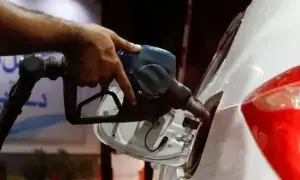
Last week’s petroleum pricing drama ended predictably: full pass-through to consumers, levy zeroed on diesel, and customs duties unchanged. The increase was inevitable.
Global benchmarks had risen for weeks while the government artificially held prices without the fiscal buffers to sustain subsidies. But the policy mix is wrong.
During an external shock, petroleum levies, climate levies, and customs duties should, at a minimum, be frozen.
The government’s failure to do so reflects a deeper failure to broaden the tax base, leaving fuel consumers to shoulder the fiscal burden.
The pricing methodology is equally flawed. With roughly 75 per cent of diesel produced locally, benchmarking against imported diesel (FOB Platts) inflates prices and generates windfall refinery margins.
A crude-based benchmark would be more appropriate, but the government did not take that step.
Petrol is up 43 per cent from pre-war levels; diesel, 86 per cent.
Both are now the highest in the region in dollar terms. April-June inflation will likely reach 12-14 per cent.
The arithmetic is stark. Last week, the landed price of petrol was USD 140/barrel (Rs246/litre) and HSD USD 262/barrel (Rs460/litre), against a crude oil landed price of around USD 150/barrel.
HSD premiums were extraordinarily high at roughly USD 110/barrel.
If Pakistan imported all its diesel, a full pass-through would be unavoidable. But it does not, as 75 per cent of HSD is locally refined.
Pakistan imports about 85 per cent of its crude and refines it into petrol, diesel, and furnace oil.
At current margins, local refineries are earning roughly USD 110/barrel on diesel, against a normal margin of around USD 10/barrel.
That is a windfall transferred in its entirety to consumers in the form of higher prices.
Refineries will argue that HSD profits offset losses elsewhere: approximately $20/barrel on petrol and USD 50/barrel on furnace oil.
Plus, there are losses on LPG too. Fair enough, but the proportions are wildly skewed.
From a single barrel, Pakistan’s refineries typically yield two units of diesel and one unit each of petrol and furnace oil.
The net windfall is roughly USD 35/barrel, or Rs62/litre.
The government should compensate refineries for losses on petrol and furnace oil, but not allow them to pass through diesel windfalls uncapped.
The question is simple: should refineries be allowed a once-in-a-generation gain at the cost of a spike in inflation for every Pakistani? When posed to the authorities, the response was: we do not want to nationalise refineries.
That is not nationalisation; it is wartime regulation. Moreover, PARCO, the country’s largest refinery, is 60 per cent government-owned.
Pakistan already tightly regulates most of its energy chain. E&P companies, IPPs, and OMCs all operate under regulated margins.
Applying the same logic to refineries during this crisis is neither radical nor unprecedented.
The government worries that altering the pricing formula may disrupt fuel supply.
That risk is manageable: guarantee refineries their normal margins regardless of volatility and cover the downside.
The supply chain stays intact; the inflationary shock is absorbed where it should be.
The math works. Keeping other product prices and levies constant, and regulating refinery margins on locally produced HSD, the blended diesel price, weighted 75 per cent local and 25 per cent import at international prices, could fall from Rs460/litre to around Rs380/litre.
Plus, the government can lower prices by another Rs35/litre through customs duty, most of which is passed on to the refineries.
These measures would be fiscally neutral, and they would prevent the inflationary tsunami that higher diesel prices will unleash across transport, food, and fertiliser costs.
A windfall tax, which the government is now floating, is the wrong instrument.
It will not undo the inflationary damage already baked in, and 60 per cent of any revenue would have to be shared with the provinces.
The parallel with gas policy is instructive. Pakistan prices its domestically produced gas at USD 3-4/MMBtu, a fraction of imported RLNG, and allocates some of it to fertiliser production.
That deliberate policy keeps food security intact at a time when many countries face shortages or pay prohibitive prices.
The same logic applies to diesel, which is largely domestically produced.
Pay market price on the crude you import and recover it from consumers, but do not let refineries capture windfall margins that bear no relation to underlying costs.
Free-market pricing is a peacetime luxury. When the conflict subsides, the government can return to the current formula and pursue deregulation, as the petroleum minister has signalled.
But right now, the priority must be energy and food security, not refinery balance sheets.
Copyright Business Recorder, 2026
The article first appeared in the daily Business Recorder on April 6, 2026
For the latest news, follow us on Twitter @Aaj_Urdu. We are also on Facebook, Instagram and YouTube.













Comments are closed on this story.