


The grand strategist who wasn't: Trump's cascade of broken promises
6 min read
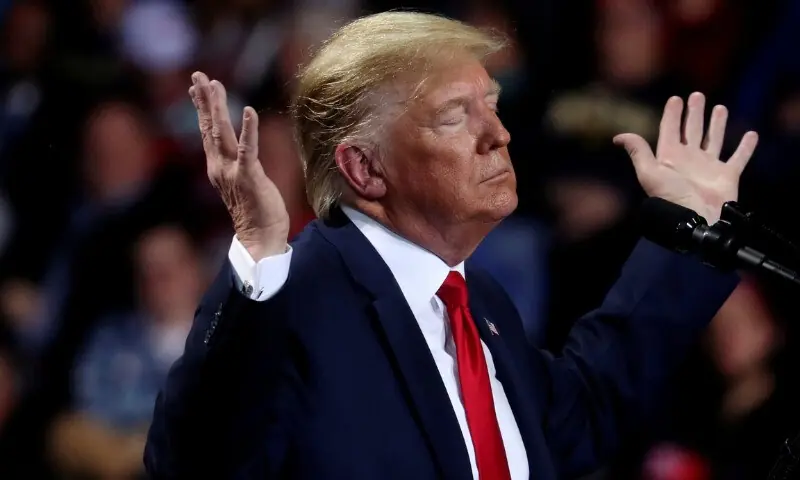
For nearly a decade, Donald Trump has sold the American public a singular vision of himself: the master dealmaker, the lone wolf capable of bending the global order to his will, the man who could fix in hours what career diplomats had failed to resolve in decades. It was compelling theatre, and millions bought the ticket.
But 2026 has been a brutal season of reckoning. Since returning to the Oval Office, Trump has not simply faced political headwinds — he has been dismantled by his own courts, outmanoeuvred by foreign adversaries, and humbled by the very metrics he swore to own. Nowhere is that gap between promise and reality more visible than in the burning waters of the Persian Gulf.
Iran: A war without a finish line
On February 28, 2026, the United States and Israel launched a series of strikes against Iran, targeting its nuclear programme, ballistic missile infrastructure, and senior government leadership — including the assassination of Supreme Leader Ali Khamenei. Trump promised swift, decisive victory. The world held its breath.
After more than five weeks of fighting, a ceasefire was brokered on April 7-8. It has held only partially and precariously ever since.
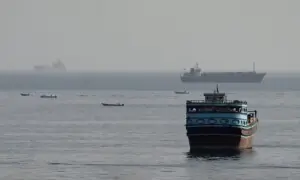
The Strait of Hormuz, through which roughly a fifth of the world’s oil and liquefied natural gas once flowed freely, remains effectively closed. The US has imposed a counter-blockade on ships seeking to use Iranian ports, producing a dual blockade that has sent fuel prices surging and rattled global energy markets. At least 17 merchant ships have been damaged in the crisis, two captured, and 12 seafarers killed or missing. Iran’s leadership, far from being removed, has reconstituted itself under Khamenei’s appointed successor.
The administration’s stated objectives, regime change, destruction of Iran’s missile programme, and control of the Strait of Hormuz, remain unfulfilled. The conflict has shifted to a grinding game of brinkmanship, with no clear exit in sight. France and the United Kingdom have proposed an international defensive mission for the Strait, but only once a sustainable ceasefire is agreed. That agreement has not come.
Trump wanted to be remembered as the president who reshaped the Middle East through strength. He risks being remembered instead as the president who started a war without a defined endpoint, shook the global energy order, and handed Iran the role of aggrieved party on the world stage.
Ukraine: The 24-hour promise that became an open wound
Before he had even returned to the Oval Office, Trump promised to end the Russia-Ukraine war in 24 hours. He said it with the confidence of a man who had never been seriously contradicted. That was then.
The reality in 2026 is more complicated, and in its own way, more damning, than simple failure. Negotiations have lurched forward and backwards across months and continents, from Miami to Paris to Geneva to Abu Dhabi. A 28-point US peace framework proposed that Ukraine cede territory it had not yet lost. A European counter-proposal pushed back. Ceasefires were announced and then immediately violated, with both sides blaming the other.
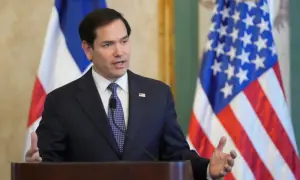
As recently as May 9, Trump announced a three-day ceasefire agreed to by both Russia and Ukraine for the Victory Day period, calling it potentially the “beginning of the end” of the war. But on the very same day, Secretary of State Marco Rubio told reporters that US mediation efforts had not led to a “fruitful outcome” and had “stagnated” — a candid admission that cut directly across his president’s optimism.
Analysts have noted that Vladimir Putin has been deliberately stalling negotiations, calculating that he can consolidate territorial gains through either a negotiated settlement or continued battlefield pressure. The 24-hour promise is now in its second year. The war grinds on. And the credibility of the United States as an honest broker has been eroded by the very erratic nature of the diplomacy meant to restore it.
The tariff king with no legal throne
Trump opened his second term with characteristic aggression on the economic front as well. Sweeping tariffs on China, the European Union, India, Canada, and Brazil, the so-called “Liberation Day” tariffs, were imposed under the International Emergency Economic Powers Act (IEEPA), a legal manoeuvre his administration presented as both bold and bulletproof.
It was neither.
On February 20, 2026, the Supreme Court ruled in a landmark 6-3 decision that IEEPA does not authorise the President to impose tariffs, effectively declaring Trump’s entire trade war architecture unconstitutional. The Court was unambiguous: the power to tax imports is a congressional prerogative under Article I of the Constitution, not a presidential one. More than $160 billion in tariffs had been illegally collected, with potential refunds now owed to importers across the country.
The administration responded by announcing replacement tariffs under Section 122 of the Trade Act of 1974 and launching a series of Section 301 investigations to lay the groundwork for further measures. It was a legal retreat dressed as a tactical pivot, and the world noticed the difference. For a president who built his political identity around dominance and deal-making, this was not a strategic retreat. It was a constitutional rebuke.
The prize he could not buy
And then there is the matter of the Nobel Peace Prize, a pursuit that, more than any policy failure, lays bare the psychology driving all the others.
Trump has coveted the prize openly and repeatedly, appearing to believe that enough pressure on Oslo might eventually yield the result he craved. It did not. The Norwegian Nobel Committee awarded its 2025 prize to Venezuelan opposition leader María Corina Machado, who gifted her medal to Trump when the pair met in Washington. The gesture did little to soothe his grievance. Days later, Trump sent an extraordinary text message to Norway’s Prime Minister Jonas Gahr Store, making clear the snub still stung.
In the message, which he circulated widely among world leaders, Trump declared that he no longer feels bound “to think purely of Peace” because the Nobel Committee had not honoured him. He linked this grievance directly to his escalating campaign to seize Greenland, asserting that “the world is not secure unless we have Complete and Total Control of Greenland” — a demand directed at a fellow NATO ally.
The message was met with condemnation across Europe. Norwegian experts noted that Trump was fundamentally mistaken in his belief that the Norwegian government controls the prize, which is awarded by an entirely independent committee. But the factual error mattered less than what the message revealed: a sitting president openly conditioning his commitment to global stability on the receipt of a personal honour, then using its absence to justify territorial aggression against an ally.
It reframes everything. The Iran war was launched without an exit strategy. The Ukraine peace plan was built on shifting sand. The tariffs were imposed without a legal foundation. Each begins to look less like a policy failure and more like the inevitable output of a leader who has always valued the appearance of winning over the substance of governing.
The reckoning
There is a pattern running through each of these episodes: a preference for performance over preparation, and for the announcement over the outcome. Tariffs imposed without legal grounding. Peace initiatives launched without a diplomatic architecture. A war started without a defined endpoint. A Nobel campaign waged as though prestige could be demanded rather than earned.
The portrait that emerges is not of a grand strategist, but of a tactician whose greatest skill has always been the projection of certainty, and whose second term has been a sustained encounter with the limits of that projection. The courts have ruled against him. The peace he promised Ukraine remains elusive. The war he started carries no finish line. And his own words have confirmed what critics long suspected: that for this president, global stability has always been, at least in part, a means to personal validation.
The deals he promised have not closed. The wins he guaranteed have not materialised. And the world, watching carefully, has begun to draw its own conclusions.
The writer is a seasoned journalist covering the economy and international affairs.
For the latest news, follow us on Twitter @Aaj_Urdu. We are also on Facebook, Instagram and YouTube.






Comments are closed on this story.