


Artemis II breaks Apollo 13 distance record on historic lunar flyby
2 min read



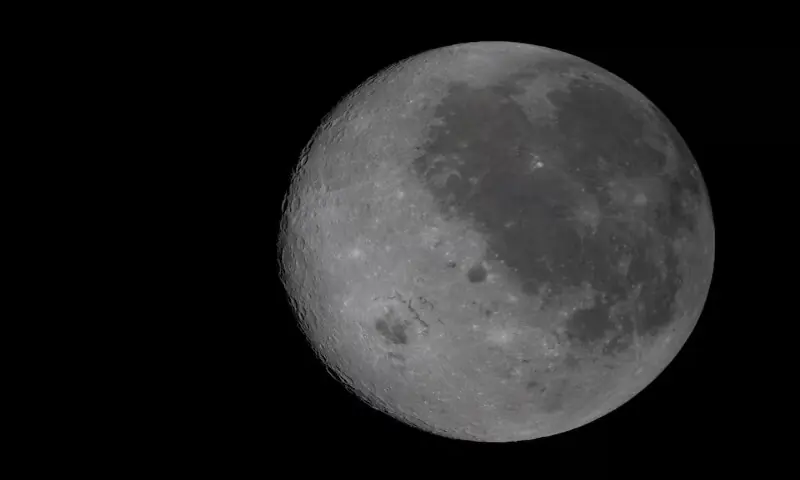
NASA’s Artemis II mission has achieved a new milestone in human spaceflight, surpassing the previous distance record set by Apollo 13.
Carrying four astronauts, the Orion spacecraft ventured farther from Earth than any humans in decades, surpassing 400,171 km on Monday at 15:58 GMT.
Later in the day, the crew is expected to reach their farthest point yet — around 406,788 km from home — on a historic journey around the moon.
According to Al Jazeera, the mission involves a flyby around the far side of the moon, during which the crew will spend more than six hours observing and documenting lunar surface features.
After completing the flyby, the Orion capsule will return to Earth via a “free-return trajectory,” a journey expected to take around four days.
The astronauts received an early message from the late Apollo astronaut Jim Lovell, who encouraged them to enjoy the view and welcomed them to “my old neighbourhood.”
Travelling over previously unseen lunar terrain, the crew has already captured images of the Orientale basin, a massive crater previously only observed by uncrewed missions.
NASA emphasises the value of human observation, with lead Artemis II scientist Kelsey Young noting that “the human eye is basically the best camera that could ever or will ever exist.”
On Earth, a team of lunar scientists at NASA’s Johnson Space Centre in Houston is monitoring the mission in real time, recording the astronauts’ observations.
The Artemis II mission also marks several historic firsts: Victor Glover is the first person of colour to orbit the moon, Christina Koch is the first woman, and Canadian astronaut Jeremy Hansen is the first non-American in the mission crew.
During roughly 40 minutes of the flyby, all communications with Artemis II will be cut off as it passes behind the moon.
Observers say the moon will appear “about the size of a basketball held at arm’s length” from the spacecraft.
The flyby is a critical step in NASA’s Artemis programme, paving the way for Artemis III in 2027 and a lunar landing as part of Artemis IV in 2028, according to NASA Administrator Jared Isaacman.
For the latest news, follow us on Twitter @Aaj_Urdu. We are also on Facebook, Instagram and YouTube.
















Comments are closed on this story.