


Dared to lead
6 min read

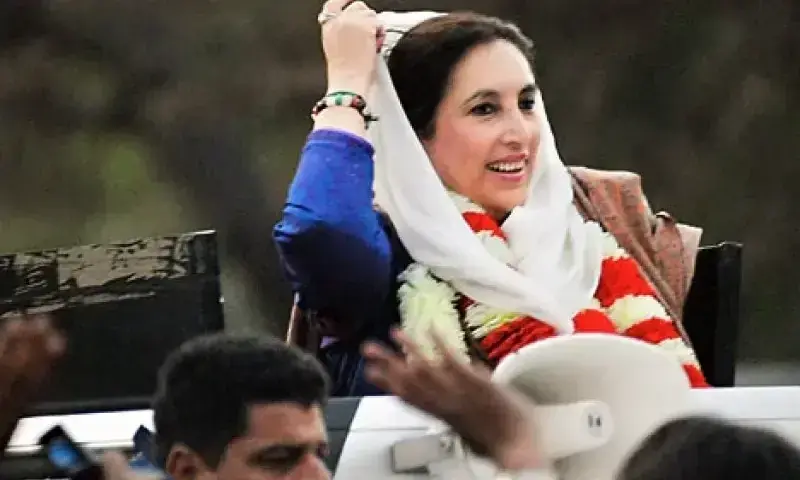
Benazir Bhutto was a remarkable leader whose life left a lasting mark on Pakistan and the world. She inspired millions with her courage, determination, and unwavering belief in democracy.
Her death was a great loss, not only for her country but also for the people who admired her spirit across the world.
Remembering her means looking back on the struggles she faced, the journey she undertook, and the legacy she built in Pakistan’s politics and society.
Born on June 21, 1953, Benazir came from a family involved in politics. Her father, Zulfikar Ali Bhutto, was a charismatic leader who founded the Pakistan People’s Party (PPP) and served as Pakistan’s Prime Minister from 1973 to 1977.
Growing up in such a politically active environment, Benazir learned from a young age about leadership, public service, and responsibility towards the nation. These lessons would shape her own journey as a politician and public figure.
Benazir studied at some of the world’s most prestigious institutions, including Harvard University and the University of Oxford.
At Harvard, she studied philosophy, politics, and economics, developing a strong understanding of international relations and global politics.
At Oxford, she further refined her skills and developed a vision for Pakistan’s future, one based on democracy, equality, and social progress. These experiences gave her the tools and confidence to navigate Pakistan’s complex political landscape.
Her rise in politics was not easy. After completing her studies abroad, Benazir returned to Pakistan committed to public service and democratic reform.
At the time, the country was under military rule, and her early years in politics were marked by personal sacrifice. She spent time in prison and faced exile, yet she endured these hardships with courage and determination.
Far from weakening her, these challenges strengthened her commitment to human rights, democratic governance, and the rule of law. She became a source of inspiration, especially for women, showing that it was possible to break barriers and participate fully in political life.
In 1988, Benazir Bhutto made history by becoming the first woman to lead a Muslim-majority country as prime minister of Pakistan. Her election was a major milestone, signalling progress for women in politics not only in Pakistan but also around the world. During her tenure, she worked to modernise the country, promote social development, and strengthen democratic institutions.
Education, healthcare, and women’s empowerment were among her key priorities. She believed that Pakistan’s future depended on investing in its people, particularly the youth, and giving opportunities to those who had been historically marginalised.
Despite her ambitious goals, Benazir faced numerous challenges, including political opposition and economic difficulties.
Nevertheless, she remained focused on her vision, advocating transparency, accountability, and democratic governance. She valued dialogue and reconciliation, understanding that Pakistan’s progress required bridging political and social divides. Her ability to connect with people from diverse backgrounds earned her wide admiration.
She worked tirelessly to promote national unity, believing that Pakistan’s strength lay in its diversity and that every citizen should have a voice in shaping the country’s future.
Her assassination in 2007 was a national and international tragedy. Her death highlighted the dangers faced by those who work to uphold democracy in politically unstable environments.
The loss of a leader so committed to progress and justice left a deep void in Pakistan’s political and social lives. Remembering her today is not only about mourning but also about reflecting on the ideals she promoted and the path she helped open for future generations.
Benazir’s legacy is far-reaching. She was a pioneer for women’s political participation, inspiring countless women to take leadership roles.
Her focus on education, healthcare, and social welfare has continued to influence policies and initiatives that benefit the Pakistani people.
On the international stage, she represented Pakistan with distinction, advocating democracy, peace, and cooperation among nations. Through her engagement with the world leaders and institutions, she helped raise Pakistan’s global profile and showed the importance of collaboration in addressing national and international challenges.
Her resilience and determination remain dominant in her legacy. Despite facing personal danger, political sabotage, and criticism, she persevered with courage.
Benazir demonstrated that true leadership is not just about success but also about the determination to continue striving for justice, equality, and social progress, even in the face of adversity. Her life continues to inspire political leaders, activists, and citizens to work for positive change.
Her contributions must also be seen in the broader context of Pakistan’s history. The country has experienced political upheaval, economic difficulties, and social change over the decades.
In this challenging environment, her efforts to strengthen democracy and promote social justice were especially important. She sought to develop a political culture based on accountability, citizens’ participation, and transparency. While these ideals were often difficult to implement, her vision served as a guiding light for Pakistan’s democratic development.
Social welfare was the foundation of Benazir’s leadership. She championed healthcare reforms, education programmes, and poverty alleviation initiatives. Women’s empowerment was particularly important to her, as she worked to ensure that women had access to education, healthcare, and economic opportunities. These efforts were not symbolic; they reflected a genuine commitment to improving the lives of those who had been historically marginalised.
Even after her death, Benazir’s influence continues. Her speeches, writings, and policies remain relevant and serve as guidance for leaders and citizens striving to uphold democracy. Political parties, civil society organisations, and educational institutions honour her memory through initiatives promoting human rights, social development, and civic engagement.
Her vision of a democratic, inclusive, and prosperous Pakistan continues to inspire efforts to create positive change.
Reflecting on Benazir’s life reminds us that leadership requires courage, vision, and dedication to the common good. She showed that entrenched systems can be challenged, societal barriers overcome, and justice pursued even in the most difficult circumstances. Her legacy encourages citizens to participate in the democratic process, promote fairness, and collaborate to address national challenges.
Benazir’s story is also a reminder of the importance of unity. Her ideals go beyond party lines, regional divisions, and social boundaries, reflecting her belief that Pakistan’s strength lies in its diversity. Remembering her contributions highlights the need for dialogue, cooperation, and shared responsibility in building a nation based on democratic principles and inclusivity.
Her journey is a testament to the power of perseverance, vision, and dedication to public service. She remains a symbol of hope, representing a Pakistan where leadership is guided by principle, women can achieve equal standing in politics, and social justice is a priority. Her memory continues to inspire new generations of leaders, activists, and citizens to engage with their communities and work for a better society.
History is shaped not only by those in power but also by those who dream of a better future, uphold their principles, and dedicate themselves to serving others. Benazir’s life and work continue to live on in history and in the hearts of millions who draw inspiration from her. Today, Pakistan honours her not just as a political figure but as a symbol of resilience, progress, and the enduring pursuit of democracy.
بچھڑا کچھ اس ادا سے کہ رت ہی بدل گئی
اک شخص سارے شہر کو ویران کر گیا
The writer is a seasoned journalist and a communications professional.
He can be reached at [email protected]
For the latest news, follow us on Twitter @Aaj_Urdu. We are also on Facebook, Instagram and YouTube.












Comments are closed on this story.