


Pakistan needs leaders, not power seekers
7 min read

Every country needs leaders who put the interests of the nation before their own. People vote for politicians because they expect them to solve problems, improve public services, create jobs, strengthen the economy and protect the country’s future. In return, politicians are trusted with power and responsibility. However, many believe that once politicians reach high office in Pakistan, they become more interested in protecting their own position than serving the public.
Politics is supposed to be a public service. The purpose of government is to solve people’s problems, improve institutions and create opportunities for future generations. In Pakistan, however, politics has often been dominated by conflict rather than cooperation. Political leaders regularly accuse one another of corruption, incompetence or wrongdoing, while the country’s real challenges continue to grow.
Instead of giving priority to education, healthcare, industrial development, agriculture, water management, energy reforms and employment, political discussions frequently become centred on personal attacks and political point-scoring. As these political battles continue, ordinary Pakistanis are left waiting for meaningful solutions to the problems they face every day.
One of the biggest reasons for this situation is the desire for power. Political power brings influence, authority and the ability to control important decisions. Once leaders reach high office, many become determined to remain there for as long as possible. Winning the next election often becomes more important than making difficult decisions that could benefit the country in the long run.
Policies are sometimes designed to improve political popularity rather than strengthen national institutions. Long-term reforms in education, taxation, industry or governance may be delayed because they do not produce immediate political rewards.
Personal ambition has also shaped Pakistan’s political landscape for decades. Ambition is not always a negative quality because every leader needs determination to achieve important goals. However, ambition becomes harmful when it replaces the responsibility of public service.
Pakistan’s politics has often revolved around individuals rather than institutions. Many political leaders spend years trying to return to power after losing office, believing that only they can lead the country successfully. Political parties themselves frequently become closely linked with individual personalities instead of developing strong internal democratic systems or encouraging new leadership. As a result, politics often becomes a contest between individuals rather than a competition of ideas and policies.
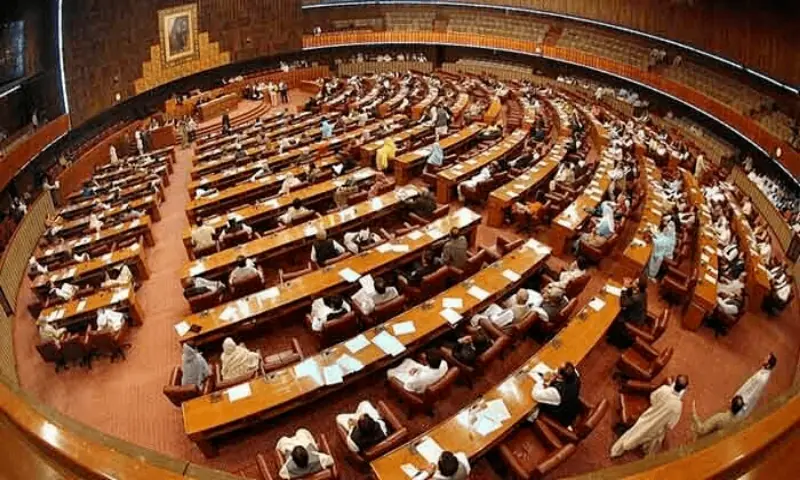
Political parties remain an important part of Pakistan’s democratic system. They provide people with choices and represent different political views across the country. However, political competition has too often turned into permanent confrontation. Instead of cooperating on matters that affect every Pakistani, such as inflation, unemployment, economic reforms, national security, climate change or public welfare, political parties frequently refuse to support proposals simply because they come from their opponents. Important legislation is delayed; parliamentary debate becomes increasingly hostile and valuable time is lost, while political leaders remain focused on defeating one another rather than solving national problems.
Another challenge is the lack of long-term planning. Pakistan’s economic and social problems have developed over many decades and cannot be solved within a single term of government. Improving schools, modernising hospitals, increasing exports, reducing poverty, strengthening local government and building efficient public institutions require continuity across different administrations.
However, successive governments have often abandoned the policies introduced by previous governments, not because they were unsuccessful but because they belonged to political rivals. This lack of continuity has slowed Pakistan’s progress and prevented implementation of many reforms.
Money also plays an important role in Pakistan’s politics. Election campaigns require considerable financial resources, and political parties often depend on wealthy supporters, influential families and business interests. After coming to power, some politicians may feel pressure to protect those interests rather than focusing entirely on the wider public. This creates the perception that those with influence receive greater attention than ordinary citizens. Such perceptions weaken public confidence and increase the belief that politics serves powerful groups instead of the nation.
The rise of social media has further changed Pakistan’s political environment. Political leaders now communicate directly with millions of people through television, social media platforms and online campaigns. While this allows politicians to reach the public quickly, it has also encouraged a style of politics that focuses heavily on publicity and public image.
Political speeches, social media trends and televised debates often receive greater attention than detailed discussions about economic policy, governance reforms or institutional development. As politics becomes increasingly driven by headlines and online popularity, serious policymaking sometimes receives less attention.
Pakistan has also faced challenges because of the weakness of public institutions. Strong institutions are required for democracy because they ensure that the government continues to function effectively regardless of which political party is in office. Independent courts, transparent elections, a professional civil service and accountable public institutions help build confidence among citizens. However, when institutions become weak or overly influenced by politics, individuals often become more powerful than the system itself. Personal loyalties may replace merit; reducing efficiency and making governance less effective.
Corruption remained one of Pakistan’s most debated political issues for many years. Allegations of corruption have been made against leaders from different political parties, contributing to public distrust. Whether proven or merely alleged, corruption damages confidence in democratic institutions.
Misuse of public funds, favouritism, abuse of authority and the lack of transparency create the impression that public office is being used for personal benefits rather than national service. When citizens lose confidence in political leadership, they also begin to lose faith in democratic processes.
The responsibility for improving Pakistan’s politics does not rest with the politicians alone. Citizens also have a major role to play. Political leaders often respond to the expectations of voters. If elections continue to be influenced mainly by personalities, family loyalties, emotional slogans or political rivalries, meaningful change becomes difficult.
Democracy becomes stronger when voters examine policies, performance, competence and integrity before making their decisions. An informed electorate encourages politicians to compete through better governance rather than louder political rhetoric.
The media also carries significant responsibility. Pakistan enjoys a lively and influential media that has the power to hold governments accountable. Investigative journalism, balanced reporting and informed debate strengthen democracy by helping citizens understand national issues.
However, when political coverage focuses mainly on sensationalism, personal conflicts or party rivalries, public discussion becomes less constructive. Citizens need accurate and balanced information to judge whether political leaders are acting in Pakistan’s best interests.
Civil society, universities, professional organisations, lawyers, academics and ordinary citizens all contribute to strengthening democratic culture. Public debate, peaceful political participation and constructive criticism remind leaders that power belongs to the people.
Democracy should not be active only during election campaigns. Citizens must continue to monitor government performance, demand transparency and encourage accountability throughout every government’s term in office.
Pakistan’s history demonstrates that national progress becomes possible whenever leaders place the country’s interests above political rivalry. During periods of economic difficulty, security challenges or natural disasters, cooperation between political forces has often produced better outcomes than prolonged confrontation.
Lasting development requires consensus on national priorities, regardless of which political party is in government. Countries that succeed over the long term usually do so because their leaders protect institutions rather than personal political interests.
At the same time, it would be unfair to suggest that every politician in Pakistan thinks only about personal gain. Many elected representatives work sincerely for their constituents, raise important public issues and dedicate themselves to improving their communities.
Unfortunately, such politicians often receive far less public attention than those involved in political disputes, protests or power struggles. The behaviour of a few influential individuals can shape public opinion about the entire political system.
Today, many Pakistanis are frustrated by rising prices, unemployment, slow economic growth, declining public services and continuing political instability. Election campaigns often raise hopes of major reforms, but when promises remain unfulfilled, disappointment grows.
Many people believe that political leaders spend more time planning their return to power, protecting their own interests or weakening their opponents than solving the problems affecting the ordinary people. This has created a widening gap between public expectations and political performance.
Breaking this cycle requires responsibility from both political leaders and citizens. Politicians must remember that public office is a trust given by the people, not a personal entitlement. They should strengthen democratic institutions, respect accountability, promote transparency and cooperate whenever Pakistan’s national interest demands unity.
Citizens, in turn, must participate actively in democracy, vote responsibly, question those in authority and reject politics based solely on personalities, family influence or empty promises.
Pakistan cannot achieve lasting prosperity through personal ambition alone. The country needs leaders who think beyond their own political future and place the nation’s welfare above individual interests. It also needs citizens who demand honesty, competence and genuine public service from those they elect.
The country’s future depends upon strong institutions, responsible leadership, political maturity and an informed public. When political leaders begin to place Pakistan before themselves and political parties choose cooperation over constant confrontation, the country will be better placed to achieve economic stability, democratic strength, social progress and lasting national unity.
The writer is a seasoned journalist and a communications professional.
He can be reached at [email protected]
For the latest news, follow us on Twitter @Aaj_Urdu. We are also on Facebook, Instagram and YouTube.











Comments are closed on this story.