


Ghalibaf says Islamabad memorandum signals US defeat
2 min read



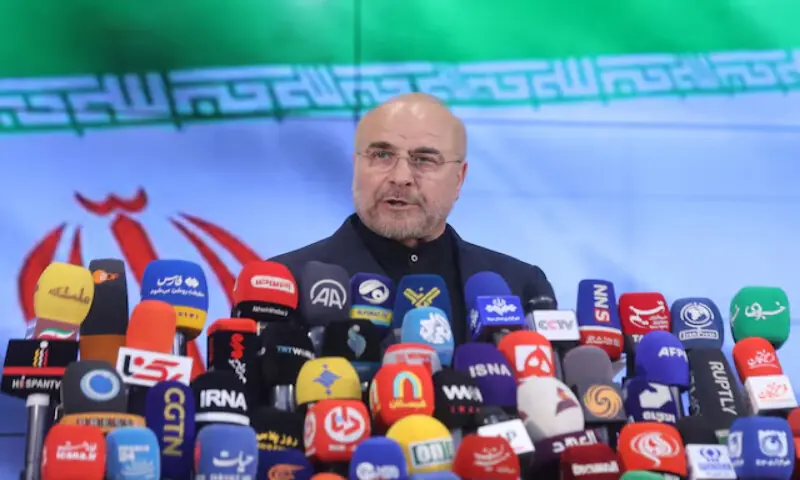
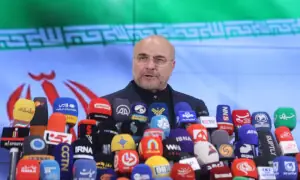
Iranian Parliament Speaker Mohammad Bagher Ghalibaf has claimed that the Islamabad memorandum of understanding underscored the failure of US pressure policies against Tehran.
Addressing the 20th Conference of the Parliamentary Union of OIC Member States (PUIC) in Baku on Wednesday, Ghalibaf maintained that recent developments had shown that the era of imposing the will of major powers on independent nations had come to an end, Tasnim news agency said in a report.
The Iranian chief negotiator said that the conflict imposed on Iran by the United States and Israel had shown that foreign military presence in West Asia had failed to bring stability and had instead become a source of insecurity.
He said Iran’s resistance during the war had imposed high costs on its adversaries and thwarted their strategic objectives, adding that military, psychological and economic pressure had failed to force Tehran into submission.
According to Ghalibaf, the conflict was not merely a military confrontation but also an attempt to reshape regional power dynamics and impose political dictates on Iran.
However, he said, the outcome had underscored the importance of national unity and resilience.
The Iranian parliament speaker said the experience had demonstrated that lasting peace could not be achieved through coercion or humiliation, but through dignity, strength and mutual respect.
Referring to diplomatic developments, Ghalibaf said the Islamabad memorandum of understanding was a product of Iran’s steadfastness rather than external pressure, describing it as a setback to US efforts to impose its will.
He reiterated Iran’s support for dialogue and diplomacy based on equality and respect for sovereignty, while maintaining that defence capability, national cohesion and diplomacy constituted complementary pillars of security.
Ghalibaf renewed Tehran’s call for regional security arrangements to be managed by countries of the region themselves, saying no state could achieve its own security at the expense of others.
He urged Muslim countries to utilise their economic, energy and human resources for collective development.
He also expressed Iran’s readiness to pursue security agreements with Islamic and regional countries, particularly those in the Persian Gulf, based on cooperation and economic integration.
The Iranian official said Tehran favoured an end to foreign military presence in the region, arguing that external bases had failed to contribute to stability.
On Palestine, Ghalibaf said no regional security framework could be complete without addressing what he described as the unresolved Palestinian issue, stressing that support for Palestinian rights was essential for justice and long-term regional stability.
He concluded by calling for greater unity among Muslim nations and expanded cooperation based on mutual respect, non-interference and good neighbourly relations.
For the latest news, follow us on Twitter @Aaj_Urdu. We are also on Facebook, Instagram and YouTube.