


Telecom bill sparks property rights row, calls for IT minister's resignation
4 min read



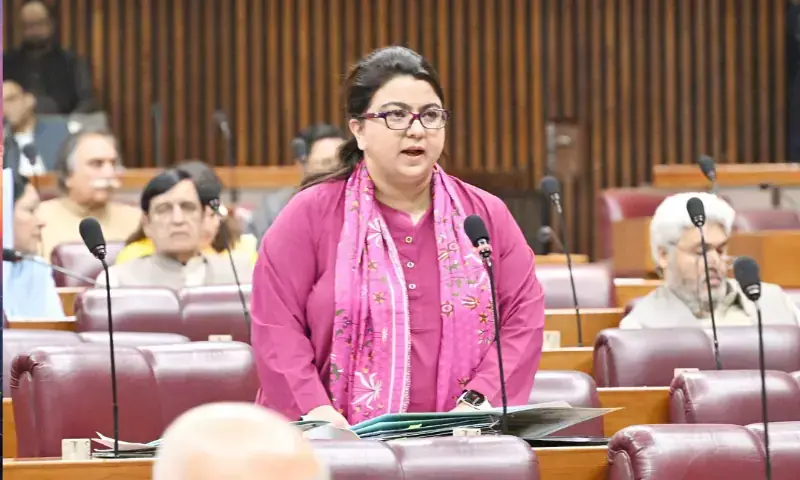
A proposed amendment to Pakistan’s telecommunications law has ignited a fierce public debate, with senior journalists, senators and economists demanding the resignation of IT Minister Shaza Fatima and accusing the government of attempting to strip citizens of their property rights.
The Pakistan Telecommunication Amendment Bill 2026, presented by the Ministry of Information Technology as a measure to accelerate broadband rollout and 5G deployment, cleared the National Assembly without significant opposition.
However, it ran into a wall of resistance when referred to the Senate Standing Committee on IT, where it has now been stalled pending a clause-by-clause review.
At the centre of the controversy is a newly inserted provision, Section 27-B, which critics say would allow telecom companies to lay fibre cables, erect mobile towers or place equipment on any private property — and impose fines of up to Rs50 million on homeowners, shopkeepers, tenants or institutions that refuse, delay or obstruct such access.
Senior journalist Rauf Klasra is credited with first bringing the clause to public attention after the bill reached the Senate, triggering a wave of criticism on social media.
Klasra also alleged that IT Secretary Zirrar Hashim Khan was the driving force behind the bill’s drafting and approval.
Broadcast journalist Fawad Ahmed said the episode exposed a wider failure of governance.
“We should not overlook the fact that the bill was passed by the National Assembly and then presented to the Senate, where it came under the attention of Rauf Klasra,” he wrote on X.
“Otherwise, the attempt to bypass citizens’ rights would have gone ahead unchecked.”
Senior journalist Najam Sethi went further, demanding Shaza Fatima’s resignation on air and alleging that telecom companies had lobbied for the bill’s passage.
He questioned whether the minister had read the legislation before tabling it, describing her as a relative of Khawaja Asif appointed on the strength of connections rather than competence.
“Such people should be removed from office,” he said.
Pakistan Institute of Development Economics Vice Chancellor Nadeem ul Haq echoed the criticism in a post on X.
“This is what happens when you put an IR graduate in charge of an IT ministry,” he wrote, questioning why the government did not appoint a specialist to the role.
He also argued that right-of-way challenges could have been addressed through existing large-scale road infrastructure projects, and called on telecom companies to condemn what he termed “a sad and sick law initiative.”
Journalist Waqas Habib Rana noted that Shaza Fatima had acknowledged the bill’s shortcomings when confronted by anchor Shahzeb Khanzada on a private television programme.
“She admitted her mistake. Who appointed her as minister and who will hold her accountable?” he wrote, urging the prime minister to intervene.
BAP Senator Samina Mumtaz Zehri, who chairs the Senate Functional Committee on Human Rights, was unequivocal in her opposition.
“A citizen’s home is sacred, representing their life’s hard work. The Telecom Bill 2026 cannot violate private property rights for corporate gain,” she said, pledging to fight the bill in the Senate.
In the Senate committee, Senator Ali Zafar was the first to raise objections, subsequently backed by committee chairperson Palwasha Khan.
Members warned that the bill’s language would allow companies to demand access to private premises with minimal notice, leaving ordinary citizens facing multi-million rupee penalties for non-compliance.
IT Ministry officials told the committee the bill was designed to resolve longstanding right-of-way disputes between federal and provincial departments that have hampered infrastructure deployment.
They maintained the legislation was drafted in consultation with all major political parties.
Jazz CEO Aamir Hafeez Ibrahim acknowledged the controversy but defended the bill’s intent. “Much of the current criticism has been driven by the perception that the reforms are aimed at individual citizens and homeowners. That is not the intent,” he wrote on X.
He added that the bill’s language could and should be refined through the parliamentary process.
Shaza Fatima, responding to the backlash, said the PPP, a coalition partner, had supported the bill in the National Assembly before opposing it in the Senate.
She insisted the government had no intention of forcibly acquiring private land or installing towers without consent, and said ambiguous clauses would be reviewed and reworded.
The Senate Standing Committee has deferred the bill and announced it will conduct a line-by-line review at its next sitting to ensure citizens’ property rights are safeguarded.
For the latest news, follow us on Twitter @Aaj_Urdu. We are also on Facebook, Instagram and YouTube.














Comments are closed on this story.