


The war that made Iran great again
5 min read



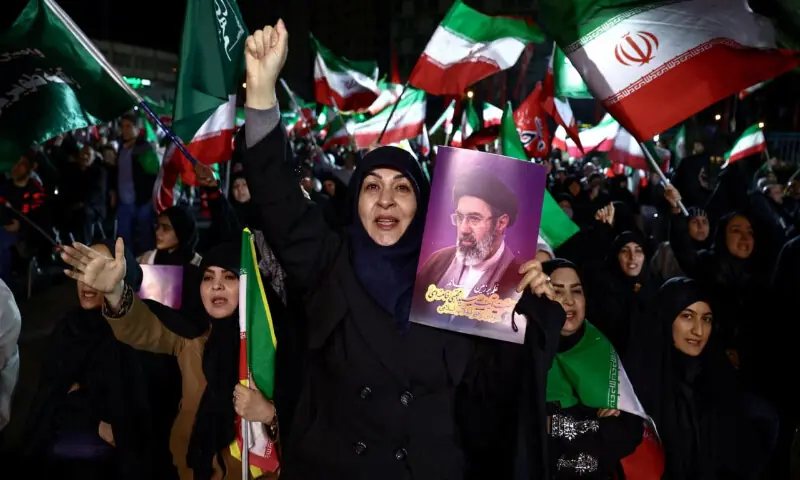
It was not supposed to go this way.
When the United States and Israel launched their joint strikes on Iran on February 28, the prevailing assumption in Washington and Tel Aviv was straightforward: a swift, decisive campaign to dismantle Iran’s nuclear programme, degrade its military capacity, and restore the old order in the Middle East — one in which Iran knew its place. One hundred days later, that assumption lies in ruins. Iran has not been broken. It has, paradoxically, been elevated.
The Islamic Republic that was once regarded as a declining, sanctioned, internally fractured state has emerged from this war as the most consequential power in the region — not despite the American and Israeli assault, but partly because of it.
A reluctant superpower
A year ago, the idea of Iran directly and repeatedly striking Israeli territory would have seemed far-fetched. The calculus was simple: Iran’s deterrence rested on proxies — Hezbollah, the Houthis, various Iraqi militias. Direct confrontation with Israel, let alone a nuclear-armed one backed by the United States, was considered suicidal.
That calculus has been shattered.
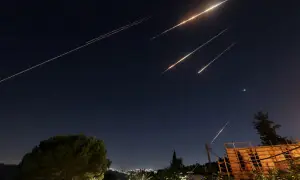
Iran launched ballistic missiles at central and southern Israel this week, triggering Israeli air defences, after Israel renewed strikes on southern Lebanon in what Tehran said was a violation of the ceasefire. Israel retaliated by targeting a petrochemical plant inside Iran. The two countries are now trading strikes with a regularity that would have been unimaginable twelve months ago — and Iran is doing so without existential panic. It is calibrating, warning, and withdrawing on its own terms.
This is not the behaviour of a defeated state. This is the behaviour of a regional power that has learned, under fire, that it can absorb punishment and survive.
Trump’s uncomfortable position
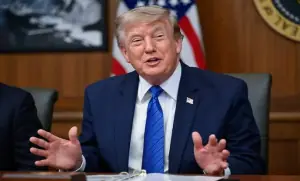
Perhaps the most telling indicator of Iran’s new leverage is the posture of Donald Trump himself.
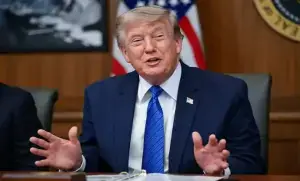
Trump called on Israel and Iran to “immediately stop shooting” on Monday, posting on Truth Social: “Both sides, Israel and Iran, are looking to do an immediate ceasefire!” The language is telling. This is not a commander dictating terms to an adversary. This is a president pleading for restraint — from both sides equally, including from his own closest regional ally.
Trump told Axios that Iran had contacted him directly, saying they would stop shooting if Israel backed off. “They called us and said that they are not doing any more attacks and asked us to tell Israel not to do any more attacks,” Trump said. Think about what that means. Iran is now giving Washington instructions on how to manage Israel.
This is a remarkable inversion of the regional order. The US, which launched this war, is now acting more as a mediator than a belligerent. And Iran is exploiting every inch of that space.
The art of the stall
Iran has also proved itself a shrewd negotiator — or, more precisely, a masterful procrastinator.
According to Axios, US and Iranian negotiators reached an agreement on the terms of a deal in Doha, but Trump did not immediately sign off.
“The president relayed to the mediators that he wants a couple of days to think about it,” a US official said.
Meanwhile, a senior Arab official involved in the mediation told NBC News the delays were “frustrating,” describing the situation as “everyone playing a game of chicken and egg.”
Tehran has good reason to drag its feet. Every week that passes without a deal is a week in which Iran consolidates its new status.
Every Israeli strike on Lebanon that Iran responds to is a demonstration that it can project power and defend its allies. And every time Trump publicly frets about the pace of talks, Iran’s hand strengthens.
Trump has sent decidedly mixed messages. On Monday, he said he “couldn’t care less” if negotiations collapsed, only to post on Truth Social hours later that talks were “continuing, at a rapid pace.” The vacillation has not gone unnoticed in Tehran.
The midterm clock
Iran understands something that its adversaries are reluctant to admit publicly: Donald Trump is fighting on two fronts. One is in the Middle East. The other is domestic.
The 2026 midterm elections loom, and a war with no end in sight is politically toxic. Trump staked his reputation on being the president who ends wars, not the one who starts them. The Iran conflict, now at 100 days, is already longer than he anticipated. As one Washington Post opinion piece noted, Trump “desperately needs” a peace deal, and his short attention span “constantly bungles his political aspirations.”
Iran, by contrast, is not running for anything. The supreme leader does not face a midterm election. Tehran can afford patience in ways that Washington simply cannot.
The limits of air power
There is a deeper lesson here that the architects of this campaign should reckon with honestly. Air power can destroy infrastructure. It can kill military commanders. It can set back a nuclear programme by months or years. What it cannot do — as Iraq, Afghanistan, Libya, and Syria have all demonstrated at enormous cost — is reshape a country’s political identity or eliminate its will to resist.
Iran in 2026 is proof of this once again. The strikes have not produced a compliant Tehran. They have produced a more confident one.
A new Middle East
The region that emerges from this war, whatever the final diplomatic settlement, will not resemble the one that existed before February 28. Iran has demonstrated that it can absorb a US-Israeli military campaign, maintain its alliances, strike its enemies directly, and negotiate from a position of strength.
That is the definition of a regional power. Not the Iran of a year ago — sanctioned, isolated, and quietly declining. But an Iran that the Middle East and Washington will have to accommodate for years to come.
The war meant to cut Iran down to size may well have done the opposite.
The writer is a seasoned journalist covering the economy and international affairs.
For the latest news, follow us on Twitter @Aaj_Urdu. We are also on Facebook, Instagram and YouTube.







Comments are closed on this story.