


What’s behind Pakistan’s counter-attack on Afghan Taliban?
3 min read



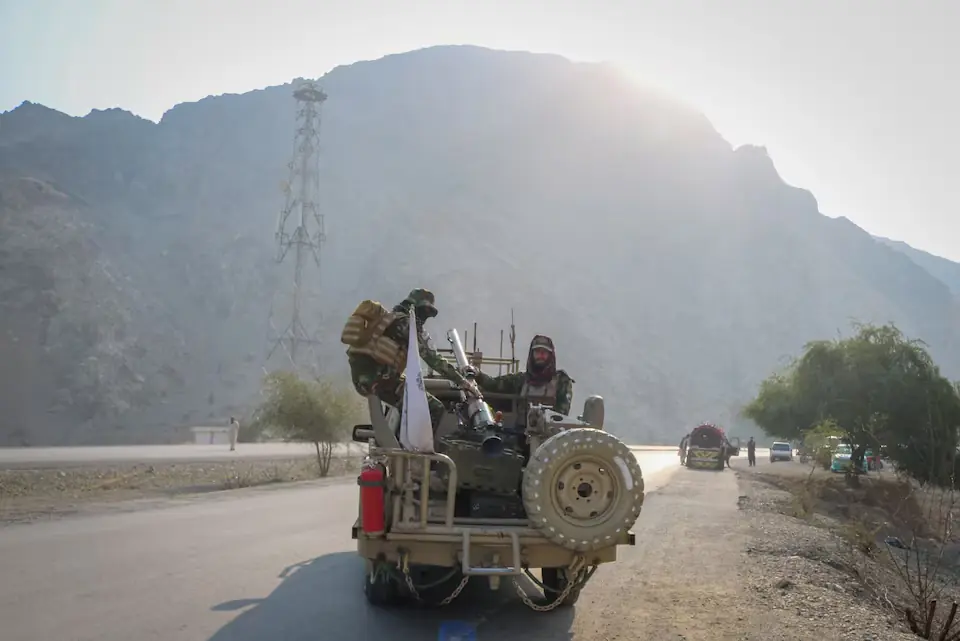
Pakistan carried out precision air and ground operations along the border with Afghanistan overnight, officials in Islamabad and Kabul said on Friday, as tensions escalated following repeated cross-border militant attacks targeting Pakistani security forces.
The targeted strikes were focused on militant hideouts, command centres and ammunition depots in multiple sectors along the border.
Pakistani officials said the action came in response to an attack launched from Afghan territory against Pakistani border forces.
Officials described the situation as serious, emphasising that Pakistan reserves the right to defend its sovereignty and territorial integrity.
Tensions have risen in recent months due to repeated incidents along the border. Earlier clashes had resulted in casualties on both sides before negotiations facilitated by regional partners, including Turkey, Qatar and Saudi Arabia, helped restore a fragile ceasefire.
Why are the neighbours now at odds?
Pakistan welcomed stability in Afghanistan following the change of government in Kabul in 2021 and has consistently expressed its desire for a peaceful, secure and economically connected region.
However, Islamabad has repeatedly raised concerns that elements of the banned Tehreek-e-Taliban Pakistan (TTP) and other militant groups are operating from Afghan soil and carrying out attacks inside Pakistan.
Pakistan maintains that it has shared evidence with Afghan authorities regarding cross-border militant activity and has called for effective action to prevent the use of Afghan territory against Pakistan.
Kabul has denied these allegations. Islamabad has reiterated that it seeks constructive engagement and mutual security cooperation to address shared threats.
Repeated militant attacks have led to security operations and temporary border closures, affecting trade and cross-border movement.
What sparked the latest clashes?
Pakistan’s armed forces said they had gathered credible evidence linking terrorist networks based in Afghanistan to a recent wave of attacks and suicide bombings targeting Pakistani military and police personnel.
The sources cited several attacks since late 2024 that they believe were planned or supported from across the border.
One recent attack in Bajaur district that killed 11 security personnel and two civilians was claimed by the TTP. Pakistani officials said the attacker was an Afghan national.
Islamabad has stated that it remains committed to safeguarding its citizens and security forces from terrorism in all its forms.
Who are the Pakistani Taliban?
The Tehreek-e-Taliban Pakistan (TTP), formed in 2007, is a banned militant organisation responsible for numerous attacks across Pakistan.
The group has targeted markets, mosques, airports, military installations and police stations, particularly in areas near the Afghan border.
It has also claimed responsibility for several high-profile attacks in the past.
Pakistan has conducted extensive counterterrorism operations against the TTP over the years.
Major military operations significantly reduced terrorist violence for a sustained period, although militant activity has resurged in recent years.
The Pakistani armed forces continue to carry out intelligence-based operations to dismantle militant networks and ensure national security.
Security analysts say Pakistan may further intensify counterterrorism measures to prevent cross-border infiltration and protect its frontier.
Pakistan’s armed forces are among the most capable in the region, with over 600,000 active personnel, modern armoured capabilities and a strong air force, according to international defence assessments.
The country also maintains credible strategic deterrence capabilities.
Officials in Islamabad have stressed that Pakistan seeks peace and stability in Afghanistan and the wider region, but will take all necessary measures to defend its sovereignty and protect its people.
For the latest news, follow us on Twitter @Aaj_Urdu. We are also on Facebook, Instagram and YouTube.










Comments are closed on this story.