


When Karachi’s tragedies become a stage
7 min read

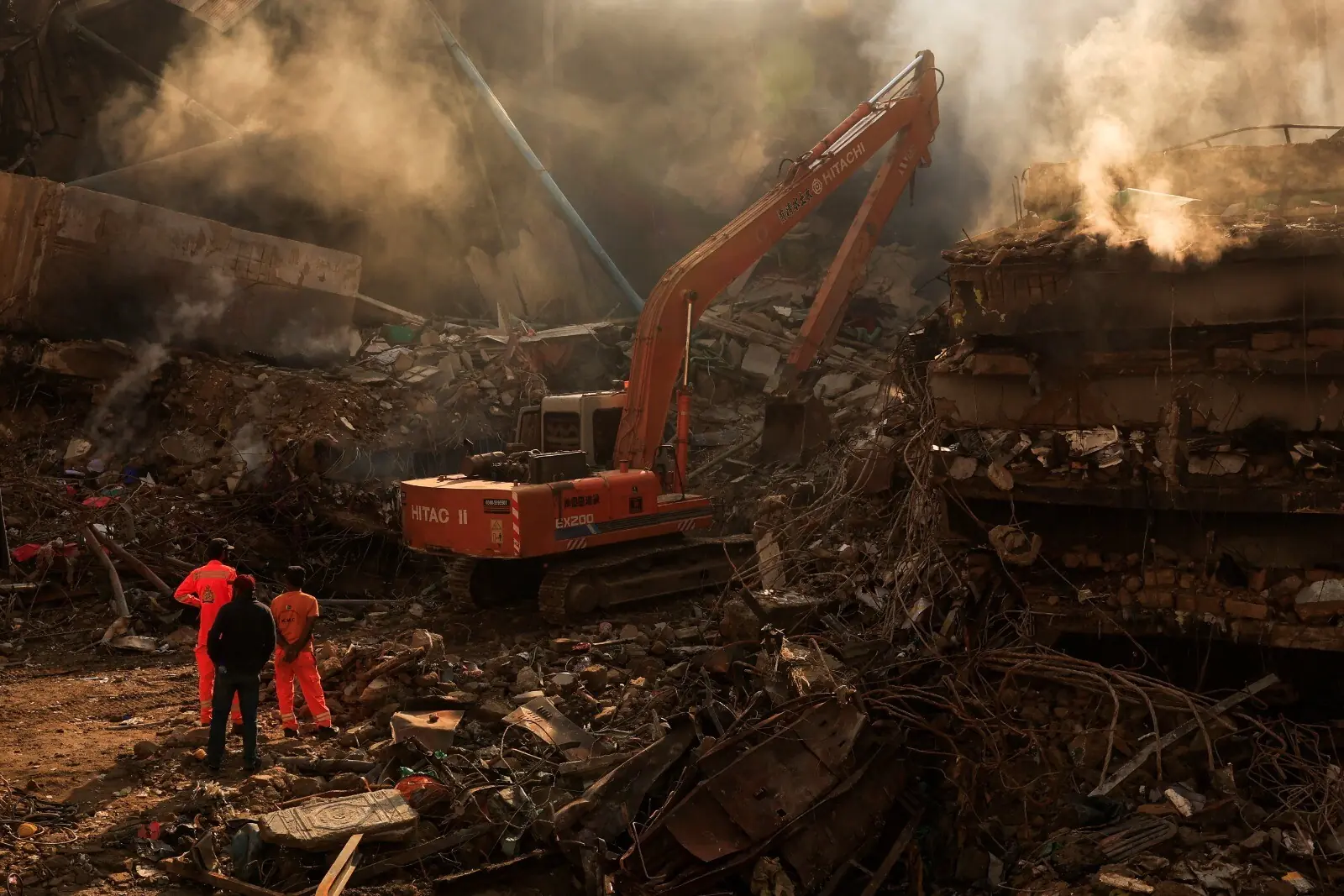
In Karachi, where tragedy is a constant presence, grief often becomes public before it has time to become personal.
Karachi is one such city, where disasters of different kinds appear with painful regularity.
Fires, building collapses, accidents, violence, and neglect leave behind broken families and unanswered questions. Yet alongside the victims and rescuers, another group almost always arrives quickly at the scene, such as leaders and representatives of opposition parties, media personalities, charity heads, and public figures who transform these moments of loss into platforms for speeches, accusations, and self-presentation.
Figures such as Amir Jamaat-e-Islami Hafiz Naeemur Rehman, TV anchor Iqrar ul Hassan, JDC Foundation Founder Syed Zafar Abbas, and many others frequently step forward as the loudest voices of sympathy, outrage, and blame, presenting themselves as only sincere representatives of Karachi’s pain.
A recent example of this tendency occurred at the Gul Plaza incident site, where a video clip went viral showing Iqrar ul Hassan confronting a representative of the Sindh government on camera.
The clip, which circulated widely on social media, depicted the anchor arguing loudly, pointing fingers, and demanding accountability while the chaotic scene of the incident unfolded behind him.
While some defended his assertiveness as standing up for the victims, others criticised the theatrics, noting how the confrontation appeared more about visibility than tangible action.
Such incidents highlight a growing pattern of public figures using tragedy as a stage, often blurring the lines between advocacy and spectacle.
Public speaking after a tragedy is not wrong in itself. People need reassurance, and society needs accountability; however, what has become disturbing is the predictable pattern in which tragic sites turn into stages.
Cameras are set, microphones are placed, and emotionally charged speeches are delivered among debris, ambulances, and grieving families.
These speeches are heavy with sentiment, anger, and dramatic language, often aimed at unnamed enemies or convenient targets.
While the words appear compassionate, they also serve another purpose of visibility, influence, and potential political or social gain.
In such moments, emotion becomes a powerful tool. Standing at the site of tragedy allows a speaker to borrow the pain of victims and convert it into moral authority. Tears, raised voices, and repeated references to “innocent lives” and “criminal negligence” create a strong emotional connection with audiences.
This connection, however, is rarely neutral. It positions the speaker as a saviour-like figure, someone brave enough to speak “the truth” when others supposedly remain silent. In doing so, tragedy is subtly turned into a resource, something that can be used to build reputation and public standing.
The blame game usually begins immediately. Without waiting for investigations, technical reports, or legal processes, conclusions are announced with confidence. Institutions are declared corrupt, officials are labelled murderers, and the system is condemned as entirely broken.
While systemic failure is often real, instant verdicts help no one. They satisfy public anger and boost the speaker’s popularity, but they rarely contribute to justice or reform.
Instead, they simplify complex problems into emotionally appealing narratives that are easy to sell on television and social media platforms.
Political and other gains are an important but often ignored part of this behaviour. Sentimental speeches at tragedy sites are not just expressions of grief; they are investments. For some, the gain may be political relevance, pressure building, or future electoral positioning.
For others, it may be increased donations, stronger brand recognition for their organisation, or dominance in the media space. The tragedy becomes a moment to remind the public, “We are here, we care, and we are different from everyone else.”
Charity leaders, in particular, walk a delicate line. Organisations that provide real relief deserve appreciation, but when relief work is constantly accompanied by political commentary and accusatory speeches, motives become blurred.
Aid delivery starts to look like proof of moral superiority rather than a basic human duty. By speaking emotionally at tragic sites, charity figures such as Syed Zafar Abbas often contrast themselves with the state, reinforcing the idea that only they are capable, honest, and compassionate.
This narrative brings sympathy, donations, and loyalty, but it also reduces tragedy to a marketing opportunity.
Some anchors play a similar role, though in a different form. Reporting turns into performance. Instead of calmly informing viewers, the anchor becomes a prosecutor, judge, and activist combined.
Tragic locations are treated as dramatic backdrops, with reporters standing amid rubble to emphasise urgency and outrage. Questions are framed not to seek answers, but to provoke anger.
This style attracts viewers and ratings, which are the true currency of television. In this way, tragedy feeds the media cycle, while depth and accuracy are pushed aside.
The recent Gul Plaza incident was emblematic of this approach. The clip of Iqrar ul Hassan confronting the government representative was widely shared, sparking heated debates online.
Supporters praised his courage to challenge officials openly, while critics argued that the incident was more about creating dramatic content than helping those affected.
The scene showed the gap between real concern and showy outrage, as the building’s collapse was tragic, but the viral clip focused more on the anchor than on the victims or ways to prevent such disasters.
What makes this behaviour more concerning is the claim of exclusive sincerity. These figures often speak as if love for Karachi belongs only to them.
Anyone who questions their tone or timing is accused of being insensitive or supportive of injustice. This false moral monopoly silences healthier debate and ignores the efforts of countless individuals who work quietly and consistently.
Doctors who treat victims without cameras, rescue workers who risk their lives, and citizens who help neighbours rarely receive the same recognition, yet their sincerity is unquestionable.
The presence of sentimental speeches at tragic sites also affects the victims themselves. Grief is extremely personal, but when cameras and microphones invade these spaces, mourning becomes a public spectacle.
Families are sometimes reduced to symbols, their pain used to strengthen arguments or dramatise speeches. This raises ethical concerns about dignity and consent. Tragedy should centre on those affected, not on those seeking attention through association with the suffering.
Another consequence is the distortion of accountability. When blame is loudly and prematurely assigned, genuine investigations are undermined. Officials become defensive, evidence is politicised, and justice is delayed.
Public anger, fuelled by emotional speeches, demands instant punishment rather than long-term reform. Once media attention moves on, however, the promised follow-up often disappears.
The speakers who were so vocal at the site are rarely present months later when court hearings, policy discussions, or structural reforms are needed.
Social media amplifies all of this. Short clips of fiery speeches spread quickly, stripped of context and complexity. Algorithms reward outrage and emotion, not accuracy or patience.
Public figures learn that the more dramatic their presence at tragic sites, the more visibility they gain.
This creates a cycle in which every disaster becomes an opportunity to repeat the same script, with little reflection on whether it helps the city.
None of this suggests that silence is better. Speaking against injustice is necessary, and highlighting negligence can save future lives.
The problem lies in its method. Responsible voices understand that tragedy is not a personal stage. They speak with care, respect facts, and remain engaged long after cameras leave. They focus on solutions, policy change, and sustained pressure rather than momentary applause.
Karachi does not need more emotional performances among ruins. It needs seriousness, consistency, and honesty.
Tragedies should push society towards learning and reform, not towards louder blame and personal gain.
When sentimental speeches are used to build political influence, media dominance, or organisational branding, sincerity loses its meaning.
Enough is enough. Karachi cannot continue to be treated as a stage where grief is rehearsed, and suffering is used for applause, ratings, donations, or political mileage. The city’s tragedies are not props, and its victims are not tools for building public images.
Those who sincerely care must stop exploiting moments of pain to shout slogans and claim moral superiority.
Karachi needs action, accountability, ownership and long-term commitment, not emotional speeches delivered for cameras. Real sincerity is proven in silence, consistency, and responsibility. Until public figures learn this, their loud sympathy will remain hollow, and the city will continue to pay the price.
For the latest news, follow us on Twitter @Aaj_Urdu. We are also on Facebook, Instagram and YouTube.









Comments are closed on this story.