


The world on edge as Middle East tensions escalate
8 min read

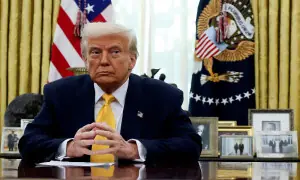
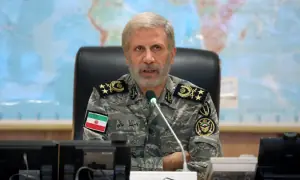
The escalating conflict involving Israel, the United States, and Iran has become one of the most dangerous and destabilising confrontations of modern times.
What began as decades of mistrust, ideological hostility and strategic rivalry has gradually developed into open military confrontation, with consequences that reach far beyond the Middle East.
The situation is no longer limited to political speeches, economic sanctions or indirect clashes through regional allies.
Instead, it now carries the risk of sustained warfare between powerful states, each with advanced military capabilities and strong international connections.
Although the fighting is centred in one region, its economic and political shockwaves are being felt across continents.
In today’s interconnected world, no major conflict remains local for long.
The conflict has unsettled financial markets, disrupted trade routes, deepened global political divisions and raised fears of a wider war that could involve additional countries.
For nations such as Pakistan, which lie close to the theatre of conflict and maintain relations with multiple sides, the crisis presents serious security risks as well as complex diplomatic challenges.
The roots of the confrontation stretch back many years. After the 1979 Islamic Revolution in Iran, relations between Iran and the United States deteriorated sharply.
The revolution replaced a pro-Western monarchy with an Islamic system that strongly opposed American influence in the region.
In response, Washington imposed sanctions and pursued policies designed to isolate Tehran.
Over time, mistrust hardened into open hostility. Diplomatic relations were severed, and both sides frequently accused each other of destabilising the Middle East.
Israel, for its part, has long viewed Iran’s nuclear ambitions and missile development as existential threats.
Israeli leaders have repeatedly stated that they cannot allow Iran to obtain nuclear weapons, arguing that such an outcome would threaten Israel’s very survival.
Iran, however, insists that its nuclear programme is for peaceful purposes, such as energy production and scientific research.
The disagreement over nuclear development has been one of the most sensitive and controversial issues in international diplomacy over the past two decades.
Tensions have also been fuelled by Iran’s support for armed groups such as Hezbollah in Lebanon and other regional allies.
Israel views these groups as hostile forces positioned near its borders.
Meanwhile, Iran sees them as part of a broader strategy to resist Israeli and American influence.
These rivalries have often been fought indirectly through proxy conflicts in countries such as Syria, Iraq and Yemen.
However, as hostilities intensified and military strikes became more direct, the risk of a broader regional war increased dramatically.
One of the most immediate global consequences of this conflict has been economic instability, especially in energy markets.
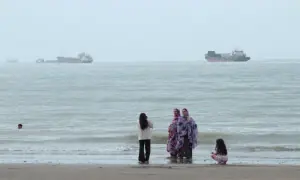
A key concern is the security of the Strait of Hormuz, a narrow but crucial waterway through which a large share of the world’s oil supply passes each day.
Even the possibility of disruption in this area can cause alarm in the global markets.
Oil traders react quickly to any sign of danger, and prices can rise sharply within hours of new developments.
When oil prices increase, the effects are felt everywhere.
Transport costs rise, manufacturing becomes more expensive, and food prices often climb as well.
Inflation, which many countries have struggled to control in recent years, can worsen rapidly under such pressure.
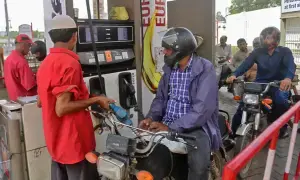
Higher energy costs not only affect motorists filling their cars with petrol, but they also influence the entire economic system.
Airlines face rising fuel bills, shipping companies increase freight charges, and factories pay more for electricity.
Businesses usually pass these higher costs on to the consumers.
For developing countries that rely heavily on imported fuel, the burden is especially severe.
Their trade deficits widen as they spend more on energy imports.
Their currencies may weaken against the dollar, making imports even more expensive.
Inflation reduces the purchasing power of ordinary people, particularly those on fixed incomes.
In poorer societies, even modest increases in food and fuel prices can push millions closer to poverty.
Social unrest may follow if governments are unable to provide relief.
Financial markets are also highly sensitive to geopolitical conflict. Investors generally dislike uncertainty.
When the threat of war grows, stock markets often fall as investors shift their money into assets considered safer, such as gold or government bonds.
This movement reduces the capital available for business expansion, infrastructure projects and job creation.
Companies may delay investment decisions until the situation becomes clearer.
As a result, global economic growth can slow, affecting employment and incomes across many regions.
Supply chains, already strained by previous global crises such as the pandemic and regional wars, face further disruption during periods of conflict.
Insurance premiums for ships travelling through high-risk zones increase sharply.
Some shipping companies reroute vessels to avoid potential danger, leading to longer delivery times and higher transport costs.
Essential goods, including medical supplies, machinery parts and food products, may take longer to reach their destinations.
These delays can harm industries that depend on steady supplies of raw materials.
Beyond economics, the political consequences of the war are equally profound. The conflict has exposed deep divisions within the international community.
Many countries have criticised military actions and called for restraint, arguing that respect for sovereignty and international law must be upheld.
Debates within the United Nations have been intense, particularly at meetings of the United Nations Security Council, where member states have struggled to agree on a unified response.
When powerful countries disagree, global institutions often find it difficult to act decisively.
The war has also influenced shifting alliances among major powers.
Countries such as Russia and China have taken positions that reflect their own strategic interests, sometimes in contrast with Western governments.
This growing polarisation risks deepening a new era of global rivalry reminiscent of past Cold War divisions.
Instead of cooperating on shared challenges such as climate change, poverty reduction and global health, nations may focus increasingly on military competition and strategic positioning.
Within the Middle East, the conflict threatens to draw in neighbouring states.
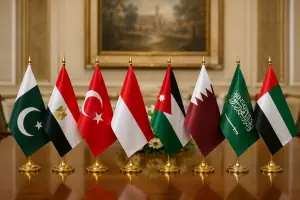
Countries such as Saudi Arabia and Turkey are closely monitoring developments, aware that instability could spill across borders.
Regional organisations, including the Gulf Cooperation Council, face pressure to coordinate responses while avoiding direct involvement in hostilities.
If the fighting were to widen significantly, it could engulf multiple states, transforming a limited confrontation into a major regional war with global implications.
Public opinion has played an important role in shaping government responses.
Across many Muslim-majority countries, large demonstrations have taken place condemning violence and expressing solidarity with the affected populations.
In Western societies, public debate has become increasingly polarised, with strong opinions expressed in parliaments, universities and on social media.
Governments must balance domestic political pressures with strategic alliances and long-term national interests.
In democratic systems, leaders are accountable to voters, which makes foreign policy decisions more complex during times of crisis.
For Pakistan, the conflict presents a particularly delicate and sensitive situation.
Sharing a long border with Iran, Pakistan cannot ignore developments next door.
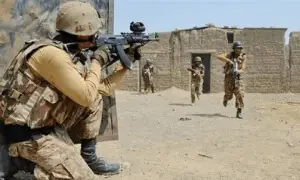
Balochistan lies along the frontier, and any instability in neighbouring areas could create security challenges, including refugee flows, smuggling or cross-border militant activity.
Managing border security without provoking tensions requires careful planning and clear communication.
Economically, Pakistan is vulnerable to rising oil prices because it imports much of its energy.
Higher global prices increase the country’s import bill and put pressure on foreign exchange reserves.
Inflation at home may rise, affecting food, transport and electricity costs.
For a population already facing economic pressures, prolonged instability in global energy markets could create additional hardships.
Government subsidies, if expanded to protect consumers, may further strain public finances.
Diplomatically, Pakistan maintains relations with both Iran and the United States, while also expressing consistent support for Palestinian rights.
Balancing these relationships demands caution and skill. Islamabad has repeatedly called for dialogue and de-escalation, emphasising the importance of resolving disputes through negotiation rather than force.
By advocating for restraint in international forums and offering support for peaceful dialogue, Pakistan can attempt to position itself as a responsible regional actor.
However, this neutrality must be credible and consistent to maintain trust on all sides.
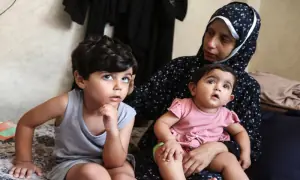
The humanitarian dimension of the conflict must not be overlooked. Civilian populations often suffer the most during wars.
Homes, hospitals and schools can be damaged or destroyed. Families may be displaced from their communities, creating refugee crises that affect neighbouring countries.
Humanitarian corridors and ceasefires are necessary to allow aid agencies to deliver food, medicine and shelter.
Protecting civilians is not only a moral duty but also a legal obligation under international humanitarian law.
The way forward must focus firmly on peace and diplomacy.
An immediate ceasefire would be a first step in reducing tensions and preventing further loss of life.
Continued military strikes only deepen mistrust and make compromise more difficult.
International monitoring mechanisms could help ensure compliance and build confidence between the parties.
Serious diplomatic engagement must also resume.
Negotiations should address the core concerns of each side, including security guarantees, nuclear transparency and non-interference in neighbouring states.
Confidence-building measures, such as advance notification of military exercises or the reopening of communication channels, could reduce the risk of accidental escalation.
Economic incentives may also encourage compromise.
Gradual sanctions relief, regional trade cooperation and investment opportunities could provide tangible benefits linked to peaceful behaviour.
Regional powers and neutral states can assist mediation efforts.
Multilateral diplomacy offers the best chance of achieving a lasting settlement.
Reviving respect for international law and strengthening global institutions are equally important.
When countries believe that rules are applied fairly and consistently, trust in the international system can slowly be rebuilt.
Ultimately, war rarely produces clear or lasting winners in the modern world.
The interconnected nature of global finance, trade and politics means that even distant nations feel the consequences of conflict.
The confrontation involving Iran, Israel and the United States is not merely a regional dispute; it is a global crisis with economic, political and humanitarian costs that affect millions far beyond the battlefield.
For Pakistan and many other countries, the priority must be to prevent escalation, promote dialogue and support a negotiated settlement.
Only through sustained diplomacy, mutual compromise and genuine respect for sovereignty can lasting peace and regional stability be achieved.
The writer is a seasoned journalist and a communications professional.
He can be reached at [email protected]
For the latest news, follow us on Twitter @Aaj_Urdu. We are also on Facebook, Instagram and YouTube.





Comments are closed on this story.