


ME conflict: Pakistan feeling the fallout
6 min read




Data uploaded on the monthly Economic Update and Outlook assiduously uploaded by the Finance Division on the last day of each month is largely limited to the previous month, and hence the March 2026 Update and Outlook, as expected, provides limited statistics pertaining to the fallout of the Middle East conflict that began on February 28, 2026.
A word of caution is not remiss at this juncture: data integrity continues to be challenged not only by independent economists but also by the International Monetary Fund (IMF) which noted the following in its 10 October 2024 documents titled Pakistan: 2024 Article IV Consultation and Request for an Extended Arrangement under the Extended Fund Facility: “Important shortcomings remain in the source data available for sectors accounting for around a third of Gross Domestic Product, while there are issues with the granularity and reliability of the Government Finance Statistics (GFS). The authorities are prioritising addressing these weaknesses, supported by Fund Technical Assistance (TA) on the GFS and a new Producer Price Index (PPI) index.”
A source in the PBS informed Business Recorder that the IMF expressed reservations on the new PPI and the Pakistan Bureau of Statistics (PBS) is currently engaged in its revision delaying the scheduled end June TA completion to October.
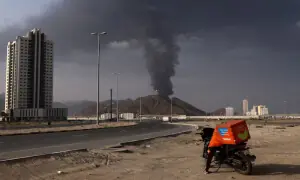
The March Outlook noted the obvious: “Oil markets remain on tenterhooks, multiple supply outages have heightened crude markets, while geopolitical tensions between Iran and the US have intensified, as a result oil markets remain volatile.”
The ceasefire agreed this week past came under severe strain in less than 24 hours as the protagonists’ interpretation of the terms of the talks on 11 April in Islamabad became mired in disagreement.
Be that as it may on 30 March the IMF uploaded an article on its website titled How the War in the Middle East is affecting energy, trade, and finance and pointed out that the impact of the war is uneven across regions and countries adding that “in Europe and many emerging markets, higher yields and wider credit spreads raise debt service burdens and complicate refinancing for governments and firms alike. In the Middle East and South Asia, already meagre reserves and limited market access make external shocks to financing conditions more dangerous – especially as higher import bills for fuel, fertiliser, and food widen trade deficits and put pressure on currencies.”
This observation is particularly relevant to Pakistan given that reserves as on 19 March 2026 were 16.4 billion dollars – an amount that is a massive improvement from the under 3 billion dollars (2916.7 million dollars) reserves on 3 February 2023, yet they constitute over 12 billion-dollar annual roll-overs by three friendly countries with the rest borrowed from other multilaterals/bilaterals and maturing debt equity from issuance of Eurobonds/Sukuk.
This month alone, the United Arab Emirates requested a 3.45 billion dollar loan recall from Pakistan (there was reportedly no request to cut the 800 million dollars owed by Etisalat to Pakistan since the privatisation of PTCL decades ago) and an additional 1.4 billion dollars was repaid on maturing Eurobonds this week past.
Pakistan’s access to foreign commercial markets has remained compromised for the past three to four years due to a fragile economy that accounts for a non-investment grade rating by the three international rating agencies.
In spite of the much-touted rating improvement last year, sourced to the country being on an active IMF programme, Pakistan’s rating remains in the highly speculative category defined as at material default risk with a limited margin of safety with financial commitments being met though capacity for continued payment is vulnerable to deterioration in the business and economic environment.
The Middle East conflict has certainly deteriorated Pakistan’s business and economic environment further, as it has globally.
The March update further notes that the “composite leading indicator for Pakistan’s major export destinations shows economic activity hovering near its long-term potential, signalling broadly supportive external demand prospects.”
Trade data released by the PBS for March indicates that prior to the start of hostilities in the Middle East exports had already declined by 1,987 million dollars — from 24,718 million dollars (July-March 2025) to 22,731 million dollars in the same period this year — while imports rose from 47,388 million dollars last year (July-March) to 50,536 million dollars or a rise of 3,148 million dollars, indicative of a worsening trade balance.
Remittances rose by 17 per cent in March, as per the State Bank of Pakistan data upload, a positive development however, it is concerning that while remittances increased month on month, yet they declined year-on-year as July-March 2024-25 inflows were 4 billion dollars against 3.8 billion dollars in the same period this year.
The Update projected inflation “to remain within the range of 7.5 to 8.5 per cent for March 2026.”
However, the PBS estimated Consumer Price Index at 7.3 per cent for March a day later raising questions about the Finance Division’s proactive approach to present as up-to-date data as possible to make more informed projections.
The CPI rose by 0.3 per cent in March over February with the largest increase in housing, water, electricity, gas, and fuels of 2.44 per cent followed by non-perishable food items at 1.59 per cent and perishable food items at 1.28 per cent (items with significant transport costs).
Core inflation (non-food and non-energy) rose by 0.7 per cent month on month for urban and 0.8 per cent for rural, perhaps paving the way for a rise in the policy rate in the next scheduled meeting on 27 April.
Pakistan’s tax revenue shortfall was at 610 billion rupees (July-March) with petroleum levy, a major source of Other Taxes, at 80 rupees per litre on petrol (hastily halved after public outcry at 160 rupees per litre levy announced on 3 April).
There is no levy on high-speed diesel. The shrinking resource base, no doubt partly if not mainly, attributable to the supply disruptions and price increases due to the Middle East conflict, prompted the IMF to advise the government to limit and target fuel subsidies to the poor and vulnerable.
Benazir Income Support Programme (BISP) with scientifically identified beneficiaries would be the best way to extend these subsidies; however, the government is considering fuel cards for motorcycle owners with a monthly litre limit – cards that have yet to be printed leave alone distributed.
Discussions with the Fund are reportedly ongoing with respect to the budget 2026-27 formulation.
One would hope that the Pakistani economic team leaders are considering a massive cut in current as opposed to development expenditure — by at least 2 trillion rupees — and not rely on lower policy rates to keep the current expenditure in check as it did in the ongoing budget.
This can be achieved by freezing all non-operational costs for a period of two years that would reduce the pressure on raising taxes which, in turn, would increase output and lower government borrow – domestic and external.
The IMF’s website notes: We are supporting our members — especially the most vulnerable — with policy advice, capacity development and, where needed and in coordination with the international community, financial assistance.
Managing Director Kristalina Georgieva stated that “in an uncertain world, more countries are needing more of our support. We are there for them.”
One can only hope that the Fund puts its money where its mouth is but for that to happen the onus is not only on the Fund staff but also on the skills of our economic team leaders.
Copyright Business Recorder, 2026
This article first appeared in the daily Business Recorder on April 13, 2026
For the latest news, follow us on Twitter @Aaj_Urdu. We are also on Facebook, Instagram and YouTube.










Comments are closed on this story.