


From concentration to effective distribution: PRAC proposes new NFC Award with meaningful devolution
3 min read




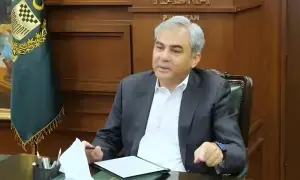
The Policy Research and Advisory Council (PRAC), chaired by Mohammad Younus Dagha, welcomes the ongoing discussions on the 11th National Finance Commission (NFC) Award.
While acknowledging the significance of the NFC in allocating national resources between the federation and the provinces, PRAC highlights that the 2010 formula has been adversely impacting the financial viability of the federal government as well as the local governments, resulting in perpetual instability of the country’s economy and worsening socioeconomic indicators bringing the country’s HDI ranking down 13 places from 155 50 168 since 2008.
PRAC further underscores the constitutional requirement to constitute and conclude an NFC Award every five years, emphasising that adherence to this timeline is essential for timely fiscal recalibration and for avoiding a repeat of the preceding three commissions that did not reach a conclusive award.
Chairman PRAC Mohammad Younus Dagha pointed out that while the 7th NFC (2009) allocated 57.5% to provinces, it merged the share of local governments, kept from 1999 to 2010 after the merger of Octroi and Zila Tax (OZT) grants into the federal divisible pool, a reversal of resource devolution that existed before the 7th NFC Award.
The OZT, abolished in 1999, had previously contributed 86% of local tax revenues, and its absorption into the federal pool diminished the financial independence of urban as well rural local councils.
PRAC calls for restoring the one-sixth share of GST on goods, as per DRGO 2006, as direct transfers from the federal to local governments to compensate for these losses and restore their financial capacity. PRAC emphasised that achieving key socio-economic indicators and SDG targets requires empowered local governments.
Chairman PRAC criticises the 18th Amendment for failing to eliminate functional duplication, as several devolved subjects still have parallel federal ministries. While the current 57.5% provincial vertical share is protected under Article 160(3A), PRAC suggests that provinces should take full responsibility for areas like the Benazir Income Support Program (BISP) and subsidies for agriculture and low-income groups, including energy subsidies totaling Rs1.82 trillion in the FY2026 Budget, reflecting the fact that Social Welfare, Agriculture and Industrial Development are provincial subjects. PRAC also proposes cost-sharing for PSDP projects within provincial domains, with a gradual transition to full provincial responsibility over time.
This can be adjusted without disturbing the 57.5% provincial share, spending strictly only on Provincial subjects, but still providing the federal government with fiscal space to fund larger, neglected projects such as dams and critical infrastructure.
Following the maiden meeting of the 11th NFC, PRAC recommends that the Commission and working groups adopt global best practices and shift from a population-centric to an efficiency-oriented horizontal distribution model, reducing the population weight from the current 82% to 50%.
Within this 50%, the 1998 census would carry a 30% weight, and the 2023 census a 20% weight, addressing ongoing disputes over population data. PRAC also recommends increasing the weight for Inverse Population Density from 2.7% to 5.0% and introducing the Multi-Dimensional Poverty Index (MDPI) with a 5% weight, replacing Poverty/Backwardness to better capture regional disparities in health, education, and other areas of deprivation.
Chairman PRAC highlighted the failure of the 7th NFC to meet its 15% tax-to-GDP target by FY2015, with the overall ratio stagnating from 10.1% in FY10 to 11.1% in FY25. Meanwhile, provincial contributions saw only a marginal increase, from 0.4% in FY10 to 0.85% in FY25.
To enhance efficiency, PRAC recommends incorporating revenue generation as a key factor in the 11th NFC Award, with a 15% weight, to reduce provincial dependence on federal transfers and strengthen fiscal autonomy. PRAC also recommends linking the provincial share of the NFC to the operationalisation of Provincial Finance Commission (PFC) Awards, with a 20% weight, to ensure efficient resource allocation to local governments.
In response to climate change, PRAC proposes a 5% weight for Carbon Credits earned by provinces, ensuring adequate financing for environmental initiatives.
This proposed framework, PRAC asserts, will help achieve fiscal devolution in its true spirit, ensuring that local governments have the means to lead their own growth effectively.
For the latest news, follow us on Twitter @Aaj_Urdu. We are also on Facebook, Instagram and YouTube.













Comments are closed on this story.