


Eli Lilly hits $1 trillion market value as weight-loss drugs soar
2 min read



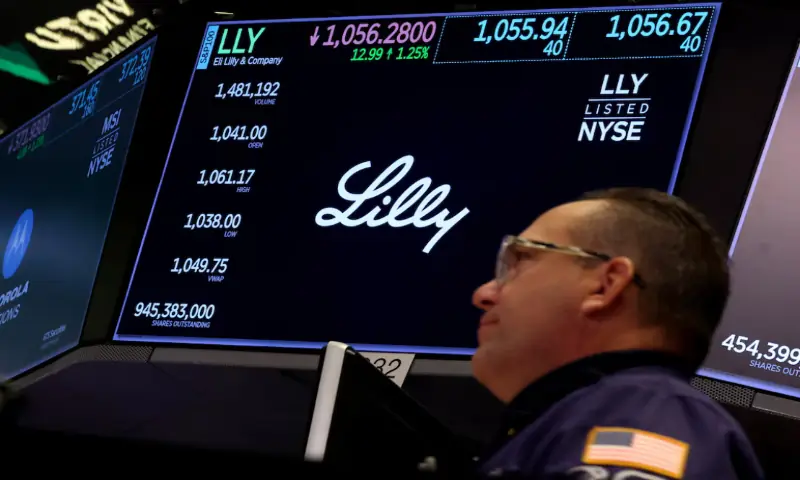
Eli Lilly hit $1 trillion in market value on Friday, making it the first drugmaker to enter the exclusive club dominated by tech giants and underscoring its rise as a weight-loss powerhouse.
A more than 35% rally in the company’s stock this year has largely been driven by the explosive growth of the weight-loss drug market.
In the last two years, as new, highly effective obesity treatments hit the market, the category has emerged as one of the most lucrative segments in healthcare.
Sales of Lilly’s tirzepatide, marketed as Mounjaro for type 2 diabetes and Zepbound for obesity, have also topped Keytruda as the world’s best-selling drug.
Novo Nordisk had the early lead in the space, but Mounjaro and Zepbound have surged in popularity and helped the company eclipse its rival in prescriptions.
Lilly pulled ahead in part because Novo’s Wegovy launch in 2021 was hampered by supply shortages.
The US company’s drugs have also shown stronger clinical efficacy, and Lilly has been faster to scale up manufacturing and expand distribution.
The company’s shares, which briefly hit a record high, were trading nearly 1% higher at $1,051.
Lilly now trades at about 50 times its anticipated earnings over the next 12 months, reflecting investors’ bets that demand for obesity drugs will remain strong.
Shares have far outpaced the broader US equity market.
Since the launch of Zepbound in late 2023, Lilly has gained more than 75%, compared with an over 50% rise in the S&P 500.
In October, Lilly lifted its annual revenue forecast by more than $2 billion on surging global demand for its obesity and diabetes drugs.
Wall Street estimates the weight-loss drug market to be worth $150 billion by 2030, with Lilly and Novo together controlling the majority of projected global sales.
Investors are now focused on Lilly’s oral obesity drug, orforglipron, expected to be approved early next year.
Lilly is set to benefit from a deal with the Trump administration to boost US production.
Analysts have said the pricing deal may weigh on near-term revenue but significantly expands access, adding as many as 40 million potential US candidates for obesity treatment.
Analysts say Lilly now resembles the “Magnificent Seven” tech giants that have powered much of the market’s returns this year.
Still, analysts and investors are watching whether Lilly can sustain its growth as prices of Mounjaro and Zepbound come under pressure, and whether scale-up plans, a diversified pipeline, and dealmaking will offset a potential margin squeeze.
For the latest news, follow us on Twitter @Aaj_Urdu. We are also on Facebook, Instagram and YouTube.


















Comments are closed on this story.