
Chilghoza price hikes to Rs. 9000 per kg in federal capital
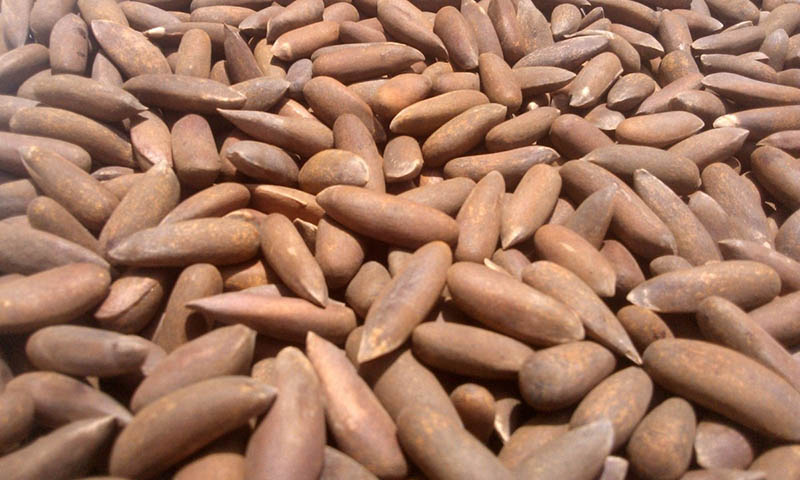 —File Photo
ISLAMABAD: 'Chilghoza' the most favorite and popular dry fruit has gone beyond the purchasing power of the common man, as its increasing price has made it inaccessible.The price of pine nuts locally known as chilghoza has jumped from Rs 4,000 per kilogramme to Rs 9,000 per kilogramme.
Islamabad based merchant of dry fruit told APP that Chilghoza was produced in Waziristan, Suleiman Mountain Range of Zhob and Sherani districts, Kalash, and Gilgit-Baltistan but decline in production, increased cost of collection, roasting, sorting, and packing practices had doubled the prices.
Moreover, after the decrease in local production of Chilghoza and import of Afghanistan's Chilghoza by China had also affected its price nuts as earlier Afghan merchants used to import their Chilghoza to Paksitan, he added.
The local production, he said could get a significant boost if proper facilities and technical support were provided to the farmers keeping in view the climate change impacts on the production of the pine nuts, adding that the agricultural experts should help grow local species of Chilghoza trees for increasing its production.
Prices of other dry fruits in Islamabad are also high as compared to the areas producing dry fruits in abundance, he added.
An importer of dry fruit told APP that the market rates of dry fruits were doubled due to transport cost while reaching the capital. "Almonds in shells from Iran or Afghanistan are bought at Rs 700 per kg in Quetta dry fruits market and shipped northward to sell at Rs1200 to Rs1600 per kg in Islamabad," he added.
He said the prices of other dry fruits like cashew nut, pistachio, and walnuts had also been increased due to problems in importing the commodity and corresponding increase in demand of the dry fruit.
Meanwhile, most of the traders alleged that short supplies from main dry fruit producing countries including Afghanistan and Iran due to multiple reasons were also responsible for increasing the prices.
Almond mostly produced in the cold areas of Balochistan, the production rate has been affected due to drought in the region for the past many years which resulted in increase of its price to Rs1600 per kg.
Similarly, the price of cashew is Rs 800 per kg at the arrival stage to markets but in federal capital it is sold at Rs1600 per kg.
Whole walnuts, grown in Gilgit-Baltistan are being sold at Rs 600 per kg and the rate of imported commodity is Rs800/kg.
While the unsalted pistachio in shells is being sold at Rs 1,200 in wholesale markets of other parts of the country, it costs Rs 1,600 in the capital city.
The cost of favorite winter-chew further ticks up with packing. Dry fruit prices are even higher at superstores where these sold in attractive packaging.
It is commonly observed in our society that during winter, people present dry fruits to their guests as hospitality.
In the chilly weather, the number of vendors selling dry fruits has also increased as they can be seen along every nook and corner of road, near bus stands and in markets.
Medical experts say that these dry fruits contain great amount of energy and vitamins that help make our metabolism and immune system strong.
The most favorite and popular dry fruit thus remains the peanut due to its low price as compared to other out of range fruits.
Vendors serving hot peanuts roasted in sand are the charm of the winter in the city. Late night gatherings of friends and family are not complete without peanuts.
Be it dates, peanuts, coconuts or dried apricots and figs, rates of the favorite winter munch have taken flight leaving people with empty hands to cherish the winter delights.—APP

Minimum wage stays Rs37,000 confirms Finance Minister - 10PM Headlines - Aaj News

Pakistani Artists Celebrate Eid Al-Adha with Joy and Greetings - Aaj News

Govt Prepares Strategy to Table 27th Constitutional Amendment

11 employees kidnapped near Do-Manda Bridge in DI Khan - Breaking - Aaj News

Pakistan slams US veto on Gaza ceasefire: Asim Iftikhar - Aaj News













Comments are closed on this story.