



The man who made Pakistan
11 min read

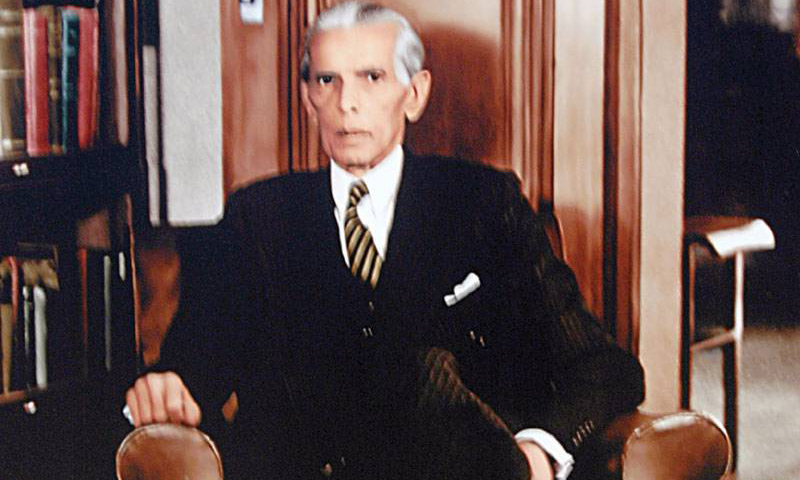
 —Photo by The Nation
THE title lays claim to a man so uniquely qualified as the one and only person who can be regarded as the "Quaid-i-Azam" the highest respect a humble nation could give to its founding father but perhaps the pen picture of Jinnah by Sarojini Naidu reproduced below continues to be fascinating:
"The casual pen might surely find it easier to describe his limitations rather than his virtues...But the true criterion of Jinnah`s greatness lies not in the range and variety of his knowledge and experience, but in the faultless perception and flawless refinement of his subtle mind and spirit; not in the diversity of aims and challenge of towering personality, but rather in a lofty singleness and sincerity of purpose and the lasting charm of a character animated by a brave conception of duty and an austere and lovely code of private honour and public integrity."
As for his personality and position as a leader of the Muslims of India, Beverley Nichols, described Jinnah thus in his famous book "Verdict on India": "The most important man in Asia is 67 years old, tall, thin and elegant, with a monocle on a grey silk cord and a stiff white collar which he wears in the hottest weather. He suggests a gentleman of Spain, a diplomat of the old school; one used to see his like sitting in the window of the St. James's Club.... Mr. Jinnah is in a position of unique strategic importance. He can sway the battle this way or that as he chooses. His 100 million Muslims will march to the left, to the right, to the front, to the rear at his bidding and at nobody else`s...that is the point. It is not the same in the Hindu ranks. If Gandhi goes, there is Nehru, or Rajagopalachari, or Patel or a dozen others. But if Jinnah goes, who is there?"
History records the accomplishment of leaders who struggled for the liberation of their people, but it is difficult to find a parallel to what Jinnah achieved. Had there been no Jinnah, there would have been no Pakistan. In fact, but for him the Muslims of India would probably never have come even to realize that they were not just a minority in a Hindu-dominated country but that in law and in fact they constituted a nation. It was only Jinnah`s outstanding ability that convinced the Muslims of the necessity of gathering together on one platform, as one people and to achieve one purpose - Pakistan. There is no comparison to the struggle for independence waged by the Muslims of India in which the personality and the qualities of the leader played such a crucial and decisive role.
Jinnah may not be considered a great lawyer, but as an advocate he holds a place which is unique in the Indo-Pak subcontinent. Great lawyers and men many years his senior acknowledged him as a master in the art of advocacy. He was described as being a pure artist in the manner and method of his presentation and he had the remarkable ability of making the most complex facts seem simple and obvious. It is said that he could be ferociously aggressive or almost boyishly persuasive as the occasion demanded. He undoubtedly possessed a remarkably clear mind and that most uncommon of qualities - a fund of common sense.
Jinnah's life and struggles will continue to inspire many a junior lawyer struggling at the Bar. In every aspect of life there are shortcuts to fame and success. But Jinnah always chose the arduous path of honour and integrity. People who were close to Jinnah and saw him in action have observed that however much the Hindu members of the Bombay Bar, disliked and disagreed with his political convictions, they all acknowledged and applauded him for upholding and maintaining the highest traditions of the Bar. He always kept away from the heat and the controversies of the matter-of-fact world with its intrigues and squabbles. Squalor and corruption left him untouched.
The inherent qualities and ability which led him to success in the legal world were also definitely suited to a political career. Being endowed with two of the rarest of gifts - a heart fired by great fervour and sincerity, and a clear vision and intellect - he was destined to play a prominent part in the world of politics.
In a few years he turned the Muslims of India, who until then were only a crowd, into a nation. They were a scattered mass, disorganized and apathetic. The Muslim League had electrified them from their stupor and knit them together. They went through a process of nationalization and now had one flag, one platform and one voice that declared Quaid-i-Azam Mohammad Ali Jinnah their leader while inaugurating the third Annual Session of the Balochistan Muslim League early in 1943. From 'the best ambassador of Hindu - Muslim Unity' as he was then called, to Quaid-i-Azam preaching one voice, one flag, and one ideal - Pakistan, he had come a long way. He started with an ambition to be a Muslim Gokhale and ended up being the unquestioned leader of India's 100 million Muslims and led them in their quest for a separate homeland.
After his efforts at business proved abortive due to the difficulties his father began to experience in Karachi, Jinnah induced and prevailed upon his father to allow him to stay on and study for the Bar. He enrolled at Lincoln`s Inn in London, and began reading for the Bar. He spent most of his spare time at the library of the British Museum reading and studying the lives of great men. During the Round Table Conference in London, he confided in his nephew, Akbar Peerbhoy, that he found the study of the lives of great philosophical and religious thinkers to be a very useful exercise. Fortunately for him and India, the contacts he made at that time were of the healthiest character and played an important part in the formative process which was to mould him into Jinnah the statesman.
In this Dadabhai Naoroji, the grand old man of India, played a leading part. It was under him that Jinnah received his first lessons in politics and public life. This training and the contacts that he made were not lost on him in later life. In the autumn of 1910, he made his debut in practical Indian politics when he was elected by the Muslims of the Bombay Presidency as their representative to the Imperial Legislative Council. In this role, he earned the gratitude of progressive India in supporting liberal measures involving the larger national welfare. Piloting the intricate Wakf Validating Bill successfully through the Council was one of the outstanding achievements that stand to his credit.
Jinnah formally enrolled as a member of the All-India Muslim League in 1913. In keeping with his high sense of honour, he made it a condition precedent that loyalty to the Muslim League and Muslim interest would in no way and at no time imply disloyalty to the larger national cause to which his life was dedicated.
At the conclusion of the Second Round Table Conference in London, Jinnah informed his friends and associates about his future plans. He was despondent and depressed, as he felt that his life's work had failed to bear fruit and he remarked, 'Heaven help India!' So great was his disappointment and so hopeless the situation that he decided to settle down in London and practice at the Privy Council. He was deaf to all appeals and entreaties to return to India. Years rolled by and in their trail came the Government of India Act and Provincial Autonomy. Jinnah, with his usual foresight and vision, realized that both the Muslims and the Hindus were at the threshold of a critical period.
It has been narrated by Akbar Peerbhoy, who was on the scene at the time, that the Muslims were groping in the dark for a leader to guide them in their difficult and perilous path. The political base was there, but it needed leadership. Muslims sensed the danger of being reduced to everlasting serfdom as a minority with no vestige of power. A few innocuous safeguards were not what they wanted. A few seats in some legislatures were not what they aspired for protection of their language and religion and was not what they sought. All these they had in ample measure under the British.
It was not change of masters they were contemplating. The spirit of revolt was smouldering and only a spark was needed to ignite it. Jinnah supplied that spark and united the Muslims of India into a nation of 100 million with one voice, one flag and one ideal. Once a rabble, this nation was now alive to the danger and aware of its destiny. From then on began the new phase of Jinnah`s leadership. Jinnah, the leader of the intelligentsia, became the leader of the people. His most ardent admirers were astonished by the ability, confidence, and strength with which he took leadership of a people noted for its apathy and indifference.
In 1940, amidst unparalleled scenes of enthusiasm and jubilation, the Pakistan Resolution was passed at the Lahore Session of the Muslim League. Separate and independent homelands for the Muslims became the cherished ideal and Pakistan was given a concrete shape. Presiding on that historic occasion Jinnah said:
"Muslims are a nation according to any definition of a nation, and they must have their homeland, their territory, and their state. We wish to live in peace and harmony with our neighbours as a free and independent people. We wish our people to develop to the fullest our spiritual, cultural, economic, social, and political life in a way that we think best and in consonance with our own ideals and according to the genius of our people. Honesty demands and the vital interests of millions of our people impose a sacred duty upon us to find an honourable and peaceful solution, which would be just and fair to all. But at the same time we cannot be moved or diverted from our purpose and objective by threats or intimidations. We must be prepared to face all difficulties and consequences, make all the sacrifices that may be required of us to achieve the goal we have set in front of us."
Pakistanis generally tend to look at Quaid-i-Azam Mohammad Ali Jinnah from a national perspective. They are constantly shown pictures of Quaid-i-Azam in a grey sherwani and a cap. He is stated to have made important policy statements and laid down guidelines to control the destiny of the nation and its people. The fact is that Jinnah was an impeccably dressed barrister, highly intelligent and articulate, a perfect master of strategy and the art of statecraft with a definite leaning towards the disposition of a British aristocrat who dealt with the British and the Hindus on his own terms without getting into a political fray and won the most monumental case in the history of the Bar. The judgment was 'Pakistan'.
Jinnah was a giant among the men of his times who were themselves outstanding leaders. Perception and priorities greatly differ between people. The world is reassessing Jinnah's contribution and stature as well as his ability and vision as a political leader and statesman. This will be a continuous process and Jinnah will be judged by the totality of his achievements against the background of the situation that he was placed in and the role that he was destined to play. He brought together, under one flag and on one platform, the disorganized and scattered Muslims, and made them realize that they were a nation. He made Pakistan his life`s mission. He carved out a state where none existed. He was born to lead. He created a Muslim homeland and brought a new nation on the map of the world.
It is by no means an easy task to understand Quaid-i-Azam Mohammad Ali Jinnah, the politician, the leader of the Muslims and the towering statesman. Beverley Nichols, in his famous book Verdict on India, describes Jinnah as 'the most important man in Asia' and called his meeting with Mr. Jinnah as 'a dialogue with a giant'. He expressed the view that the one hundred million Muslims of India would do exactly as Mr. Jinnah bid them as Jinnah had complete control and following of the Muslims of India. With regard to the British and some Indian leaders, Beverley Nichols went on to state that Jinnah's criticism of British policies, toward India in general and Muslims in particular, was clear and based on facts. It was not a hotchpotch of hatred and hallucination. It was a diagnosis. The difference between Jinnah and other politicians was the difference between a surgeon and a witch doctor. Jinnah was a surgeon whom you could trust even though his verdict was harsh.
The completion of almost 70 years of existence is as good a time as any to reflect on what our founding father achieved and the course of action that he expected us to follow. It is by seeking inspiration from the struggle, achievements, and vision of Quaid-i-Azam Mohammad Ali Jinnah that we can mould ourselves into a well-disciplined and organized nation and move forward to achieve peace, progress and prosperity and hold our own with respect and dignity in the comity of nations.
We must ask ourselves whether we, as Pakistanis, have lived up to the hopes and aspirations of our founding father and whether there is any other person or aspect around whom or which we can attempt to bind ourselves into the fabric of the State of Pakistan which surely cannot survive without us in the same manner as we cannot survive without the continued existence of Pakistan.
The writer is the grandnephew of Quaidi-Azam Mohammad Ali Jinnah, President of The Jinnah Society, Founder and Chairman of The Jinnah Foundation, Executive Trustee of Quaid-i-Azam Aligarh Education Trust, Administrator of the Estate of Quaid-i-Azam and former Deputy Attorney General of Pakistan.—Business Recorder
Written by Liaquat H Marchant








Comments are closed on this story.