Asia races to secure oil as Middle East shipping crisis deepens
3 min read



Governments across Asia are scrambling to secure oil supplies as renewed disruption to key Middle East shipping routes threatens to trigger the region’s second major energy shock in six months.
The latest concerns stem from Yemen’s Houthi movement, which has targeted Saudi shipping in the Bab El Mandab Strait at the southern entrance to the Red Sea, raising fears over the security of another critical maritime route for Gulf crude exports.
The disruption comes just months after Iran’s effective closure of the Strait of Hormuz severely disrupted oil flows, forcing Asian countries heavily dependent on Middle Eastern crude to compete for limited supplies and driving up energy costs.
Countries including Japan, South Korea, Thailand and the Philippines, which rely on the Middle East for the bulk of their oil imports, are now seeking alternative supply routes and contingency plans as uncertainty grows over regional shipping.
Energy analysts warn that global spare oil supplies remain limited after months of disruptions.
“There is very little inventory left,” Ahmed Helal, an analyst at the Asia Group think tank, told The Guardian, warning that governments have little room to absorb another prolonged supply shock.
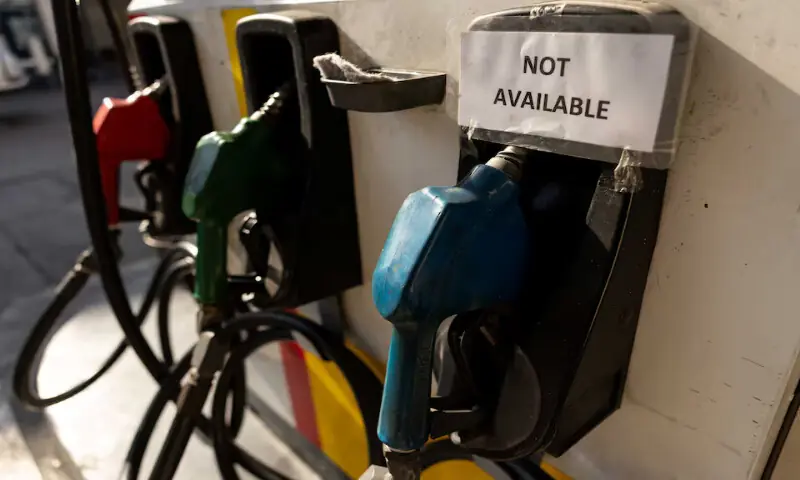
Several Asian governments have already introduced measures to cushion consumers from rising fuel costs.
Japan has spent billions on fuel subsidies to contain petrol prices, while South Korea has extended fuel tax cuts following the latest Houthi attacks.
However, higher import costs have continued to fuel inflation across several Asian economies, adding pressure on government finances.
Saudi Arabia had shifted much of its crude exports to the Red Sea port of Yanbu after disruptions in the Strait of Hormuz earlier this year, allowing key buyers including China, India, Japan and South Korea to maintain supplies.
That alternative route is now under pressure following Houthi attacks on Saudi oil tankers and energy infrastructure.
Shipping companies are increasingly avoiding the Bab El Mandab Strait, with vessel traffic falling sharply in recent days as operators respond to mounting security risks.
Industry analysts say insurers have also raised war-risk premiums for tankers operating in the area, significantly increasing shipping costs that are expected to be passed on to consumers.
Some refiners in Japan and South Korea are reportedly exploring longer alternative routes through the Mediterranean or around the Cape of Good Hope to bypass the threat.
However, those options would substantially increase voyage times, freight charges and logistical costs, particularly for very large crude carriers that cannot fully transit the Suez Canal while fully loaded.
The latest disruption has renewed concerns over Asia’s dependence on Middle Eastern energy supplies.
During the Strait of Hormuz crisis earlier this year, several countries revived coal-fired power generation, introduced emergency energy-saving measures and sought alternative fuel sources to cope with shortages.
Governments are again responding by expanding strategic oil and gas reserves, while efforts to accelerate renewable energy projects have gained fresh urgency.
Some Asian refiners have also turned to Russian crude as they look for alternative supplies amid continuing uncertainty in the Middle East.
Analysts say the latest disruption has once again exposed how heavily Asia depends on Middle Eastern energy, underscoring the need for countries to build larger strategic reserves and diversify their sources of oil.
For the latest news, follow us on Twitter @Aaj_Urdu. We are also on Facebook, Instagram and YouTube.