

India's youth victory leaves bigger jobs challenge unanswered
3 min read



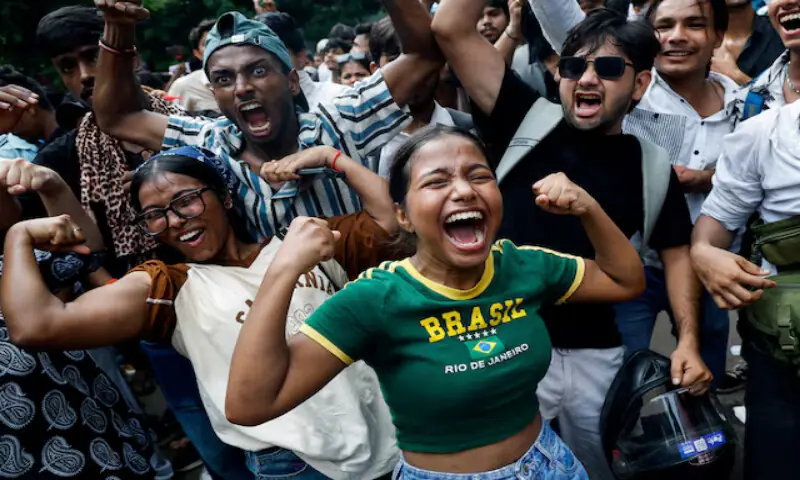
In a victory for young Indians, a nationwide protest has forced one of Prime Minister Narendra Modi’s biggest political climbdowns. However, the deep anxieties that fuelled the movement — over education, employment and the future — remain.
As the country seeks to harness the potential of a population where two-thirds are under 35, can it create enough good jobs for a generation expected to drive the next phase of growth?
A generation waiting for work
Jubilant celebrations on Saturday at Jantar Mantar — a longtime protest site in the heart of the capital — marked the end of a month-long campaign that rapidly gathered support across the country.
The viral Cockroach Janta Party (CJP), which started as online satire before swelling into a nationwide movement, called off demonstrations after the government bowed to all its demands, including the resignation of Education Minister Dharmendra Pradhan and reforms to the examination system.
What sparked the protests was the leak of question papers for the National Eligibility-cum-Entrance Test (NEET), India’s extremely competitive and high-stakes medical school entrance exam.
But they soon evolved into a broader expression of frustration among young people about opportunity and accountability.
Already the fastest-growing major economy, India is expected to become the world’s third-largest economy this decade.
But that projection rests heavily on India’s demographic advantage, and requires young people moving from classrooms into productive employment.
Recent government data suggest the labour market has become increasingly difficult for young people to enter.
India’s official youth unemployment rate stood at 9.9% last year, more than three times the overall unemployment rate of 3.1%.
The simmering anxiety among India’s youth was evident in a Deloitte Global survey published in May.
“Gen Zs report higher financial stress, with a larger proportion highlighting home affordability challenges and financial insecurity,” the survey said.
More than an exam
Modi announced on Sunday the creation of a task force headed by tech entrepreneur Nandan Nilekani to overhaul India’s examination system.
In India, entrance exams are much more than academic milestones — they are a gateway to professional careers that promise stable employment, financial security and social mobility.
More than 2 million students sat the NEET examination this year, yet government data show that only around 6% ultimately secure a medical college seat.
Families often spend years — and sometimes their life savings — on extra coaching, accommodation and study materials in the hope of securing one of those coveted spots.
When confidence in that pathway is shaken, the ramifications are immense.
“The youth of India have finally awakened to the seriousness of the problem,” education activist Nandita Narain told Reuters.
“The anger that was building up for some time has come to the surface.”
Market matters
India’s crackdown on derivatives trading is pushing some retail investors toward margin-funded stock bets instead.
The shift has fuelled a surge in broker loans, raising fresh concerns about speculative risk and financial stability.
For the latest news, follow us on Twitter @Aaj_Urdu. We are also on Facebook, Instagram and YouTube.