


American makeover leaves soccer facing a battle for its soul
5 min read
The 2026 World Cup may ultimately be remembered less for the identity of its winner than for the question it left hanging over the game: how much of soccer’s American makeover will survive once the tournament leaves North America?
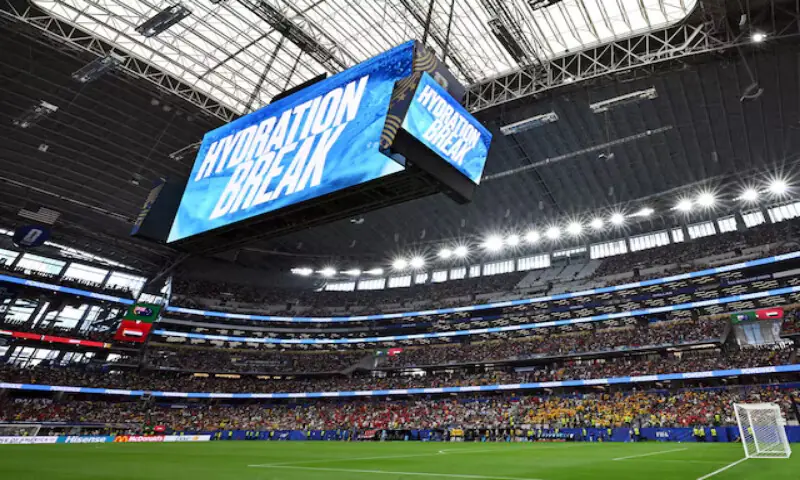
From mandatory “hydration” breaks that effectively split matches into four quarters to championship rings, a halftime show and an ever more tightly packaged entertainment product, FIFA embraced elements of the US sporting model with enthusiasm.
Some of those innovations will probably be remembered as novelties of an American-hosted tournament — while others may prove harder to dislodge.
The mid-half breaks, brought in throughout the competition regardless of whether conditions strictly required them, were introduced by FIFA on player-welfare grounds in a tournament played through the heat and humidity of a North American summer.
Once established, they also created something football has traditionally resisted: two scheduled interruptions in the middle of each half.
For coaches, they became tactical timeouts. For broadcasters, they offered natural windows that could one day carry enormous commercial value.
But for supporters accustomed to soccer’s continuous rhythm, they made matches feel increasingly divided into four quarters.
That is where the legacy question becomes more pertinent.
The breaks are likely to be discussed for future World Cups, not least because player welfare offers FIFA an obvious rationale for retaining them and because the commercial potential of fixed mid-half pauses will be difficult for the sport’s decision-makers to ignore.
Yet any attempt to normalise them globally would meet resistance, particularly in Europe, where soccer’s relative freedom from stoppages remains one of the characteristics supporters most fiercely defend.
UEFA has said it will not bend its rule that hydration breaks cannot exceed one minute.
The tournament therefore became a test case for how far FIFA is willing to reshape football in the image of the market in which it is being played. The answer is: quite far.
Blurred lines
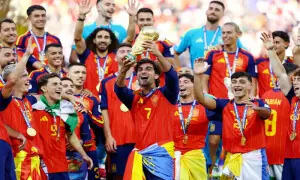
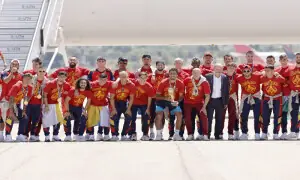
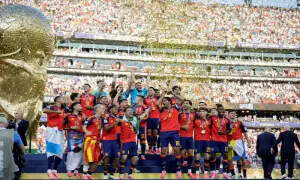
The winning team, Spain, received championship rings, a tradition imported directly from North American sport, while the showpiece final itself featured a major halftime entertainment production that has drawn obvious comparisons with the Super Bowl and led to a 27-minute interval, shooting past the sacrosanct 15-minute halftime period.
Neither changes the absolute fundamentals of the game.
But they contributed to a sense that FIFA was no longer merely bringing the World Cup to the United States but increasingly adapting the World Cup to American sporting culture.
There was an irony in that. Across the tournament, American cities experienced much of what has always made international soccer distinct: vast travelling support, flags filling city centres, supporters singing for hours before and after matches and national teams carrying a sense of identity that no franchise model can easily reproduce.
The United States appeared to be absorbing the culture of football.
At the same time, FIFA seemed intent on absorbing the culture of American sports entertainment and projecting it to fans worldwide.
The tournament was also unavoidably political, with FIFA President Gianni Infantino’s close relationship with US President Donald Trump becoming one of its defining off-field themes.
To critics, Infantino’s proximity to Trump often went beyond the diplomatic courtesies normally expected between the head of a global sports body and the leader of a host nation.
The controversy surrounding Folarin Balogun’s disciplinary case brought those concerns into especially sharp focus after Trump publicly praised FIFA’s handling of the matter following his own intervention.
FIFA said its judicial bodies acted independently and autonomously, but the episode reinforced an impression among some that the line between football governance and political influence had become uncomfortably blurred.
Refereeing debates
The tournament’s inevitable refereeing controversies added another layer of unease.
Officials were asked to enforce a game operating under new rules and interpretations while also managing familiar pressures over consistency, player protection and the growing influence of technology.
The result was a World Cup in which debate often moved beyond whether one decision was right or wrong and towards something more fundamental: whether the laws of the game had become too complicated for players, coaches and supporters to understand in real time.
New interpretations were meant to bring greater clarity and consistency, but the tournament frequently demonstrated how difficult both can be to achieve.
VAR remained central to major decisions, but technology did little to eliminate argument.
On some occasions it merely shifted the argument from the referee’s judgment to the interpretation of slow-motion images and technical language.
That was compounded by a wider atmosphere of suspicion around officiating, with conspiracy theories amplified on social media and referees often unable to answer back.
FIFA refereeing chief Pierluigi Collina dismissed allegations of bias and said match officials operated with complete independence.
On the pitch, the expanded 48-team format produced a mixed verdict.
There was more football, more countries and more opportunities for nations previously not included in the sport’s biggest event.
The expanded knockout phase gave the group stage additional jeopardy, but the sheer scale of 104 matches made this World Cup feel less like a concentrated festival and more like a vast sporting season squeezed into a matter of weeks.
That size suited FIFA’s commercial ambitions and the geography of the hosts, but whether it improved the sporting product is more debatable.
The tournament still delivered what World Cups always do: new heroes, fallen favourites, national heartbreak and moments that cut through the noise surrounding the event. Its most lasting legacy, however, may not be a match or a champion, but the precedent it has created. The real test of that will come in 2030.
For the latest news, follow us on Twitter @Aaj_Urdu. We are also on Facebook, Instagram and YouTube.