


Parliament's finance committees flag 'ambitious' FBR target
3 min read



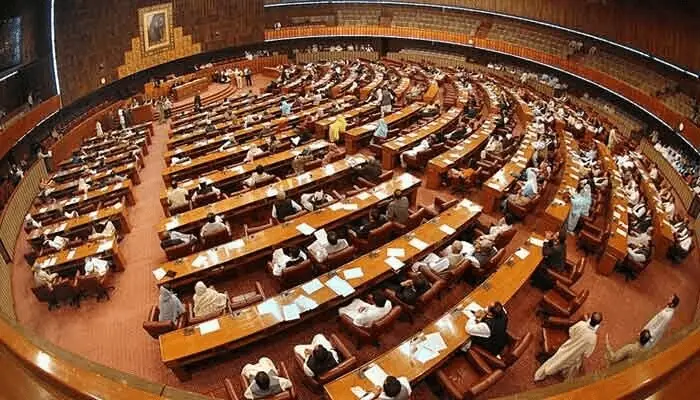
The standing committees on Finance and Revenue of both the Senate and National Assembly expressed concern on Saturday over the government’s revenue targets for fiscal year 2026-27, warning they were overly ambitious given persistent shortfalls in tax collection.
The government has set an FBR collection target of Rs15.26 trillion for FY27 — an increase of over 8% from the Rs14.13 trillion proposed for the outgoing year. The FBR, however, collected only around Rs13 trillion in FY26, falling significantly short.
“The Federal Budget FY2026-27 remains heavily focused on revenue generation and fiscal consolidation, while offering limited measures to stimulate economic growth, investment, and employment,” said NA Finance Committee Chairman Syed Naveed Qamar.
Qamar questioned the rationale of imposing additional taxation on citizens while simultaneously maintaining large primary surpluses and compressing development expenditure under IMF programme requirements. Committee members noted FBR had historically struggled to meet its targets and raised reservations over the feasibility of the projected increase.
“Concerns were also raised regarding the heavy reliance on enforcement measures rather than broadening the tax base through meaningful structural reforms,” the committee statement read.
The NA panel noted that debt servicing continued to consume the largest share of current expenditure, exceeding Rs8 trillion. Members called for a comprehensive debt management strategy to reduce borrowing costs and create fiscal space for development.
Particular concern was raised over a newly proposed retailer tax scheme, with members warning it “could create distortions within the tax system, discourage compliance under the normal tax regime, and potentially erode the existing tax base.”
“Sustainable economic growth requires comprehensive reforms aimed at broadening the tax base, improving expenditure efficiency, strengthening debt management, and promoting investment and productivity,” Qamar said.
Senate Committee
The Senate Standing Committee on Finance and Revenue met separately, where FBR officials informed members that the prime minister had established a Tax Policy Office to separate tax policy formulation from tax administration.
Senator Abdul Qadir said the super tax was “discouraging investment in Pakistan.” Senator Sherry Rehman noted provincial tax collection was outperforming FBR in some areas and questioned whether the FBR would meet its annual targets.
The committee approved a proposal to outsource the auction of seized goods to the private sector.
Finance Minister Muhammad Aurangzeb, also present, said investors required predictability and consistency in government policy. He described the Tax Policy Office as a major structural reform and said economic consultations would continue throughout the year rather than concluding on June 30.
The committee resumes clause-by-clause scrutiny of the Finance Bill 2026-27 on Sunday.
What did the government propose?
The government has introduced enforcement and tax policy measures worth nearly Rs650 billion to meet the Rs15.26 trillion FBR target. Enforcement measures are expected to yield Rs400 billion, while taxation measures are projected to generate Rs250 billion.
Measures include rationalisation of the penalty regime, Federal Excise Duty on luxury vehicles, Naphtha and solvent oil, and a sales tax on 21 items charged on the printed retail price.
A fixed tax scheme for small retailers with an annual turnover of Rs200 million or less has also been introduced, applying a 1% tax on turnover with a minimum payment of Rs25,000 at the time of filing.
For the latest news, follow us on Twitter @Aaj_Urdu. We are also on Facebook, Instagram and YouTube.













Comments are closed on this story.