



Northern Israeli voters want Netanyahu to take stronger action against Hezbollah
4 min read



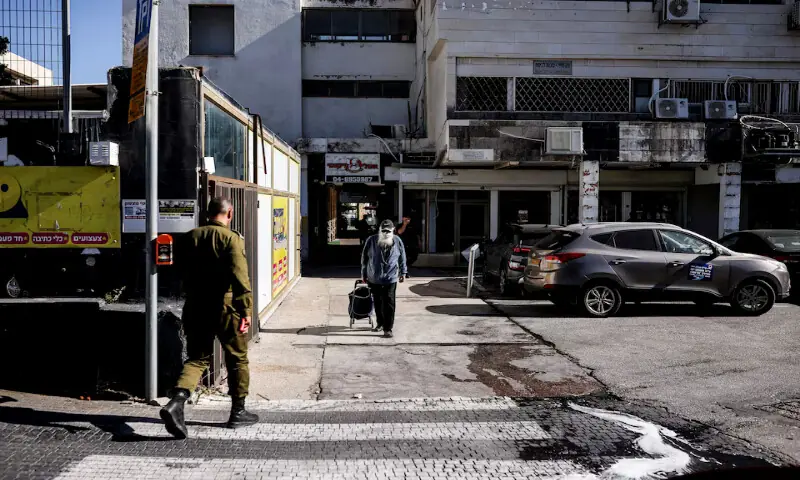
Israeli Prime Minister Benjamin Netanyahu faces plunging support in the electorally vital north, where Hezbollah rocket fire has been heaviest, a new poll has shown, putting pressure on him to take a more hawkish stance as elections loom.
Wednesday night’s ceasefire agreement between Israel and Lebanon — whether it holds or not — may not be what northern voters have in mind.
The May poll by Agam Labs at Israel’s Hebrew University, shared exclusively with Reuters, showed residents in the north abandoning Netanyahu’s Likud more quickly than voters elsewhere and faulting him more harshly over the war in Lebanon.
With Iran demanding an end to Israel’s military campaign as part of any peace deal it agrees with the United States, the poll shows how Netanyahu is increasingly caught between domestic electoral considerations and the diplomatic efforts of his allies in Washington.
Voters want end to Hezbollah threat
The general election due by October could tip Netanyahu’s governing coalition from power, risking his long record as Israel’s arch political survivor.
While his government is widely seen as the most extremist in Israeli history, many northern voters want a tougher military stance, unfettered by US pressure to end the conflicts in the Middle East.
For residents of the northern city of Kiryat Shmona, where some half of voters backed Likud in the last election, ending the threat from Hezbollah and its near-daily rocket and drone attacks is the biggest issue.
When sirens start to wail, they have only seconds to seek shelter, and voters there told Reuters they want the war against Hezbollah pursued until the group is dismantled.
“All night there are loud explosions,” said Kiryat Shmona resident Moshe Yifrah, 45, adding that he does not believe a ceasefire with Hezbollah would protect his family.
“Who would we make it with? Murderers who want to kill us?” he said.
In Lebanon, more than 7,500 people have been killed by Israeli military action since October 2023.
Many northern voters, like Yifrah, want Israel to intensify its campaign, which continued despite an April truce, but believe Netanyahu is buckling to pressure from US President Donald Trump to agree to a ceasefire.
“I’m not ashamed to say that I voted for this government, but it turns out that the one managing it is President Trump,” said Yifrah.
Trump, who wants a deal with Iran, said on Monday that Israel and Hezbollah had agreed to de-escalate hours after Netanyahu ordered new strikes on Beirut’s southern suburbs.
Netanyahu’s electoral rivals almost immediately accused him of compromising on national security — adding to his political difficulties months before the election is due.
“Everywhere Hezbollah is deployed, it must be struck, and the hands of the IDF should not be tied,” said former military chief of staff Gadi Eizenkot, a prime ministerial hopeful, in a speech on Monday.
Then on Wednesday evening, a new truce agreement was struck, requiring Hezbollah to leave south Lebanon.
Netanyahu said soon afterwards that despite the ceasefire, military operations would continue for now.
Election rivals target north
The Agam Labs poll showed only 23% of voters in the north saying they would back Likud in the next election, down from the 35% it gained in the last election in 2022.
Support for the wider right-wing bloc that makes up Netanyahu’s coalition has fallen yet further in the north, the poll showed.
The drop in support for Likud is around three times greater in the north, home to around a fifth of the electorate, than elsewhere in Israel and around 70% of the voters surveyed there said they disapproved of the handling of the war in Lebanon — more than elsewhere in Israel.
“We see a dramatic shift,” said Nimrod Nir of Agam Labs.
“It’s almost a mirror image of what we saw regarding the past elections, with two-thirds intending to vote for the anti-Netanyahu bloc,” he added.
The chairperson of Kiryat Shmona’s Likud branch did not respond to a request for comment on the party’s reduced support in polls or agree to an interview.
Nestled amid lush green mountains, Kiryat Shmona had been a prosperous centre of tourism and farming, but residents now describe it as a ghost town, with many residents having left.
Shops were shuttered, and a playground was empty during a Reuters visit this week.
Netanyahu’s main rivals are trying a hawkish message in the north, with Eizenkot visiting more than 15 times in recent weeks. Netanyahu has stayed away.
“He should come visit,” said Yisrael Cohen, 40, who previously backed Likud but will not in the next election. “The government needs to see us.”






Comments are closed on this story.