


Modi’s bid to isolate Pakistan backfires as Islamabad gains global clout
4 min read

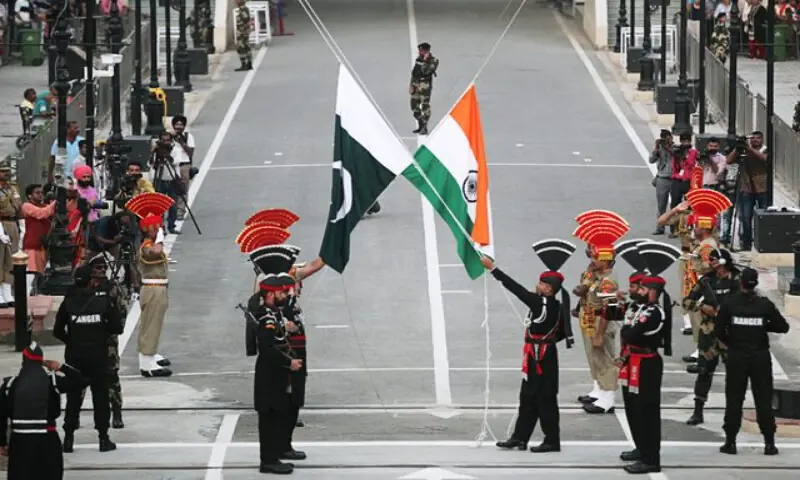
India’s efforts under Prime Minister Narendra Modi to diplomatically isolate Pakistan have largely failed, analysts say, as Islamabad has re-emerged as an increasingly influential regional player with close ties to China, the Gulf and the United States, according to a report in Al Jazeera.
In September 2016, after an alleged attack in Indian-occupied Kashmir killed 18 Indian soldiers, Modi vowed to isolate Pakistan globally, warning that the sacrifice of Indian troops “would not go in vain”.
Nearly 10 years later, Pakistan has strengthened ties with China, rebuilt relations with the United States under President Donald Trump, and positioned itself as a central mediator in ongoing talks between Washington and Tehran.
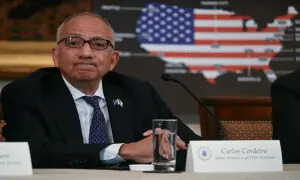
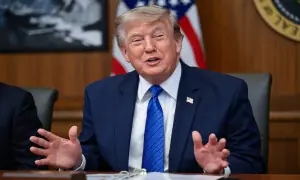
Prime Minister Shehbaz Sharif and army chief Asim Munir have both visited the White House over the past year, while Trump has repeatedly praised Pakistan’s leadership and acknowledged Islamabad’s role in regional diplomacy.
Analysts say Pakistan has successfully capitalised on shifting geopolitical dynamics, while India’s hardline approach has produced unintended consequences.
“Certainly, India’s strategy of isolating Pakistan has backfired in a significant way,” Michael Kugelman, a South Asia analyst at the Atlantic Council, told Al Jazeera.
A key shift came after the brief but fierce military confrontation between India and Pakistan in May 2025, one of the most serious escalations between the nuclear-armed neighbours in decades.
US President Donald Trump later announced that Washington had brokered a ceasefire between the two countries.
Pakistan publicly thanked Trump for his role, while India maintained that the truce resulted from direct bilateral talks.
Trump nevertheless repeatedly claimed credit for preventing a wider war and echoed Pakistani claims that several Indian fighter jets had been downed during the fighting — claims New Delhi initially avoided addressing publicly.
Analysts say India also struggled to convince the international community of Pakistan’s alleged involvement in the Kashmir attack that triggered the conflict.
Pakistan, meanwhile, used the episode to reinforce its diplomatic standing, even nominating Trump for the Nobel Peace Prize after the ceasefire agreement.
Trump has since hosted army chief Asim Munir at the White House and described him in unusually warm terms, despite India portraying Pakistan’s military establishment as linked to militancy.
For decades, India pursued a policy of “strategic restraint” towards Pakistan, relying on diplomacy and economic influence rather than military escalation.
Modi’s hardline Hindutva government initially attempted engagement with Islamabad after taking office in 2014, but relations deteriorated sharply following attacks blamed on Pakistan.
New Delhi subsequently intensified efforts to isolate Islamabad diplomatically, including effectively freezing the South Asian Association for Regional Cooperation (SAARC) by boycotting a summit hosted by Pakistan in 2016.
However, analysts say the strategy weakened regional integration while Pakistan gradually repaired ties with major powers and Gulf states.
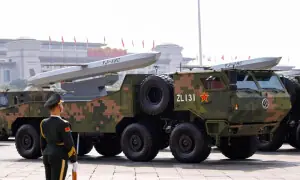
Pakistan’s relationship with China has deepened further in recent years, particularly in defence cooperation.
The May 2025 military escalation with India also highlighted Pakistan’s growing military cooperation with China.
At the same time, India’s increasingly close relationship with Israel and its shifting stance on Palestine have complicated ties with parts of the Muslim world, analysts say.
Under Modi, India has become one of Israel’s closest strategic partners and has increasingly avoided criticism of Israeli barbarism in Gaza and the wider region.
Critics argue that this alignment, combined with rising concerns over anti-Muslim rhetoric and policies adopted by India, has affected New Delhi’s image among Gulf countries.
Pakistan, by contrast, has sought to strengthen relations with Gulf nations and positioned itself as a bridge between Washington, Beijing, Tehran and Riyadh.
Islamabad has also moved to improve ties with the Trump administration through agreements involving critical minerals and cryptocurrency projects, while US companies have announced fresh investments in Pakistan’s mining sector.
Former Pakistani envoy to the United Nations Masood Khan described the recent improvement in US-Pakistan ties as the result of “astute diplomacy”.
Pakistan’s diplomatic rehabilitation marks a sharp contrast with the post-9/11 era, when it faced intense international scrutiny over alleged links to armed groups and suffered economic and political isolation.
Analysts say Islamabad has since worked to reposition itself around diplomacy, connectivity and regional engagement rather than ideological confrontation.
Still, experts caution that the current geopolitical balance may not be permanent.
While US-India ties have faced strains under Trump’s second term, the broader strategic relationship between Washington and New Delhi remains substantial, particularly in trade, technology and defence cooperation.
Analysts warn that tensions between Pakistan and India will persist unless the two sides address core disputes, particularly Indian occupied Kashmir.
Observers say recent informal contacts between retired officials from both countries may signal tentative recognition that prolonged hostility has yielded limited gains for either side.
Experts argue that sustained dialogue and backchannel diplomacy remain essential to preventing future military escalations in one of the world’s most heavily militarised nuclear regions.
For the latest news, follow us on Twitter @Aaj_Urdu. We are also on Facebook, Instagram and YouTube.







Comments are closed on this story.