


Arbitration court backs Pakistan on IWT as India refuses to recognise ruling
3 min read


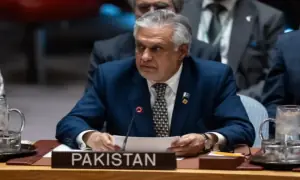
An international arbitration court has issued a ruling in favour of Pakistan’s position on the Indus Waters Treaty (IWT), as India continued to reject the tribunal’s authority and reaffirmed its unilateral suspension of the 65-year-old water-sharing agreement.
The Court of Arbitration issued a supplemental award on May 15, 2026, concerning maximum pondage — related to the general interpretation of the treaty — following a three-day hearing completed on April 28, during which the court acknowledged Pakistan’s stance.
India’s Ministry of External Affairs spokesperson Randhir Jaiswal dismissed the ruling, calling the tribunal an “illegally constituted so-called Court of Arbitration.” He declared all its proceedings, awards, and decisions null and void, and said India’s decision to hold the treaty in abeyance remains in force.
Legal analysts note, however, that India’s position carries no weight under international law. The Court of Arbitration was established under the Indus Waters Treaty itself, a binding international agreement signed by both countries, making India’s refusal to participate a violation of its own treaty obligations rather than a legitimate legal objection.
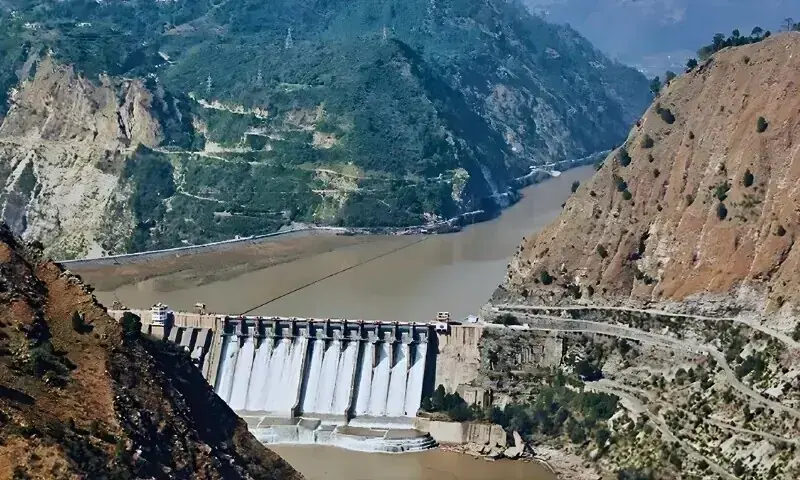
Pakistan had filed a petition seeking a detailed review of the treaty’s interpretation and application, particularly regarding the design of Indian hydropower projects and their downstream impact on the Sindh, Jhelum, Chenab, and their tributaries. The court is currently examining two key issues — Pakistan’s request to halt certain Indian hydropower projects, and the treaty’s current legal status.
India unilaterally suspended the Indus Waters Treaty following the Pahalgam attack in April 2026 — a move Islamabad and international legal observers described as having no basis under the treaty’s provisions, which contain no clause permitting suspension.
The IWT was brokered by the World Bank and signed on September 19, 1960, to manage the division of the waters between the two countries following the partition of the subcontinent. Under the agreement, India was allocated the three eastern rivers — Beas, Ravi, and Sutlej — while Pakistan retained primary rights over the three western rivers — Chenab, Jhelum, and Indus.
While India holds the right to generate hydropower from western rivers, the treaty explicitly prohibits it from storing water or reducing downstream flow into Pakistan. Islamabad has repeatedly presented evidence before international forums of Indian violations of these provisions over the decades.
Pakistan has consistently upheld the treaty and supported the international arbitration mechanism established under it. Islamabad’s decision to pursue legal recourse through the Court of Arbitration is in full accordance with the treaty’s dispute resolution framework — the same framework India is now refusing to honour.
India’s latest rejection continues a pattern of unilateral actions on water issues that have drawn concern from international observers monitoring the stability of one of the world’s most consequential transboundary water agreements.
For the latest news, follow us on Twitter @Aaj_Urdu. We are also on Facebook, Instagram and YouTube.












Comments are closed on this story.