


Chinguetti libraries fight to save ancient manuscripts from desert decay
2 min read



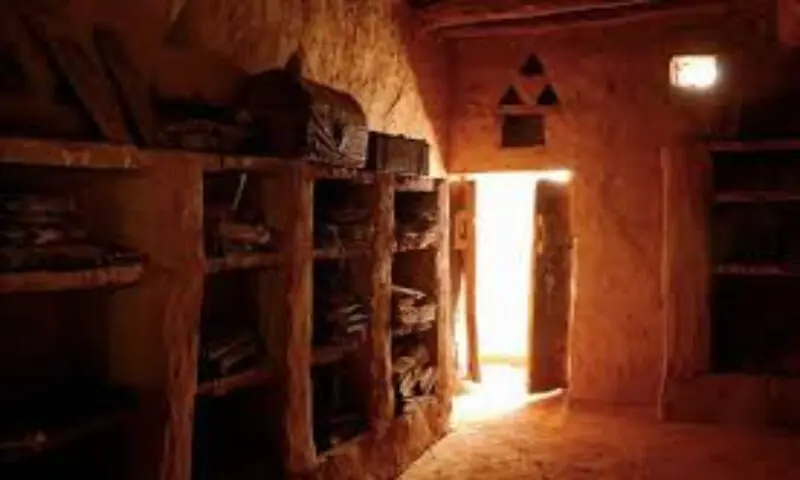
In the desert town of Chinguetti in northern Mauritania, family-run libraries preserving centuries-old Islamic manuscripts are struggling to survive as climate change, desertification, and migration threaten both the books and the people who safeguard them.
Inside a quiet, high-ceilinged library lined with steel shelves, bookkeeper Muhammad Gholam el-Habot carefully handles fragile Arabic manuscripts, wearing white gloves as he inspects and reboxes them for preservation.
The 50-year-old librarian oversees around 1,400 manuscripts inherited from his father, continuing a family duty passed down for generations.
The manuscripts are part of a broader historical legacy in Chinguetti, once a major centre of Islamic learning between the 13th and 17th centuries.
The town, historically known as part of “Bilad Shinqit,” was a key stop on trans-Saharan trade routes linking Africa’s Sahel and Maghreb regions, attracting scholars, traders, and pilgrims.
At its peak, Chinguetti housed thousands of manuscripts across dozens of private libraries covering Islamic jurisprudence, mathematics, medicine, poetry, and astronomy.
The town was widely known in Islamic tradition as the “seventh holiest city” and later referred to as the “Sorbonne of the Sahara.”
Today, only a handful of these family libraries remain active, as most residents have moved to urban centres such as Nouakchott in search of education and employment.
El-Habot said continuing the preservation work is a family obligation tied to his ancestors’ wishes that the library remain open and maintained by a religiously committed descendant.
However, the survival of these collections is increasingly uncertain.
Mauritania, which is around 90% Sahara Desert, has experienced worsening desertification and a 35% decline in rainfall since 1970, according to researchers.
Climate change has intensified sandstorms, extreme temperatures, and unpredictable weather patterns, all of which threaten fragile paper manuscripts and mudbrick library structures.
Experts say rising heat, humidity fluctuations, and flash flooding are accelerating the deterioration of irreplaceable texts. Many buildings are not equipped to withstand sudden rains or prolonged heat exceeding 40°C.
Efforts to preserve the manuscripts include digitisation, chemical treatments against insects, and improved storage, but funding remains limited.
Some libraries have received support, including a 2024 UNESCO-backed restoration initiative that provided equipment such as air-conditioning units and digital tools to selected sites.
Despite these efforts, many collections remain vulnerable, and tourism—once a key source of income for preservation—has yet to fully recover after past security incidents and the COVID-19 pandemic.
El-Habot continues to work daily inside the library, carefully maintaining manuscripts that document centuries of Islamic scholarship and scientific thought. For him, the mission is both personal and cultural.
“I have to protect this heritage,” he said. “For my family, and for all of humanity.”
For the latest news, follow us on Twitter @Aaj_Urdu. We are also on Facebook, Instagram and YouTube.






Comments are closed on this story.