


In Gaza, a father’s search for his son becomes a two-year ordeal of doubt
3 min read

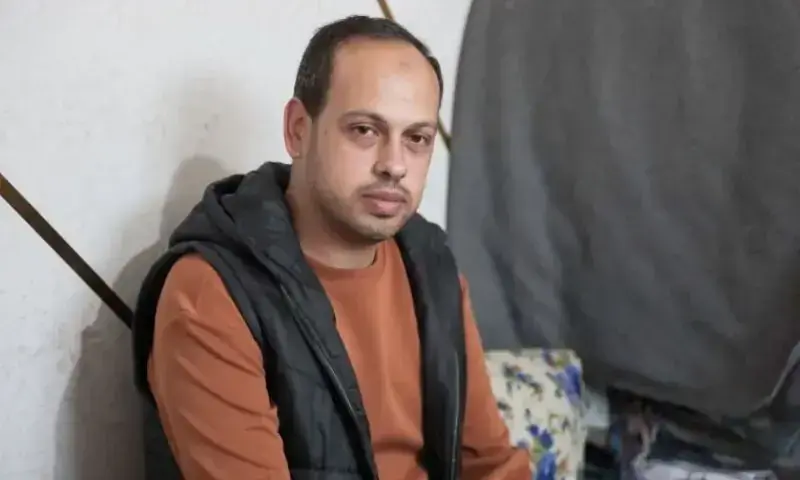
In the ruins of northern Gaza, where entire neighbourhoods have been reduced to dust and memory, one question has refused to fade for Mohammed Lubbad: Does his son exist — and if so, where is he?
In a deeply reported account, Al Jazeera traces Lubbad’s agonising journey, one that began on October 13, 2023, when an Israeli air strike hit his family home in Beit Lahiya.
The blast killed several relatives instantly and left him buried under rubble, critically injured and drifting in and out of consciousness.
When he awoke in hospital, the world he knew had been erased. His mother was dead. His brother and sister-in-law were gone. One of his daughters had been killed. Only his young daughter Jana survived.
But amid the devastation, another uncertainty emerged — one that would come to define his life.
His wife, Amal, had been eight months pregnant at the time of the strike.
In the chaotic aftermath, information came in fragments. Lubbad was told that Amal had been pulled from the rubble alive and taken to the hospital, where doctors performed an emergency Caesarean section.
A baby boy, he was told, had been delivered. His son.
For a brief moment, amid overwhelming loss, there was something to hold on to.
But that moment did not last.
Soon, conflicting accounts began to surface. Amal had been transferred to another hospital. Her condition had deteriorated. Days later, on October 22, she died of her injuries.
And the child?
No one could give a clear answer.
A search through a broken system
What followed was not just grief, but a relentless search through a collapsing healthcare system.
Hospitals in Gaza were overwhelmed, understaffed and, in many cases, damaged or forced to shut down. Records were incomplete. Patients were transferred repeatedly. Infants, especially premature babies, were moved between facilities, sometimes without documentation.
At one point, Lubbad was told his son might be among the babies at al-Shifa Hospital. At another, he had been transferred elsewhere. Each lead dissolved into uncertainty.
“Between every tragedy, we would ask the same question,” he recalled. “Where is the child?”
The question has now stretched across more than two years.
Living with uncertainty
For Lubbad, the pain is not only in what he lost, but in what he cannot confirm.
He cannot mourn his son because he does not know if the child is dead.
He cannot celebrate his son, because he does not know if the child is alive.
The ambiguity has become a psychological burden.
“I’m close to a psychological breakdown,” he said, describing sleepless nights and a constant sense of incompleteness. Life, he says, has been frozen in that moment of uncertainty.
Now caring for his surviving daughter, he struggles to rebuild any sense of normalcy while carrying a question that refuses resolution.
The need for proof
What Lubbad seeks is not complicated: certainty.
He has called for DNA testing, a way to confirm whether any of the unidentified or displaced children in Gaza could be his. But such processes are difficult to organise in a territory still grappling with war’s aftermath, institutional collapse and limited resources.
Without documentation, without records, and without a coordinated system, answers remain elusive.
Refusing to let go
Despite everything, Lubbad refuses to stop searching. He has considered public protests, appeals to authorities and media attention — anything that might bring clarity.
The war has taken nearly everything from him. But it is the unanswered question that weighs most heavily.
Until he knows the truth, he says, there can be no closure, only waiting.
For the latest news, follow us on Twitter @Aaj_Urdu. We are also on Facebook, Instagram and YouTube.









Comments are closed on this story.