


Europe could face jet fuel crunch within weeks, airports body warns
2 min read
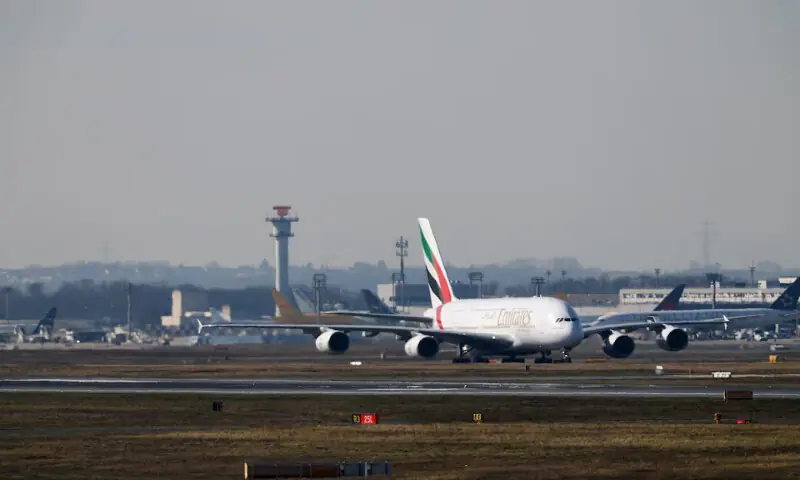
Europe’s airport industry group has warned that the continent could face a systemic jet fuel shortage in three weeks unless the Strait of Hormuz opens up, calling for urgent EU-wide action to secure supplies ahead of the peak summer travel season.
In a letter to the European Commission dated April 9, the Airports Council International Europe (ACI) said a fuel crunch would “significantly harm the European economy,” compounding the macroeconomic impact of rising oil prices triggered by the Middle East conflict.
The Financial Times was first to report on the letter on Friday. The Commission did not immediately respond to a request for comment.
Air connectivity contributes 851 billion euros ($997.03 billion) in gross domestic product annually for European economies and supports 14 million jobs, with airports handling 26% of Europe’s exports by value, based on data up to 2019 from an ACI study.
A meeting of the European Commission’s oil coordination group this week showed there was currently no EU-wide mapping, assessment or monitoring of jet fuel production and availability, ACI director general Olivier Jankovec said in the letter.
The body has asked the Commission to step in and map current and projected jet fuel availabilities against needs, identify alternative import sources, assess threats to intra-EU fuel flows, and evaluate commercial and strategic reserve levels.
Jet fuel prices have more than doubled to $150 to $200 per barrel in recent weeks, a financial hit for an industry where fuel accounts for up to a quarter of operating expenses.
The letter also called for a series of immediate policy interventions, including the temporary lifting of import restrictions on jet fuel, namely those under the EU’s new methane regulation, which will come into force in January 2027.
Jankovec warned the rules had already been discouraging third-country fuel sellers from signing supply contracts for this summer.
The body also suggested collective EU purchasing of jet fuel and targeted refinery obligations to safeguard production and include airports, airlines and ground handlers in state aid in response to the crisis.
For the latest news, follow us on Twitter @Aaj_Urdu. We are also on Facebook, Instagram and YouTube.









Comments are closed on this story.