


Islamic scholarship laid groundwork for European Renaissance, historians say
3 min read

The European Renaissance, often described as a “rebirth” of classical learning, drew heavily on earlier intellectual developments in the Islamic world, where advances in science, technology and philosophy helped shape the course of later European thought.
Historians say the Islamic Golden Age provided key tools, texts and ideas that Renaissance thinkers would later adopt and expand upon.
The period followed the rise of Islam in the 7th century, a religion that spread rapidly from its origins in western Arabia across the Mediterranean and into Asia, uniting diverse cultures under a shared belief system.
Before Islam, Arabian society was largely tribal and nomadic, with strong trading networks and a rich poetic tradition but no unified faith. With the emergence of Islam under the Prophet Muhammad (p.b.u.h), the region saw increasing political and religious consolidation.
After he died in 632 AD, Muslim rulers expanded their territories, defeating the Sasanian Empire, weakening Byzantine control in the eastern Mediterranean, and establishing influence across North Africa and parts of southern Europe.
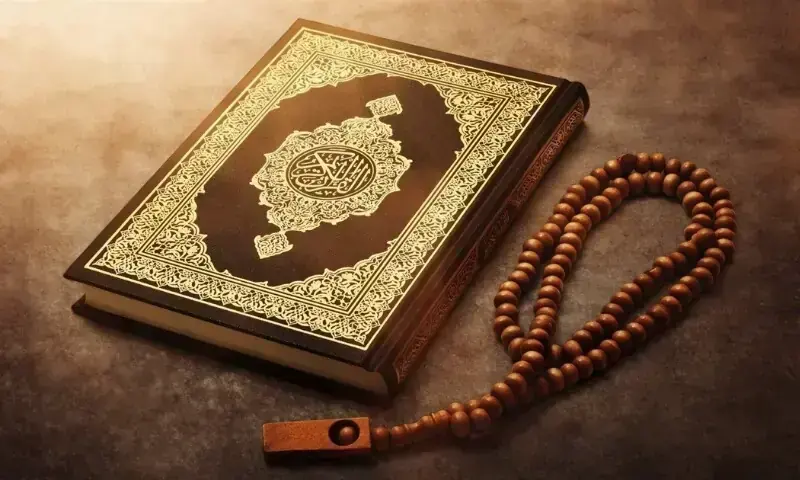
This expansion created the conditions for a flourishing intellectual era. Increased literacy, encouraged by the emphasis on reading the Holy Qur’an, helped drive scholarship across the Islamic world.
In contrast, much of medieval Europe relied on the clergy to interpret religious texts written in Latin, limiting broader access to knowledge.
The Islamic Golden Age is often linked to the Abbasid Caliphate, which came to power around 750 AD and ruled a vast empire stretching from present-day Portugal to Afghanistan.
Its capital, Baghdad, became a centre of learning, home to the House of Wisdom, a major repository of texts in science, astronomy and philosophy.
Scholars there translated works from Greek, Latin, Persian and Sanskrit into Arabic, which became the common scientific language across the empire.
These translations were frequently carried out by scholars of diverse religious backgrounds, including Christians and Jews.
Historians say this effort preserved many classical works that might otherwise have been lost. Later, European scholars translated these Arabic texts into Latin, reintroducing ancient knowledge to the continent.
Technological developments also played a role. The adoption of paper, introduced from China, facilitated the spread of written knowledge and later influenced European innovations such as the printing press.
The impact of Islamic scholarship extended to key Renaissance figures. In the late 15th century, Italian polymath Leonardo da Vinci studied Latin translations of Arabic scientific works, becoming familiar with their findings.
Among the scholars who influenced him was Ibn al-Haytham, known for his work in optics and for developing an early scientific method based on observation and experimentation.
His studies on light and vision, including the concept behind the camera obscura, informed later artistic techniques such as linear perspective, visible in works like The Last Supper and Mona Lisa.
In astronomy, Polish scientist Nicolaus Copernicus built on earlier work by Islamic scholars such as Nasir al-Din al-Tusi, who had refined and challenged ancient Greek models of the universe.
Mathematics was another area of influence. The adoption of so-called “Arabic numerals,” originally developed in India, transformed calculation methods. These numerals, along with the development of algebra, enabled more complex mathematical problem-solving and were later used by European scholars.
The spread of decimal systems and algebraic methods contributed to advances in art, architecture and commerce during the Renaissance, supporting developments in banking and accounting in 13th- and 14th-century Europe.
Historians say that while the Islamic Golden Age and the European Renaissance are often treated as separate periods, the connection between them is significant.
Many achievements credited to Renaissance Europe, they argue, were built on centuries of accumulated knowledge from the Islamic world, underscoring a shared intellectual heritage that shaped modern science and culture.
For the latest news, follow us on Twitter @Aaj_Urdu. We are also on Facebook, Instagram and YouTube.












Comments are closed on this story.