


Nepal swears in rapper-turned-PM Balendra Shah after historic win
4 min read

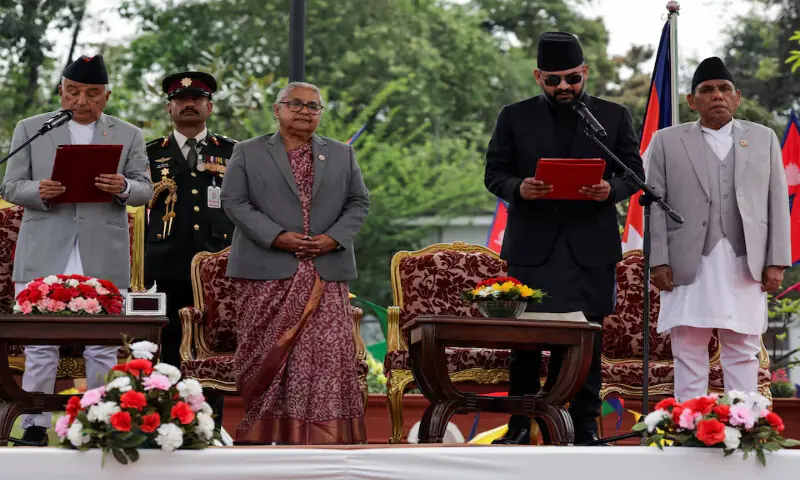
Nepal has entered a new chapter in its political history, as rapper-turned-politician Balendra Shah — widely known as Balen — was sworn in as prime minister on Friday, following a landslide election victory for his Rastriya Swatantra Party (RSP).
The election, held months after a Gen Z-led uprising toppled former prime minister KP Sharma Oli, gave Shah and his four-year-old party a historic mandate.
Analysts and voters alike say the win presents a rare opportunity to respond to the demands of young Nepalis, though it also comes with significant challenges.
“For a party this young, this is an unprecedented opportunity,” political analyst Bishnu Sapkota told Al Jazeera.
“Expectations are enormous, and it will be very difficult to meet them all.”
A landslide win
Shah defeated Oli in a constituency that had long been a stronghold for the former prime minister.
The RSP secured 125 of the 165 first-past-the-post parliamentary seats, and projections suggest the party could achieve a two-thirds majority once proportional representation seats are allocated — far exceeding expectations.
“We anticipated just over 50 per cent,” RSP leader Shishir Khanal told Al Jazeera.
“A two-thirds mandate was beyond our imagination. But it also raises the stakes. People expect rapid results, and Nepal’s institutional capacity and slow economic growth make that extremely challenging.”
Immediate tests ahead
One of Shah’s first tasks will be implementing the findings of the Karki Commission, which investigated the killings and property damage during last year’s Gen Z protests.
The interim government submitted the report on March 8, and the incoming Shah administration is expected to implement its recommendations.
“There is a strong public demand for transparency and accountability,” Sapkota said.
“Implementation will have to happen in stages, and political reactions are inevitable.”
The protests last year were fueled by public frustration over corruption, poor governance, and lack of accountability.
High-profile investigations into political figures are expected to be among the government’s first major undertakings.
Two power centres
Shah’s alliance with RSP founder Rabi Lamichhane — a controversial media personality facing allegations of fraud, money laundering, and dual citizenship violations — has raised questions about the balance of power within the party.
“Balen needed a party, and Rabi needed Balen’s popularity. It’s a marriage of convenience,” said Tribhuvan University political science professor Gehendra Lal Malla.
“Differences could emerge later, especially regarding ongoing charges against Lamichhane. Shah must uphold the rule of law.”
Analysts note, however, that Shah’s popularity was the driving force behind the RSP’s landslide.
“The party must recognise that Shah’s appeal won the mandate and give him the freedom to form his cabinet,” Sapkota said.
The first 100 days
RSP leaders plan to act quickly.
Khanal said the government intends to prioritise anti-corruption measures, reopen high-profile cases, and form a commission to investigate the assets of senior officials dating back to 1990.
Gen Z activists, who were instrumental in last year’s uprising, have stressed accountability.
“With the RSP’s large majority, parliamentary opposition will be weak,” said activist Yujan Rajbhandari.
“The streets will play a major role as opposition if the government fails to deliver.”
Diplomacy and foreign relations
Shah’s critics have questioned his diplomatic skills, citing past remarks attacking neighbouring countries and displaying controversial maps of a “Greater Nepal.”
Analysts, however, argue these concerns are overstated.
“When he made those comments, he was a mayor, not a national leader,” Sapkota said.
“He has a clean slate, which could allow Nepal greater independence in foreign policy.”
India has already signalled a willingness to work with the new leadership.
Prime Minister Narendra Modi congratulated both Shah and Lamichhane after the election, while Shah reaffirmed Nepal’s “historical, close and multifaceted relations” with India.
Looking ahead
Experts say Shah’s relationship with the media and communication style will be critical.
“Balen must engage more with the press,” Malla said. “As a national leader, communication and accountability are essential.”
As Nepal enters this new political era, Shah and his young administration face high expectations and intense scrutiny, with voters watching closely to see if the Gen Z revolt translates into meaningful change for the country.
For the latest news, follow us on Twitter @Aaj_Urdu. We are also on Facebook, Instagram and YouTube.










Comments are closed on this story.