


US and Israeli war aims in Iran are not the same, US spy chief says
3 min read



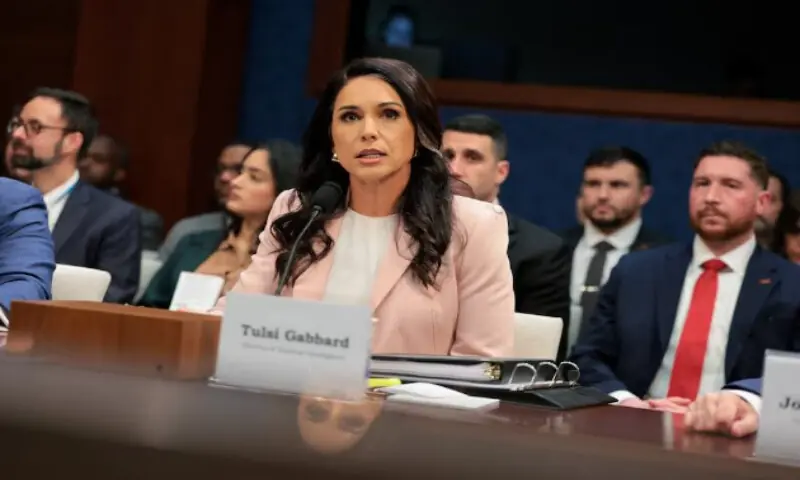
American and Israeli objectives for the war on Iran are not the same, U.S. Director of National Intelligence Tulsi Gabbard said on Thursday, with Israel focused on disabling Iran’s leadership and U.S. President Donald Trump focused on destroying Iran’s ballistic missile programme and navy.
“The objectives that have been laid out by the president are different from the objectives that have been laid out by the Israeli government,” Gabbard told the House intelligence committee’s annual hearing on worldwide threats to the United States.
“We can see through the operations that the Israeli government has been focused on disabling the Iranian leadership. The president has stated that his objectives are to destroy Iran’s ballistic missiles launching capability, their ballistic missile production capability, and their navy,” she said.
The U.S. and Israel have repeatedly sought to highlight their close coordination in their joint air assault on Iran, but officials on both sides have acknowledged that their objectives were not the same.
As the conflict neared the three-week mark, Israel has led strikes that have killed Iranian clerics and military leaders, while the U.S. has been focused on striking sites related to the country’s missile programme.
The Republican president’s administration has given conflicting messages about the state of Iran’s nuclear programme. In the run-up to the war, some top administration officials said Iran was weeks away from developing a nuclear weapon, although others - including the president — claimed that another U.S.-Israeli campaign last summer had destroyed its weapons programme.
Iran has maintained that its nuclear programme was for peaceful purposes.
Gabbard said during the 2-1/2-hour House hearing on Thursday the U.S. intelligence community had “high confidence” that it knows where Iran keeps its stockpile of highly enriched uranium but declined to discuss in a public session whether the U.S. has the means to destroy it.
GAS FIELD ATTACK
The gap was highlighted on Wednesday night, when Trump said in a social media post that Washington “knew nothing” about Israel’s attack on Iran’s South Pars gas field, which drew an Iranian assault on energy infrastructure in Qatar, and that Israel would not attack the field further unless Iran again attacked Qatar.
Gabbard said she did not have an answer when Democratic Representative Joaquin Castro of Texas asked to what she attributed Israel’s decision to strike Iranian energy infrastructure despite Trump calling for those facilities to be off-limits.
Gabbard’s appearance in the House was her second straight day of testimony, after she, CIA Director John Ratcliffe and other intelligence agency directors also testified to the Senate intelligence panel on Wednesday.
At both hearings, Gabbard was questioned about whether she felt Iran had posed an “imminent” threat to the United States to justify the air assault by the U.S. and Israel that began on February 28.
Joe Kent, who headed the National Counterterrorism Centre, on Tuesday became the first senior official in Trump’s administration to resign over the Iran War, saying Iran posed no imminent threat to the U.S.
Gabbard said in both hearings that it was solely up to Trump to determine whether the United States faces an imminent threat.
For the latest news, follow us on Twitter @Aaj_Urdu. We are also on Facebook, Instagram and YouTube.











Comments are closed on this story.