


The Rs55 petrol shock: Why the public always pays the price
4 min read

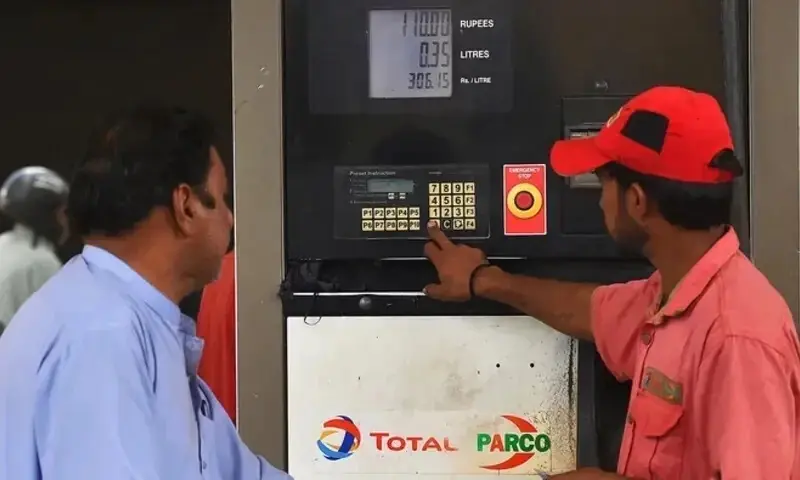
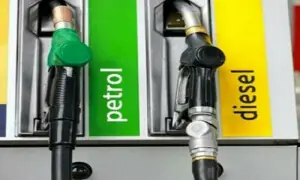
Pakistan’s latest Rs55-per-litre increase in petrol and diesel prices has once again exposed a familiar pattern in the country’s economic management: when global markets become unstable, the burden is swiftly shifted to the public.
The government has justified the hike by citing rising international oil prices triggered by conflict in the Middle East. That explanation is partly valid.
Pakistan imports the majority of its petroleum and is therefore vulnerable to global supply disruptions.
But the deeper problem lies not in the crisis itself — it lies in the country’s chronic lack of preparedness and policy choices that amplify the pain for ordinary citizens.
The hidden tax in every litre
One of the most overlooked aspects of Pakistan’s fuel pricing is the massive tax component embedded in the final price.
Even before the latest hike, the government was already collecting significant revenue through the petroleum levy and other charges on every litre of fuel.
In fact, the latest adjustment reportedly includes an additional Rs20 per litre increase in the petroleum levy, pushing the government’s total tax collection on petrol to roughly Rs120 per litre when all taxes and duties are combined.
For ordinary consumers, this means a substantial portion of the pump price reflects government revenue rather than the actual cost of oil.
Over the past two years, Pakistan’s reliance on petroleum levy has grown dramatically, with annual collections projected to reach over Rs1.4 trillion.
Fuel has effectively become one of the state’s most dependable revenue streams.
This growing dependence on fuel taxation raises serious concerns about whether price hikes are driven purely by global market pressures or by the government’s fiscal needs.
The strategic weakness few talk about
Another alarming issue is Pakistan’s limited capacity to maintain strategic oil reserves.
Unlike many countries that store petroleum for several months to cushion sudden market shocks, Pakistan typically maintains stocks for only a few weeks.
This leaves the country extremely vulnerable whenever global supply routes face disruption — particularly in regions like the Strait of Hormuz, through which a significant portion of the world’s oil supply passes.
Without sufficient stockpiles, Pakistan has little choice but to react immediately to international price spikes.
The absence of long-term strategic reserves means that every geopolitical crisis quickly turns into a domestic economic crisis.
Countries with large petroleum reserves can absorb temporary price shocks and stabilise domestic markets. Pakistan, however, lacks that buffer.
Inflation’s domino effect
Fuel price increases never remain confined to petrol pumps.
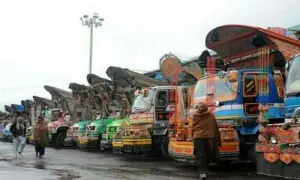
Diesel powers Pakistan’s transport network and much of its agricultural machinery.
When diesel becomes more expensive, transportation costs increase, food prices rise, and inflation spreads across the economy.
A Rs55 increase, therefore, does not just affect motorists.
It impacts farmers transporting crops, truckers delivering goods, small businesses moving supplies, and ultimately households already struggling with rising living costs.
Shared sacrifice — or selective sacrifice?
What makes the situation more difficult for many citizens to accept is the perception that economic sacrifices are not being shared equally.
If the situation were truly as difficult as described, critics argue that the government could have considered alternative measures before passing the full burden onto consumers.
For example, authorities could have reduced or temporarily suspended fuel allowances for government officials, limited the use of large-engine official vehicles, or imposed restrictions on luxury cars with engine capacities such as 2600cc or 3500cc.
Such measures would at least signal that the state is willing to curb its own consumption before asking the public to absorb higher costs.
Instead, the perception persists that while citizens are asked to pay more at the pump, the culture of official privilege remains largely untouched.
A structural failure, not just a crisis
The government has framed the price hike as a temporary response to extraordinary circumstances.
But the truth is that Pakistan’s energy vulnerability has been decades in the making.
The country still lacks meaningful strategic oil reserves, sufficient domestic refining capacity, robust public transport systems, and serious energy diversification.
Without these reforms, every geopolitical shock — whether war, shipping disruption, or currency depreciation — will continue to trigger sudden and painful price increases.
A warning for the future
The Rs55 petrol hike may be explained as a response to global turbulence, but it also serves as a warning.
Pakistan’s energy policy remains reactive, tax-heavy, and structurally fragile.
Until the country builds strategic reserves, reduces its dependence on fuel taxation, and invests seriously in energy security, the same cycle will repeat.
Each global crisis will bring the same announcement, the same justification — and ultimately the same outcome: the bill is handed to the Pakistani public.
The writer is a seasoned journalist covering the economy and international affairs.
For the latest news, follow us on Twitter @Aaj_Urdu. We are also on Facebook, Instagram and YouTube.









Comments are closed on this story.