


From handwashed underwear to fake Adidas, stranded travellers wait out travel chaos
4 min read

In the lobby of a tired hotel near Doha airport, stranded travellers wear identical fake Adidas T-shirts bought from a nearby store and swap tips on where to buy underwear.
“It’s our uniform,” said Erika Macikova.
The 49-year-old Slovak winemaker was returning from an ayurvedic retreat in Sri Lanka when she became stranded in the Qatari capital. Her luggage remains at the airport, but she was evacuated to a hotel alongside hundreds of other passengers.
With no spare clothes, Macikova tracked down open shops and began sharing their names with fellow globetrotters.
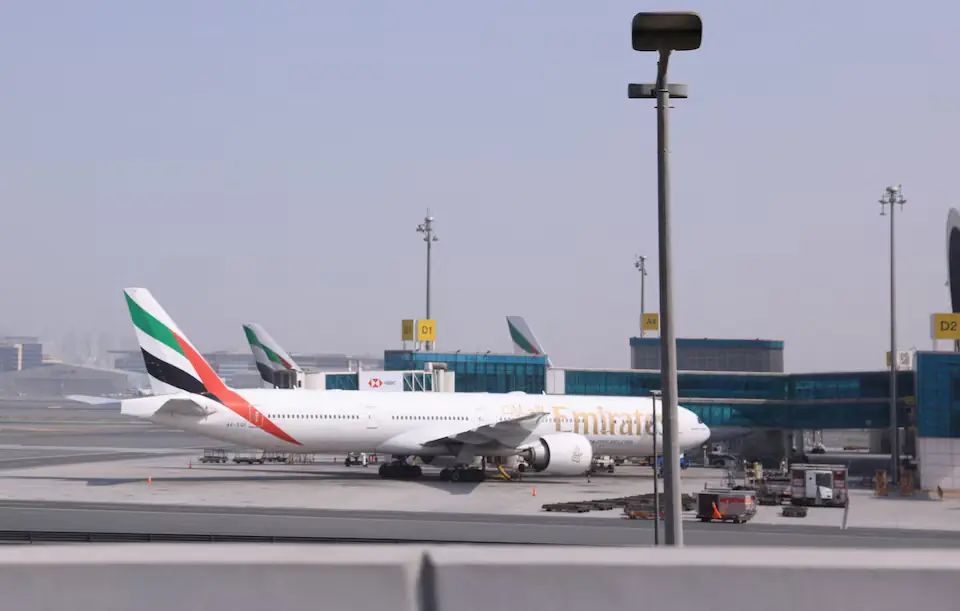
Tens of thousands of travellers across the Middle East were entering a third day of limbo after escalating conflict between the U.S., Israel and Iran disrupted flights worldwide and forced the closure of major airports, including Dubai, the world’s busiest international hub.
Many of those stuck in the region, like Macikova, were changing planes.
Dubai, which handles more than 1,000 flights a day, and nearby Doha and Abu Dhabi sit at the crossroads of east‑west air travel, funnelling long‑haul traffic between Europe and Asia through tightly scheduled connecting flights.
The upheaval is rippling far beyond the Middle East, with tens of thousands of passengers stranded in places including Bali, Kathmandu and Frankfurt.
The UAE’s civil aviation authority said it assisted about 20,200 travellers on Saturday. Data shows that at least 4,000 flights were cancelled in the space of three days.
In Dubai, James Gaskin spent Monday morning washing his underwear and a collection of novelty socks in his bathroom sink.
After a week in India for work, the 53-year-old procurement manager from northern England was already short of clean clothes when his connecting flight back to Britain was cancelled. He was taken to a local hotel with hundreds of other passengers.
Like many of them, Gaskin said he had little idea what was unfolding when he landed at Dubai airport.
“A lady came to the gate and just stood on a chair and made an announcement that everyone had to leave the airport. All very calm and orderly,” he said. “In a British way, I did six hours of queuing without any real drama.”
But the baggage hall descended into chaos, he said, as passengers pulled bags off carousels, seeking their own.
“Even though it was pandemonium, I was pretty relaxed,” he said.
But then “there were quite a few bangs, the airport got hit“, he said. “That brought it home.”
“The general feeling is, the longer it goes on, the more edgy people are getting.“
Passengers WhatsApp to share coping tips
Across hotels in the region, strangers trade information on where to find washing machines, how to navigate airline helplines or retrieve luggage, and whether it makes sense to pool resources and try to leave by car.
They gather in hotel lobbies to play games or watch sports, or head to shopping malls to buy snacks. WhatsApp groups have sprung up.
Many are trying not to dwell on their situation, even as loud bangs overhead remind them why they are stuck.
Macikova was spending as much time as possible inside the hotel because she felt most secure there.
She was immersed in a romantic novel, but Gaskin was bored. His wife had sent him logins to various streaming services, but he had not felt like watching them.
British friends Julie Hardy and Francis McKay, who had been on a two-week tour of southern India, were staying at the same low-rise hotel near the airport.
On Sunday, they took a taxi to a nearby mall to buy medication, cheese and crackers, and to have lunch.
It was fun, they said. The nights are harder.
On Saturday night, two alarms went off on Hardy’s phone, and she rushed to the hotel lobby in her nightie, which no one seemed to find surprising.
“I’m very reluctant to go to bed up here,“ she said. “I would rather be downstairs for as long as possible … I can’t relax, because I think something’s going to happen in the night and I’m going to have to get up quickly and evacuate.”
McKay was anxious too and, while it sounded dramatic, worried whether she would see her family again:
“It’s the unknown, and I’ve never been in a war zone.”
For the latest news, follow us on Twitter @Aaj_Urdu. We are also on Facebook, Instagram and YouTube.










Comments are closed on this story.