


US, Iran agree to Friday talks in Oman but still at odds over agenda
4 min read



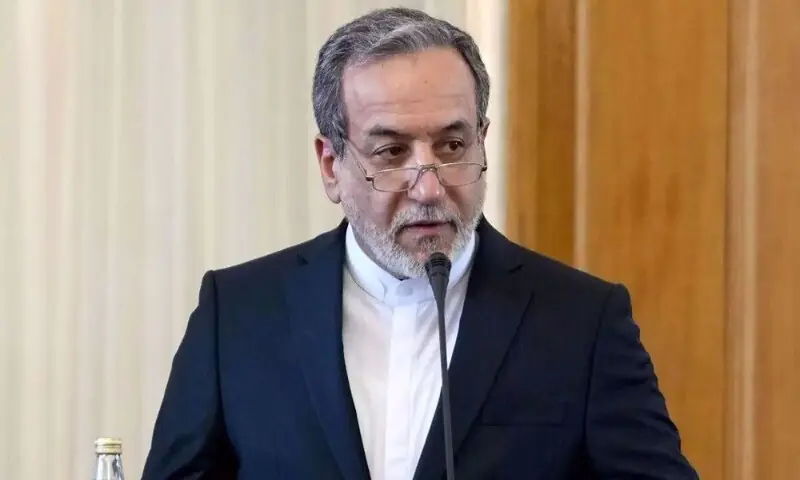
The US and Iran have agreed to hold talks in Oman on Friday, officials for both sides said, even as they remained at odds over Washington’s insistence that negotiations include Tehran’s missile arsenal and Iran’s vow to discuss only its nuclear programme.
The delicate diplomatic effort comes amid heightened tensions as the US builds up forces in the Middle East and regional players seek to avoid a military confrontation that many fear could escalate into a wider war.
Differences in recent days over the scope and venue for the talks have raised doubts whether the meeting would take place, leaving open the possibility that US President Donald Trump could carry out his threat to strike Iran.
Asked on Wednesday whether Iran’s Supreme Leader Ayatollah Ali Khamenei should be worried, Trump told NBC News: “I would say he should be very worried. Yeah, he should be.”
He added that “they’re negotiating with us,” but did not elaborate.
After Trump spoke, US and Iranian officials said the two sides had agreed to shift the talks’ location to Muscat after initially accepting Istanbul.
But there was no indication they had found common ground on the agenda.
Iran has pushed to restrict the negotiations to discussing its long-running nuclear dispute with Western countries.
But US Secretary of State Marco Rubio presented a different view on Wednesday.
“If the Iranians want to meet, we’re ready,” Rubio told reporters.
But he added that talks would have to include the range of Iran’s ballistic missiles, its support for armed proxy groups around the Middle East and its treatment of its own people, besides nuclear issues.
A senior Iranian official said, however, that Iran’s missile programme was “off the table.”
A second senior Iranian official said Tehran would welcome negotiations over the nuclear dispute but that US insistence on dealing with non-nuclear issues could jeopardise the talks.
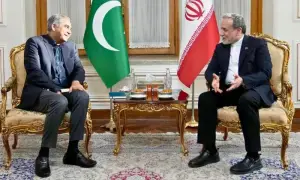
Trump’s son-in-law, Jared Kushner, was due to take part in the talks, along with US special envoy Steve Witkoff and Iranian Foreign Minister Abbas Araqchi, officials said.
Change of venue
While the talks were originally slated for Turkey, Iran wanted the meeting to take place in Oman as a continuation of previous talks held in the Gulf Arab country that had focused strictly on Tehran’s nuclear programme, a regional official said.
Iran says its nuclear activities are meant for peaceful, not military purposes, while the US and Israel have accused it of past efforts to develop nuclear weapons.
A Gulf official said the talks could be mediated by several countries, though Iran has indicated that it wants a two-way format limited to Washington and Tehran.
The diplomatic efforts follow Trump’s threats of military action against Iran during its bloody crackdown on protesters last month and the deployment of more naval power to the Gulf.
The US has sent thousands of troops to the Middle East since Trump threatened Iran last month — including an aircraft carrier, other warships, fighter jets, spy planes and air refuelling tankers.
After Israel and the United States bombed Iran last summer, renewed friction has kindled fears among regional states of a major conflagration that could rebound on them or cause long-term chaos in Iran.
Trump has continued to weigh the option of strikes on Iran, sources say. Oil prices have risen due to the tension.
Ballistic missile stockpile
Iranian sources told Reuters last week that Trump had demanded three conditions for the resumption of talks: zero enrichment of uranium in Iran, limits on Tehran’s ballistic missile programme and an end to its support for regional proxies.
Iran has long said all three demands are unacceptable infringements of its sovereignty, but two Iranian officials told Reuters its clerical rulers saw the ballistic missile programme, rather than uranium enrichment, as the bigger obstacle.
An Iranian official said there should not be preconditions for talks and that Iran was ready to show flexibility on uranium enrichment, which it says is for peaceful, not military purposes.
Since the US strikes in June, Tehran has said its uranium enrichment work has stopped.
In June, the United States struck Iranian nuclear targets, joining in at the close of a 12-day Israeli bombing campaign, and Iran struck back at Israel with missiles and drones.
Iran said it replenished its missile stockpile after the war with Israel last year, warning it would unleash its missiles if its security is under threat.
For the latest news, follow us on Twitter @Aaj_Urdu. We are also on Facebook, Instagram and YouTube.






Comments are closed on this story.