


When words replace work: Pakistan’s endless blame game
7 min read



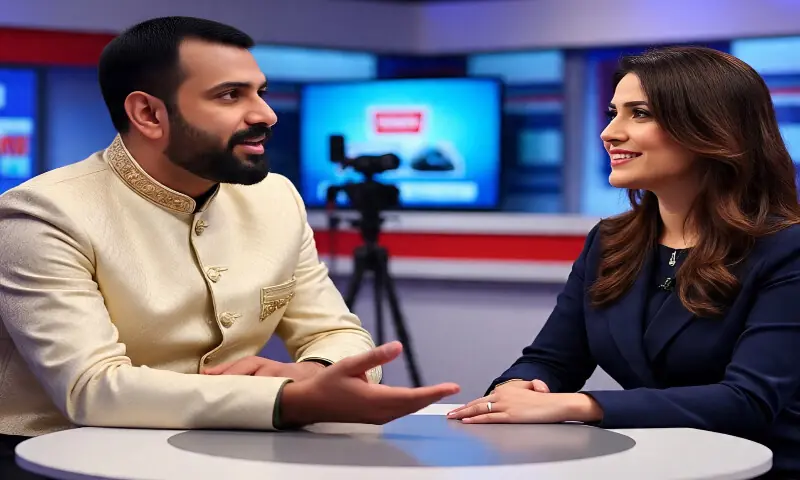
In Pakistan, political debate is a constant part of everyday life. People discuss politics in homes, markets, offices, and on social media.
Elections come and go, governments change, and promises are made again and again. Yet one habit remains unchanged across almost all political parties.
When leaders are asked about their performance, they often avoid talking clearly about their own achievements.
Instead, they turn the discussion towards the failures of other parties. This behaviour raises a serious question about political culture in Pakistan.
Why do leaders choose comparison over explanation? Why do they prefer to talk about what others failed to do instead of clearly telling the public what they themselves have delivered?
Whenever a political leader appears on television or addresses a public gathering, the same pattern is repeated.
If asked about inflation, they respond by blaming the previous government. If asked about unemployment, they talk about corruption under their opponents.
If questioned about broken institutions, they describe how badly the country was run before they came into power.
While history and context are important, constant reference to the past becomes tiring for ordinary citizens who are struggling in the present.
People want to know what has been done during the current government’s time, not what happened 10 or 20 years ago.
This habit of comparison may seem like a clever political strategy, but it often feels like an excuse.
It creates the impression that leaders are unwilling or unable to defend their own performance.
If a party believes it has delivered for the people, why not explain those achievements clearly? Why not talk about improved services, completed projects, or better policies?
The avoidance of such discussion suggests either a lack of confidence or a fear of honest evaluation.
Ordinary people usually ask simple questions. Has the cost of living gone down or up? Are jobs easier to find? Is healthcare affordable? Are schools improving?
These questions affect daily life and do not require complex political arguments.
Yet instead of addressing them directly, leaders turn them into political battles.
They compare figures selectively, highlight the failures of others, and claim moral superiority.
In doing so, they often forget the real purpose of governance, which is to serve the people.
One reason political leaders rely so heavily on comparison is the culture of the blame game that dominates Pakistani politics.
Taking responsibility is seen as a weakness rather than a strength. Admitting mistakes is considered dangerous, as it may be used by opponents as political ammunition.
As a result, leaders rarely say, “We failed in this area” or “We could have done better.” Instead, they say, “It is not our fault” or “Others left us no choice”.
This constant blame-shifting may protect leaders in the short-term, but it damages trust in the long run.
This behaviour of avoiding one’s own performance also affects how future leaders are shaped.
Young politicians learn by observing senior figures. When they see that the comparison and blame game are rewarded with attention and power, they adopt the same methods.
Over time, this becomes a norm rather than an exception. Politics then turns into a contest of speeches instead of a system of service.
The focus shifts from solving problems to winning arguments, from improving lives to controlling narratives.
Another reason for this behaviour is the absence of a strong tradition of accountability.
In many democratic societies, governments are expected to present regular performance reports.
These reports show what was promised and what was delivered. In Pakistan, election manifestos are often forgotten soon after polling day.
Once in power, parties rarely return to their promises to explain progress or failure. Without such accountability, comparison becomes an easy replacement for performance.
The media also plays a role in encouraging this approach. Many television talk shows focus on confrontation rather than clarity.
Politicians are often invited not to explain policies, but to attack opponents. The louder and more aggressive a leader is, the more attention they receive.
Calm explanations of governance rarely attract the same interest. Over time, politicians learn that comparison and conflict bring visibility, while honesty and detail do not.
Political loyalty in Pakistan further strengthens this pattern.
Many voters support parties based on emotion, identity, or longstanding commitment rather than performance.
Leaders know that attacking rival parties excites their supporters. It creates an “us versus them” narrative that keeps emotions high and questions low. In such an environment, performance becomes secondary to political survival.
Another important aspect of this behaviour is the lack of respect it shows for the voter’s intelligence.
When leaders repeatedly compare themselves with others instead of explaining their own work, it sends an unspoken message that citizens cannot understand facts or judge performance fairly.
This is unfair. People may not be experts in policy, but they understand their own lives very well.
They know whether roads are broken, hospitals are crowded, prices are rising, or jobs are scarce.
Ignoring this lived experience creates a dangerous gap between the rulers and the ruled.
However, this culture has serious consequences. When leaders avoid talking about their own deliverables, public trust erodes.
People begin to believe that all parties behave in the same way and that no one is truly accountable.
This leads to disappointment, frustration, and political apathy. Many young people, in particular, feel disconnected from politics.
They see endless arguments but little improvement in their lives.
The constant focus on comparison also prevents meaningful discussion about policy.
Instead of debating how to improve education or healthcare, political discussions turn into arguments about who damaged the country more.
This backwards-looking approach leaves little room for innovation or long-term planning. A nation cannot move forward if its leaders are always looking back.
There is also a moral question involved.
Leadership comes with responsibility. Holding power means accepting both credit and blame.
When leaders take credit for success but refuse responsibility for failure, they weaken the ethical foundation of governance.
A society cannot develop strong institutions if its leaders avoid accountability.
Laws, systems, and reforms only work when those in charge are willing to be judged by their actions.
It is important to say that comparison itself is not always wrong. Comparing policies, systems, and results can help people understand progress or failure.
For example, showing how a new policy reduced poverty compared to the past can be useful.
The problem arises when comparison replaces explanation entirely. When leaders use comparison to hide weak performance, it loses its value and becomes dishonest.
Another damaging effect is economic uncertainty. Investors and businesses want stability and clarity.
When political leaders focus on a blame game and conflict, it sends negative signals to the economy.
Constant political fighting suggests instability, which discourages investment and growth. This directly affects employment and development.
Social harmony also suffers. Political comparison often turns into personal attacks and accusations.
This deepens divisions within society and creates hostility among the citizens.
Instead of working together to solve shared problems, people are pushed into opposing camps. This weakens national unity and trust.
The repeated use of comparison also prevents closure and learning.
Every government faces challenges and makes mistakes. If leaders honestly admit these mistakes, future governments can learn from them.
When everything is blamed on others, lessons are lost. The same errors are repeated, and progress remains slow.
In this way, comparison not only hides failure but also blocks improvement.
A mature political system requires leaders who can stand by their record.
Such leaders do not need to constantly mention their rivals.
They allow their work to speak for itself. They understand that no government is perfect, and that the people can accept failure if it is explained honestly.
What people do not accept is avoidance and deception.
When asked about performance, political leaders should answer clearly.
They should explain what they promised, what they achieved, what they could not achieve, and why.
They should share lessons learned and outline future plans. This approach shows respect for the public and confidence in leadership.
Citizens, too, have a role to play. As long as they accept comparison as an answer, leaders will continue to use it.
Asking better questions, demanding clear figures, and refusing vague excuses can slowly change political behaviour.
Democracy is not only about voting; it is also about questioning those in power.
The real issue is not whether one party performed better than another. The real issue is whether people’s lives have improved.
Comparison does not fill empty stomachs, reduce electricity bills, or create jobs. Only effective governance can do that.
At its heart, this issue is about respect. Respect for the public, for truth, and for the idea of service.
Political parties exist to serve people, not to constantly fight each other. When leaders speak more about rivals than about results, they forget why they were elected in the first place.
If Pakistan is to move forward, its political culture must mature. Comparison should support explanation, not replace it.
Criticism of others should never be an excuse for silence about one’s own work.
Only when leaders are willing to stand honestly before the public and say, “This is what we did,” can trust begin to grow. Without that honesty, democracy remains noisy but empty, full of words yet short on progress.
The writer is a seasoned journalist and a communications professional
He can be reached at [email protected]
For the latest news, follow us on Twitter @Aaj_Urdu. We are also on Facebook, Instagram and YouTube.











Comments are closed on this story.