



Trinasolar to Launch Ultra-High-Efficiency Vertex N Modules in Pakistan to Tackle Climate and Energy Challenges
3 min read



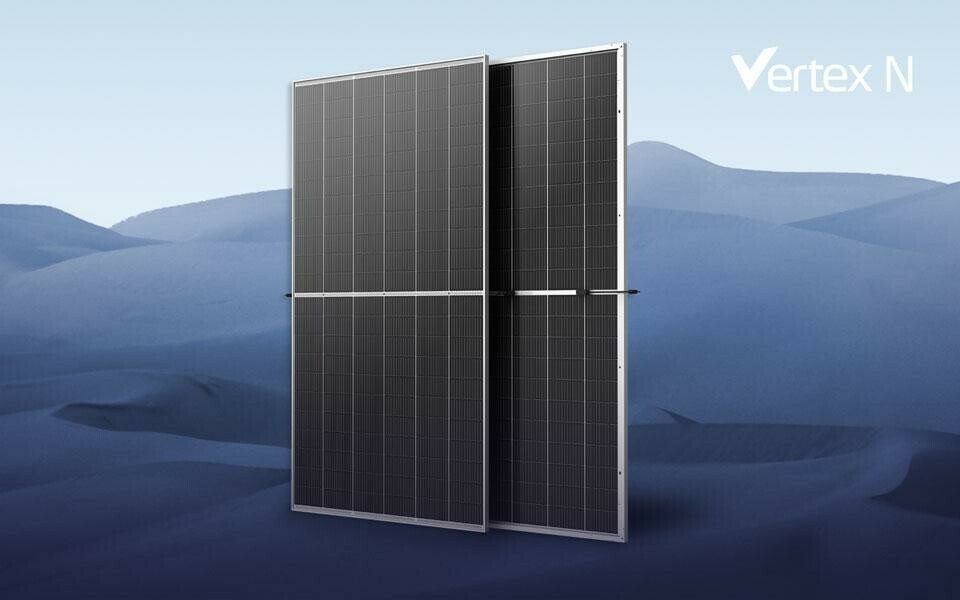
As Pakistan grapples with increasingly severe climate conditions and an urgent need for energy resilience, global solar technology leader Trinasolar is preparing to introduce its next-generation Vertex N series modules—powered by i-TOPCon Ultra technology—into the local market. The move aims to bring one of the most powerful and climate-hardened solar technologies to Pakistan’s commercial, industrial, and utility-scale solar projects.
The launch comes amid a surge in solar adoption across the country, driven by rising grid electricity costs, growing environmental concerns, and industrial demand for sustainable energy. With energy users in industrial zones, textile hubs, and large-scale development sites facing soaring power needs, the new Vertex N Ultra modules promise to deliver up to 40 watts more power output, 1% higher efficiency, and superior durability—critical advantages for Pakistan’s high-irradiation and weather-prone regions.
Two high-performance models will be introduced:
- Vertex N NEG19RC.20 for commercial and industrial use, delivering up to 670W power and 24.8% efficiency.
- Vertex N NEG21C.20 for utility-scale projects, generating up to 760W power and 24.5% efficiency.
Designed for Pakistan’s Harsh Climate
Pakistan’s energy sector has long battled technical and environmental challenges—frequent hailstorms, scorching summer temperatures, heavy dust, and unpredictable monsoon flooding. The recent extreme weather events in Punjab and Khyber Pakhtunkhwa damaged many conventional rooftop and farm-based solar installations.
Trinasolar says the Vertex N modules are built to withstand such extremes. Recognized as an “Overall High Achiever” in the 2024 PV Module Index Report by the Renewable Energy Test Center (RETC), these modules carry certifications for:
- Thermal cycling and high-temperature endurance (ideal for >45°C environments)
- Dust and sand abrasion resistance
- High performance under salt mist and humidity (for coastal/desert zones)
- Wind load durability, simulating dust storms and local gusts
- Impact survival under 55-mm iceball tests, followed by thermal cycles and hotspot endurance trials
Such resilience ensures 25–30 years of stable performance, reducing maintenance and operational costs—an essential factor in Pakistan’s capital-sensitive energy landscape.
High Output, Lower Costs
The i-TOPCon Ultra technology incorporates double-sided full passivation, ultra-thin busbar design, low optical loss layers, and n-type 210mm cell technology. These innovations allow developers to achieve higher string power and energy output per square meter, meaning:
- Fewer panels needed
- Lower land usage
- Reduced structure and BOS (balance-of-system) costs
- Lower Levelized Cost of Energy (LCOE)
This efficiency could accelerate return on investment (ROI) for industrial, agricultural, and utility-scale operators.
Market Rollout
Trinasolar is working with local distribution partners to ensure widespread adoption across Pakistan’s solar hotspots. The company plans to officially unveil the Vertex N series during the Solar Pakistan exhibition from 15–17 August in Karachi, offering customers and industry leaders a first-hand look at the modules.
Industry experts say this launch could mark a turning point in Pakistan’s transition toward high-performance, climate-resilient solar energy infrastructure—addressing not just the country’s growing energy needs but also its vulnerability to climate extremes.
For the latest news, follow us on Twitter @Aaj_Urdu. We are also on Facebook, Instagram and YouTube.












Comments are closed on this story.