
Editorial: Fata reforms debate
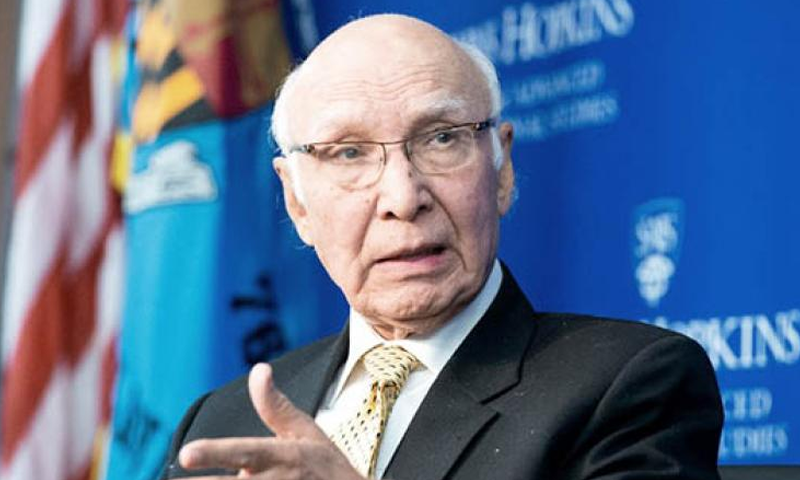
 -File Photo
WEB DESK: As part of the reforms package for the Federally Administered Tribal Areas (FATA) the Federal Ministry of States and Frontier Regions (Safron) has directed the Fata Civil Secretariat to start work on codifications of 'riwaj' (customary) laws.
It may be recalled that a six-member committee headed by the Prime Minister's Adviser, Sartaj Aziz, had made a set of recommendations aimed at mainstreaming the tribal areas that included doing away with the colonial era repressive laws, Frontier Crimes Regulations. Apart from its other tyrannical provisions the FCR gave government representatives, political agents, the power to impose collective punishment on entire tribes for offences committed by individuals. Colonial rulers also codified local customs, so tribal leaders could use them to run their affairs through the traditional 'jirga' (council of elders).
The reform committee has suggested retaining the jirga system for deciding both civil and criminal cases in accordance with the areas' traditions. The Fata Civil Secretariat is to start codifying riwaj in consultation with local elders and legal experts in all of the seven agencies and six frontier regions.
The exercise is to incorporate afresh customary practices into the new judicial system while ensuring that there is no conflict with the fundamental rights. Although the committee's reform proposals provide for a judicial oversight, making customs and traditions the basis of a new justice system in one part of the country is wrong both because it is discriminatory and also because not all customs are worth keeping.
Proponents of the move seem to have the example of Swat and Malakand in mind where the princely state was abolished and its laws abrogated without properly replacing them with an effectively functioning judicial system. As a result, Sufi Mohammad created a lot of trouble at the head of a religious movement, Tehreek-e-Nifaaz-e-Shariat-e-Mohammadi, demanding restoration of the old speedy justice system. The lesson to be drawn from the example is that doing away with the old can help only when replaced with something better.
Riwaj reflects values and social prejudices in societies that are not static. More often than not, traditions are used to oppress weaker sections of society, especially women. It is worthwhile to note in the context that women in certain areas, especially in Lower Dir, are always prevented, as part of an understanding among all political parties, from using their right to vote because the local traditions do not allow women to make their own decisions, therefore, they cannot come out and participate in the electoral exercise as equal beings.
Incorporating traditions in the new Fata judicial system can easily encourage such behaviour. It is hoped that when the Fata reforms committee's recommendations come up for debate in Parliament sometime next month, this particular issue will receive meticulous scrutiny.
Source: Business Recorder
Dense fog shuts motorways in Punjab, KP as air pollution remains severe

Pakistan’s FDI plunges 25% in first five months of current fiscal
PM Shehbaz emphasises technical skills, education for Pakistanis going abroad

Rain spell, thunderstorms expected across Punjab on December 20-21

Pakistan Navy launches fourth Hangor-class submarine Ghazi in China








Comments are closed on this story.