
Water dispute: government all set to write to World Bank, India
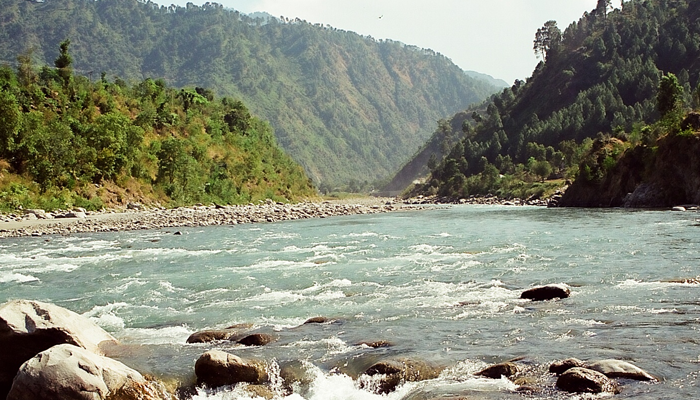
 -File Photo
Pakistan is all set to write to the World Bank and India to formulate Court of Arbitration (CoA) on 330MW Kishanganga and the under-construction 850MW Ratle hydroelectric projects on Chenab river in Held Kashmir in violation of Indus Water Treaty (IWT) 1960, well-informed sources told Business Recorder.
Secretaries of Water and Power of both countries met in New Delhi on July 14-15 to convey their respective positions on the controversial projects as both countries are not ready to go on the back foot.
"We are sending names for the Court of Arbitration (CoA) both to the World Bank and India to resolve a dispute on water rights. Pakistan's position is very strong as we have initiated work well in time," the sources added.
The court comprises seven judges out of which three will be impartial umpires and four will be arbitrators. Of the four arbitrators, two will be chosen by each country (Pakistan and India) and the process of formulating the seven-member court of arbitration will take a few months.
Ministry of Water and Power has also sent a report on the delegation's visit to New Delhi and progress made so far aimed at contesting the case with a very strong legal team, the sources continued.
"India is on the defensive on legal issues which have been raised by Pakistan. India agreed to nominally reduce the pondage of Kishanganga project but not as per Islamabad's demand," the sources maintained.
India on a couple of occasions conveyed to Pakistan that it should resolve water disputes bilaterally instead of taking them up at the international fora.
"The World Bank will establish a special court to resolve water dispute under the Treaty as talks at the level of Permanent Commission of Indus Waters (PCIW) and government-to-government level to resolve the dispute on the designs of both the hydropower projects have failed," the sources further added.
In the Kishanganga case, the pondage in the Indian proposal has been kept at 7.5 million cubic meters (mcm) whereas Pakistan argues that the pondage should be at less than 1 mcm.
Ratle Hydroelectric project includes a 13 m (436 ft) tall gravity dam and two power stations adjacent to one another.
Water from the dam will be diverted through four intake tunnels about 400m south-west to power stations and the main power station will contain four 205MW Francis turbines whereas auxiliary power station will contain one 30MW Francis turbine.
The installed capacity of both power stations will be 850MW. The project is expected to be completed by February 2018.
The Kishanganga project will divert a portion of the Neelum River from Pakistan which will reduce power generation at the Neelum-Jhelum Hydropower Plant.
India states the project will divert 10 percent of the river's flow while other estimates stand as high as 33 percent.
Pakistani legal and water experts argue that there are flaws in the decision of ICJ and Pakistan can get relief in case the decision is challenged.
The International Court of Justice gave its "final award" on 20th December 2013, wherein it allowed New Delhi to go ahead with the construction of Kishanganga over which Islamabad had raised objections.
The court delivered its "final award" after India requested clarification of an order issued by it in February. The "final award" specifies that 9 m3/s of natural flow of water must be maintained in Kishanganga river at all times to maintain the environment downstream.
The court said alternative techniques will have to be used for Kishanganga hydroelectric project and all future run of the river projects undertaken on western rivers of the Indus system. The western rivers are allocated to Pakistan under the Indus Waters Treaty of 1960.
In 1947, the water availability in Pakistan was 5,650 cubic meters per person which kept on decreasing due to: (i) the Indus Water Treaty 1960 giving away 33 MAF water of three eastern rivers to India; (ii) a gradual decline in trans-boundary flows into Pakistan which has been alarmingly raised up to the tune of 10.25 MAF; and (iii) exceptional growth in population of Pakistan making per capita water availability in Pakistan as low as 964 cubic meters per year which makes us a water deficit country and can hamper our well-being and at the same time severely impact future economic development. -Business Recorder

Pakistan, Russia in talks on oil sector cooperation: finance minister

Serial numbers of Indian Rafale jets downed by Pakistan revealed

Govt sets up eight working groups for next NFC Award

Over 340,856 suspected cases of super flu reported in Pakistan

On APS anniversary, president vows zero tolerance for terrorism, its facilitators








Comments are closed on this story.