

Panama Canal shipping fees surge to record $1.1m amid Hormuz disruption
3 min read



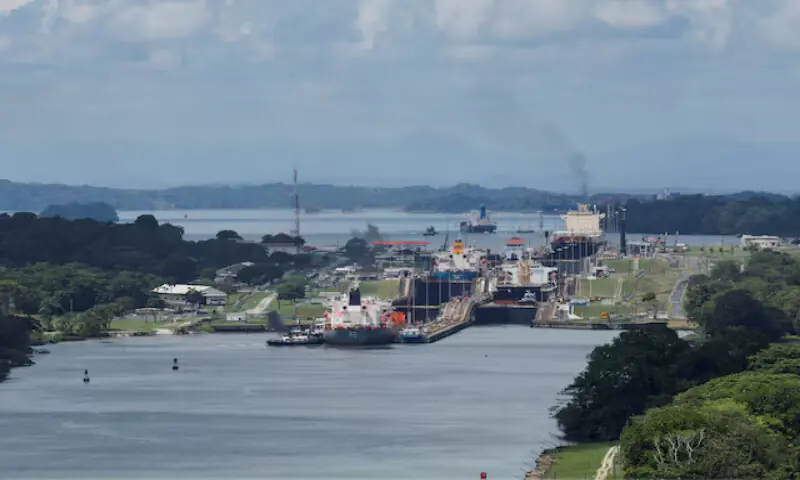
Shipping companies are paying record amounts to secure passage through the Panama Canal as disruptions in the Strait of Hormuz and the Red Sea push more vessels towards the crucial trade route.
Daily auctions for canal transit slots have averaged about $1.1 million this month, more than 16 times the average price recorded during the same period last year, according to Argus.
The sharp increase comes as the war involving Iran continues to severely disrupt shipping through the Strait of Hormuz, while attacks by Houthi fighters have made the Red Sea route increasingly risky, according to a report by the Telegraph.
The Panama Canal, which connects the Atlantic and Pacific oceans, has consequently seen a surge in demand.
Waiting times for vessels have stretched beyond a week, while one container ship reportedly paid $4 million to secure an earlier crossing, according to Bloomberg.
The Panama Canal Authority (PCA) normally charges set reservation fees for vessels using the waterway.
However, shipowners can also bid for slots through an auction system to move ahead of vessels waiting in line.
The increase in demand is adding to concerns over the canal’s capacity, particularly as weather conditions threaten to reduce water levels.
An El Niño weather pattern has raised surface temperatures in the Pacific, increasing the risk of severe drought later this year.
The PCA has already introduced restrictions on ships’ draughts — the distance between the waterline and the lowest point of a vessel’s hull — to conserve water.
Ross Griffith, head of US crude freight pricing at Argus, said the authority had introduced water-saving measures in anticipation of a potentially severe El Niño-driven drought.
He said the measures came as demand for Panama Canal crossings increased following the resumption of hostilities in the Strait of Hormuz and renewed threats to shipping from the Houthis.
The canal is one of the world’s most important trade chokepoints, with around 40% of US trade passing through it.
About $270 billion worth of goods travel through the waterway each year, with China also among its major users.
The disruption to rival routes has increased the canal’s strategic importance.
The Strait of Hormuz remains heavily affected by the conflict that began in February, while attacks in the Red Sea have forced many vessels to reconsider the route.
US President Donald Trump has repeatedly threatened to take control of the Panama Canal, including refusing to rule out military action.
He has accused Panama of charging excessive fees and has also raised concerns about China’s growing influence around the waterway.
Earlier this year, Panama’s Supreme Court revoked a contract awarded to Hong Kong-based CK Hutchison to operate the Balboa and Cristóbal ports at either end of the canal, ruling that the agreement was unconstitutional.
The United States financed the construction of the Panama Canal more than a century ago before transferring control of the waterway to Panama in 1999.
For the latest news, follow us on Twitter @Aaj_Urdu. We are also on Facebook, Instagram and YouTube.