Four major astronomical events to light up skies on August 12
3 min read



Skywatchers are in for a rare celestial spectacle on August 12, when several major astronomical events are set to occur around the same period.
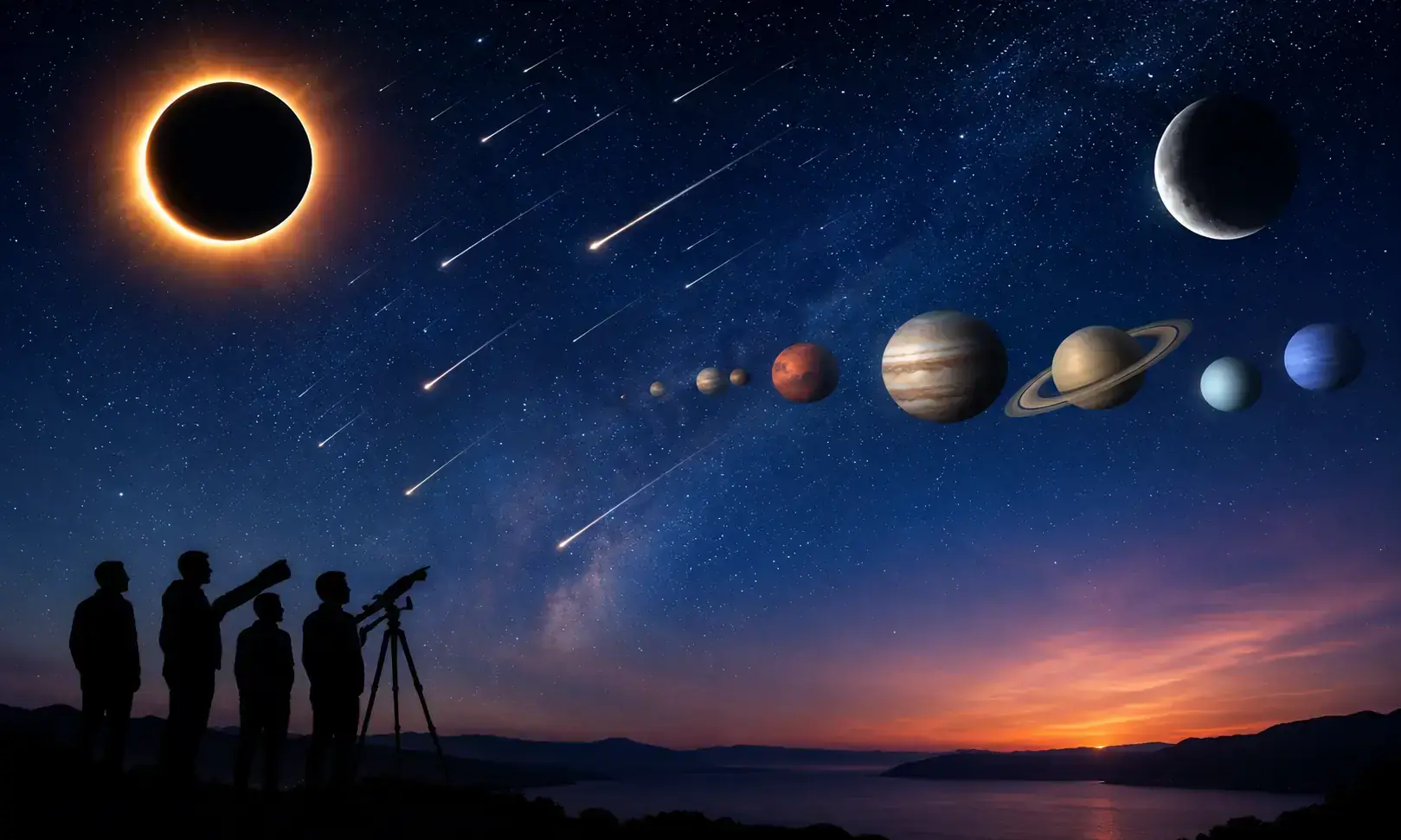
The phenomena include an alignment of six planets, a new moon, a total and partial solar eclipse and the peak of the annual Perseid meteor shower.
According to Fox Weather, August is generally considered a favourable month for skywatching because of the number of astronomical events occurring during the month and relatively moderate nighttime conditions in many areas.
Six planets — Jupiter, Mercury, Mars, Uranus, Saturn and Neptune — are expected to appear in a particular arrangement in the sky during the early hours of August 11 and 12.
According to the Planetary Society, the planetary alignment will become visible before dawn on Tuesday and could remain observable for several nights.
Jupiter, Mercury, Mars and Saturn may be visible to the naked eye under suitable conditions. Uranus is expected to require binoculars or a telescope, while Neptune’s greater distance means a larger telescope will be needed.
As a result, the six planets will not be visible simultaneously to the naked eye.
August 12 will also mark the new moon phase, when the illuminated side of the Moon faces away from Earth. The resulting darker skies can provide better conditions for observing distant stars and meteors.
A solar eclipse will also occur on the same day. According to NASA, the path of totality will cross parts of northern Russia, Greenland, Iceland and northern Spain, with a small part of Portugal also falling within the path.
A partial eclipse will be visible from some areas stretching from Alaska to North Carolina in the United States.
NASA advises people to use special solar eclipse glasses or appropriate solar filters when viewing a solar eclipse. Looking directly at the Sun with the naked eye can cause serious eye damage, while ordinary sunglasses are not safe for eclipse viewing.
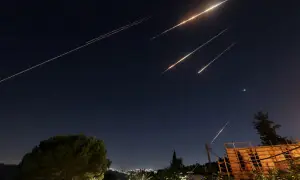
The Perseid meteor shower will reach its peak during the night of August 12 and into August 13. The annual meteor shower is produced by debris left behind by the comet Swift-Tuttle, creating bright streaks across the night sky.
Under favourable conditions, observers may see around 100 meteors per hour, although the actual number can vary depending on location, weather and the darkness of the sky.
This year’s viewing conditions are expected to be relatively favourable because the meteor shower’s peak coincides with the new moon. Reduced moonlight should make the sky darker and improve the chances of spotting meteors.
NASA recommends viewing the northeastern sky after dark, although meteors can appear across the entire sky. Observers are therefore advised to keep their view as wide as possible.
Experts recommend choosing a dark, open location away from city lights. Allowing the eyes around 30 minutes to adjust to the darkness can also improve visibility.
However, all four phenomena will not be visible from the same location at the same time. The solar eclipse will be limited to specific geographical areas, while visibility of the planetary alignment and meteor shower will depend on the observer’s location and local weather conditions.
For the latest news, follow us on Twitter @Aaj_Urdu. We are also on Facebook, Instagram and YouTube.