

FO: Hormuz progress key to easing wider Gulf tensions
4 min read



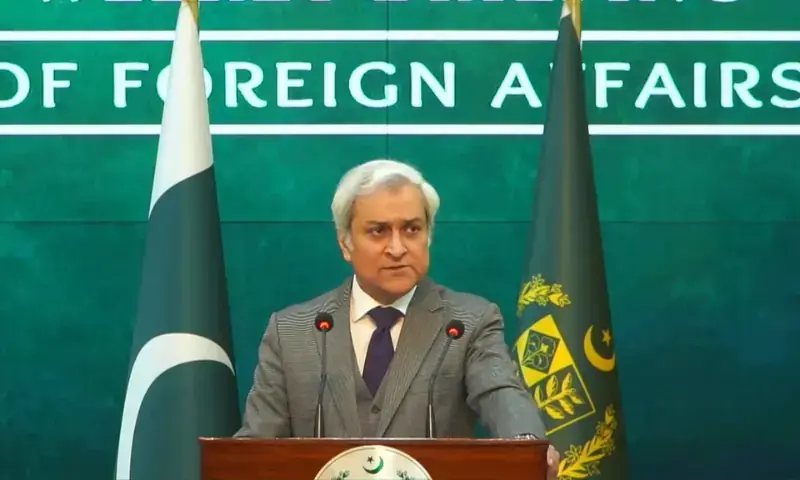
Foreign Office Spokesperson Tahir Andrabi said in a weekly media briefing on Thursday that resolving the standoff in the Strait of Hormuz was key to easing the wider conflict in the Gulf and Middle East, particularly between Iran and the United States, reaffirming its support for diplomatic efforts to achieve a lasting settlement of the regional crisis.
Pakistan remained actively engaged with regional countries to promote de-escalation and dialogue, adding that progress on the Strait of Hormuz would help create conditions for resolving broader tensions, including renewed engagement between Iran and the United States, FO spokesperson said.
He said Pakistan would continue to pursue diplomatic engagement and support initiatives aimed at resolving the crisis, describing diplomacy as the only viable path to sustainable peace and stability in the region.
Andrabi said Oman, as a littoral state overlooking the Strait of Hormuz and the Gulf, had consistently played a constructive role in promoting regional peace and stability, and Pakistan appreciated its efforts to foster de-escalation and peaceful coexistence.
Responding to a question, Andrabi said the continuing standoff in the Strait of Hormuz had complicated efforts to achieve a sustainable settlement of the wider crisis involving Iran and the United States.
He said any progress on the waterway would create a conducive atmosphere for the parties to return to dialogue envisaged under the Islamabad Memorandum of Understanding and the Pakistan-Qatar Joint Statement.
“We hope that an agreement on the Strait of Hormuz will pave the way for continued dialogue, particularly the resumption of technical talks between Iran and the United States,” he said.
Andrabi said Pakistan’s diplomatic engagements over the past week reflected its commitment to promoting dialogue and regional stability.
He said Deputy Prime Minister and Foreign Minister Ishaq Dar held a telephone conversation with Saudi Foreign Minister Prince Faisal bin Farhan on July 30, during which they discussed regional developments, including the situations in the Red Sea, Bab al-Mandeb and Palestine.
On Aug. 3, Dar also spoke with Iranian Foreign Minister Abbas Araghchi. The two sides discussed regional and international developments, including the situation in occupied East Jerusalem, while Pakistan invited the Iranian foreign minister to undertake an official visit to Islamabad.
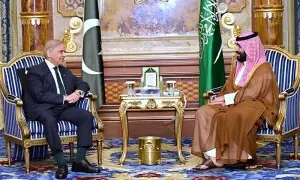
Andrabi said Prime Minister Shehbaz Sharif was undertaking an official visit to Saudi Arabia from Aug. 6 to 8, accompanied by a high-level delegation including Dar, the army chief, the chief of defence forces and other federal ministers.
During the visit, PM Shehbaz is scheduled to hold talks with Saudi Crown Prince Mohammed bin Salman on strengthening bilateral relations and exchanging views on regional and international developments.
Although taking place against the backdrop of heightened tensions in the Gulf, the visit carried significance beyond the immediate crisis and would deepen strategic cooperation, enhance coordination on regional and international issues and reinforce multilateral cooperation, Andrabi said.
The spokesperson also highlighted Dar’s participation in the Ministerial Meeting on Jerusalem in Amman on Aug. 5, where Pakistan reiterated its support for the Palestinian people and reaffirmed its commitment to the establishment of an independent Palestinian state based on the pre-1967 borders, with East Jerusalem as its capital.
He said the foreign ministers of the R-4 Group - Egypt, Pakistan, Saudi Arabia and Türkiye - met on the sidelines of the conference and reaffirmed their support for the rights of the Palestinian people while stressing continued consultation and diplomacy to promote regional peace, security, stability and de-escalation.
Responding to a question on attacks on commercial vessels transiting through Bab al-Mandeb, Andrabi said Pakistan had consistently condemned attacks on maritime shipping regardless of the nationality of the vessels.
“We have condemned attacks on vessels in Bab al-Mandeb, whether they are Saudi or from any other country. Pakistan-Saudi Arabia cooperation will continue,” he said.
On Afghanistan, Andrabi said Pakistan had repeatedly conveyed to the Afghan authorities its concerns over the use of Afghan soil by militant groups to launch attacks inside Pakistan and had urged Kabul to ensure its territory was not used for terrorism against any other country.
Commenting on India’s remarks on the ongoing legislative assembly elections in Azad Jammu and Kashmir, Andrabi rejected them as baseless and politically motivated, saying the elections were being held peacefully and transparently under the territory’s constitutional and legal framework.
On Bangladesh, Andrabi said Pakistan’s engagement with Dhaka continued through normal diplomatic channels and was not confined to any single event. He said Pakistan did not interfere in the internal affairs of other countries and respected Bangladesh’s sovereign choices while continuing to cooperate for mutual progress and prosperity.
For the latest news, follow us on Twitter @Aaj_Urdu. We are also on Facebook, Instagram and YouTube.