

India's 'Cockroach' protests spread, piling pressure on Modi
3 min read



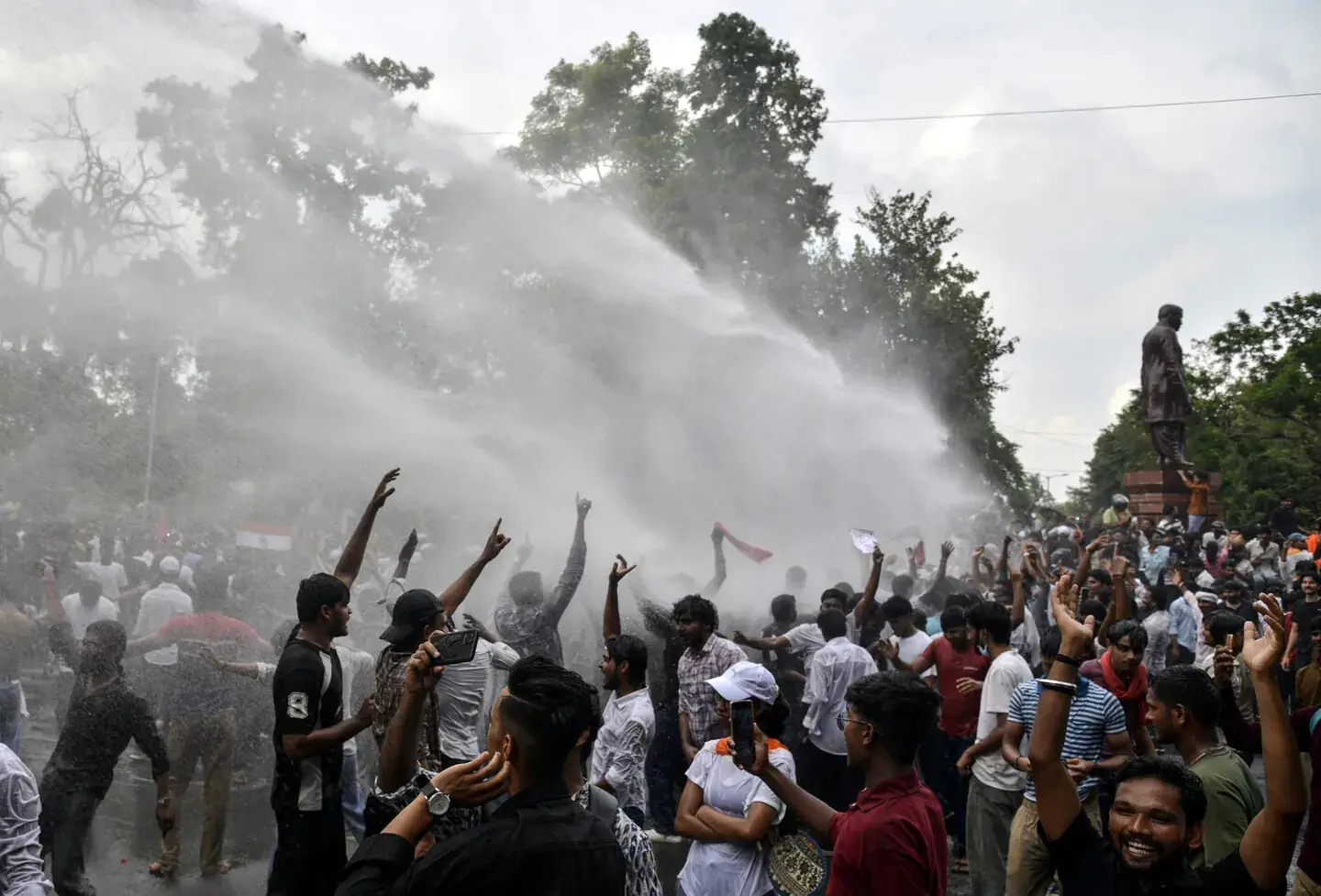
Protests led by India’s online “Cockroach” movement gathered fresh momentum on Wednesday, as thousands of demonstrators remained camped at New Delhi’s Jantar Mantar while similar rallies spread to several cities across the country.
What began as a social media campaign under the banner of the Cockroach Janta Party (CJP) has quickly grown into one of the biggest challenges facing Prime Minister Narendra Modi’s government since his re-election in 2024.
The movement has mobilised thousands of young Indians, reflecting growing anger over repeated exam paper leaks, rising unemployment and the government’s failure to address their concerns.
Protesters have refused to vacate their camps at New Delhi’s Jantar Mantar until Education Minister Dharmendra Pradhan steps down.
Protesters said the minister failed to prevent a series of examination scandals that have eroded students’ trust in the country’s education system.
The movement has also spread beyond New Delhi, with demonstrations reported in cities including Mumbai, Bengaluru and Patna.
In the eastern city of Patna, police fired tear gas and water cannons to disperse protesters calling for Pradhan’s resignation, according to local media reports.
The campaign gained fresh political momentum after opposition parties openly backed the protests.
Congress leader Rahul Gandhi, who was briefly detained during demonstrations on Tuesday, renewed his criticism of the government in parliament on Wednesday, demanding accountability over the police crackdown on student protesters earlier this week.
Addressing reporters after the parliamentary session, Gandhi pledged his support for the demonstrators.
“We are going to ensure that you are protected and your future is protected,” he said.
The opposition has also demanded that the government apologise for Monday’s police action, during which security forces fired tear gas and used batons to disperse tens of thousands of protesters attempting to march on parliament at the start of the monsoon session.
Rights organisations have accused police of using excessive force and questioned the legality and proportionality of the crackdown.
The CJP movement first emerged in May as an online satirical campaign after reports that Chief Justice Surya Kant had likened young people to “cockroaches” and “parasites” during a court hearing.
Since then, it has evolved into a nationwide youth movement focusing on examination scandals, unemployment, opportunities for young people and what organisers describe as the Modi government’s increasingly authoritarian style of governance.
Public anger intensified after the leak of India’s medical entrance examination paper forced more than two million candidates to retake the test, while controversy over the online marking of examinations affecting nearly two million high school students has further fuelled the protests.
The sustained demonstrations have become one of the largest youth-led protest movements in India in recent years, placing growing political pressure on the Modi government as parliament remains in session.
For the latest news, follow us on Twitter @Aaj_Urdu. We are also on Facebook, Instagram and YouTube.