


US reinstates sanctions on Iranian oil sales after attacks on ships in Hormuz
2 min read



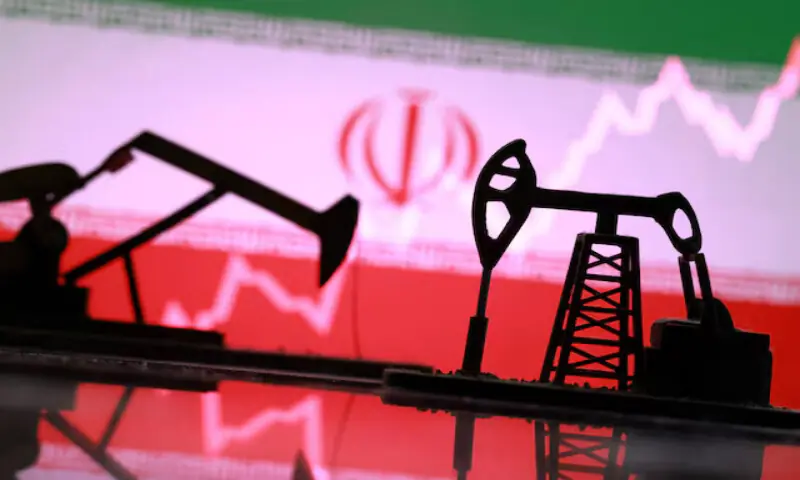
The United States on Tuesday re-imposed sanctions on Iranian oil, as a US official warned that Iran’s attacks on vessels in the Strait of Hormuz were “wholly unacceptable” and would be met with consequences.
Oil prices were up more than 5% following the announcement.
The US Treasury had authorised last month Iran oil sales until August 21 as part of the fragile agreement between Tehran and Washington.
Tuesday’s revocation cuts that wind-down period to an end date of July 17.
The US move came after three tankers reported being struck by unknown projectiles in and near the Strait of Hormuz in recent days, the British navy-affiliated agency UKMTO said in a report.
There was no immediate comment from Tehran or any claim of responsibility.
The US official said negotiators continued to work in good faith toward a final agreement with Iran despite the latest escalation.
The attacks and the US response threaten to put the diplomatic understanding between Washington and Tehran on shaky ground, raising the risk that further retaliation could derail negotiations over a broader agreement.
Another US official, speaking on condition of anonymity, said initial indications were that Iran had fired at three commercial vessels.
The Strait of Hormuz, a narrow waterway between Iran and Oman, is one of the world’s most important energy choke points.
Roughly a fifth of global oil and liquefied natural gas shipments passed through the strait each day before the war.
Any prolonged disruption could push up energy prices and increase pressure on consumers and governments already facing higher fuel costs.
Oil exports remain a critical source of revenue for Iran, providing billions of dollars in hard currency that help fund government spending and support an economy weakened by years of US sanctions.
Despite restrictions, Tehran has managed to expand shipments in recent years, largely to China, making oil sales one of the country’s most important economic lifelines.
Oil prices have fallen steeply since the agreement was struck last month.
Bob McNally, president of Rapidan Energy Group, said the developments “signal that the ceasefire is not as solid and durable as the oil market has chosen to assume,” and added that “the oil market has some risk pricing to do.”
For the latest news, follow us on Twitter @Aaj_Urdu. We are also on Facebook, Instagram and YouTube.










Comments are closed on this story.