


Israel damaged heritage sites across south Lebanon, minister says
4 min read

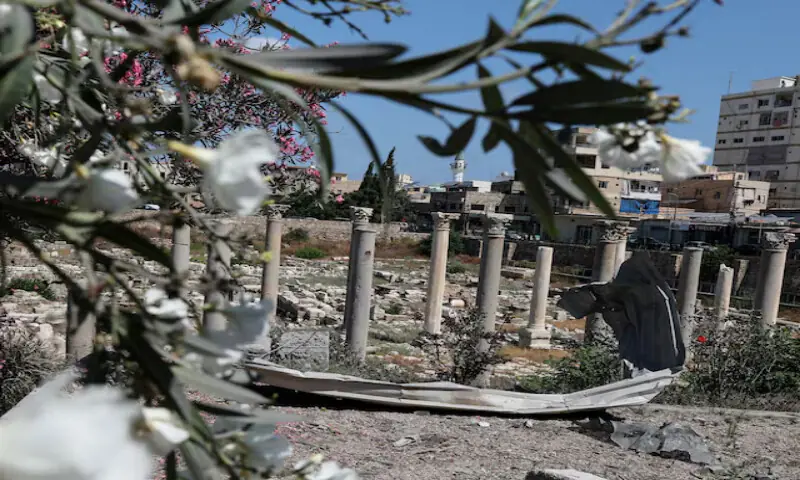
A crown was blown off an ancient column in a UNESCO-listed site in Lebanon’s port city of Tyre.
A pilgrimage site for Muslims and Christians alike was destroyed in another southern town.
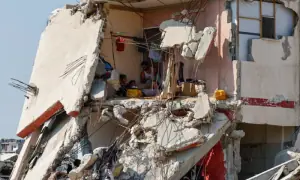
Israeli strikes pummelled the Mamluk-era market in the city of Nabatieh, and the rogue troops razed centuries-old Lebanese border towns.
Israel’s nearly four-month air and ground campaign in Lebanon has damaged or destroyed revered heritage sites across southern Lebanon, Lebanese Culture Minister Ghassan Salame told Reuters.
Despite a ceasefire that took hold a week ago, authorities have yet to build a full picture of the damage as Israeli troops still occupy a zone about 10 km deep into Lebanon that is off-limits to Lebanese, Salame said.
“We cannot work under the shadow of occupation,” he said.
That occupation zone includes the medieval Beaufort Castle as well as centuries-old villages that were home to Christians, Muslims and their places of worship.
“There are villages that have been completely bulldozed,” Salame said.
Even ancient towns outside the zone were pummeled with air strikes, including Tyre and Nabatieh.
Heavy bombing hit the town of Tebnin, prompting fears that its Crusader fortress was also damaged, Salame said.
“Heritage is not only Roman and Phoenician antiquities,” he added.
“Heritage is also historic buildings, archaeological sites, and buildings with a cultural function.“
In response to questions from Reuters, Israel’s military said it does not aim to “cause excessive damage to civilian infrastructure and strikes only out of military necessity, with consideration for the safety of its citizens,” a reference to residents of northern Israel, which Hezbollah has targeted.
It said it took into account the existence of “sensitive sites” and applied “a rigorous approval process as required”.
Israel has accused Hezbollah of placing weapons in Beaufort Castle, a claim that Lebanese authorities deny.
Ancient ruins damaged
Modern-day Lebanon sits at the intersection of civilisations, including the Phoenicians, Byzantines, Mamluks and Crusaders, each leaving their mark with temples, castles and mausoleums.
Nearly 5,000 years old, Tyre and its Roman ruins are the products of that heritage.
Established as an island fortress, Tyre was permanently connected to the mainland by the invading forces of Alexander the Great.
It has survived repeated rounds of conflict.
After the recent war, much of the city has been turned to rubble, and dust-caked cars with blown-out windows are parked around the collection of columns erected in honour of long-forgotten deities.
Barriers set up to shield ancient ruins from Israeli strikes or flying debris were blown into the middle of the site they were meant to protect.
“Look at the damage that happened to it, it’s as if it all exploded from underneath, as if an earthquake hit it,” said Adnan Istanbouli, an official from Lebanon’s antiquities department, as he stood near a Roman mosaic.
Alwan Charafeddine, deputy mayor of Tyre, said “it is supposed to be one of the cities that is internationally protected, or that should never be targeted in any way, in any conflict.”
Request for increased protection
In a statement last month, the United Nations Educational, Scientific and Cultural Organisation (UNESCO) said it was concerned about the state of conservation of Tyre, a World Heritage Site that is under the body’s enhanced protection status.
It also said it was “deeply alarmed” by reports of damage to a citadel in the southern town of Chama and fighting by Beaufort Castle, while condemning what it described as “unlawful attacks against cultural property.”
The agency had voiced similar concerns over the fate of historical sites in Iran in March.
When Israeli bombing spread to the ruins of Tyre, Salame asked UNESCO to reclassify it as a UNESCO World Heritage Site in Danger, which would trigger more protection responsibilities on UNESCO and the international community. It has not yet been listed as one.
Radical Israeli Defence Minister Israel Katz said earlier in the war that Israel would destroy all houses along Lebanon’s border with Israel.
Salame said he feared Israel’s campaign would permanently erase centuries of Lebanese history.
“There is something systematic: a systematic destruction of villages, hamlets, and entire towns,” Salame said.
For the latest news, follow us on Twitter @Aaj_Urdu. We are also on Facebook, Instagram and YouTube.






Comments are closed on this story.