


Trump says US-Iran agreement averts ‘worldwide depression’
2 min read



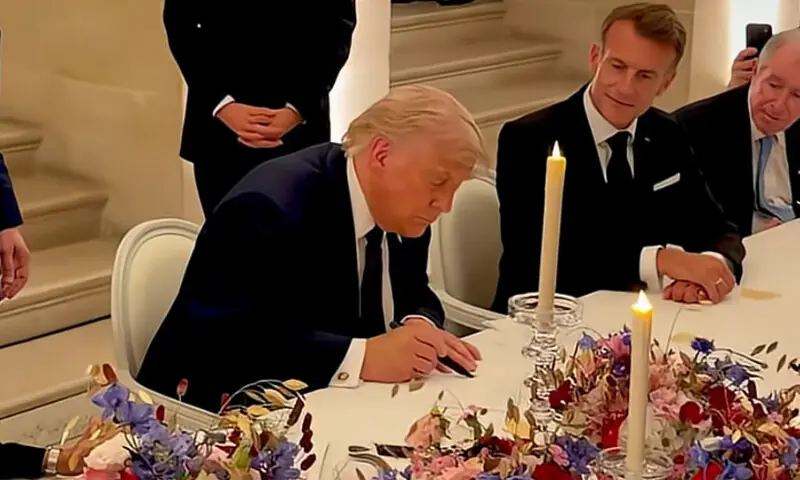
US President Donald Trump has described the 14-point US–Iran agreement as a “major win” for the United States, saying it helped avert a “worldwide depression.”
In remarks on Wednesday, Trump shifted from earlier threats of renewed military action against Iran to a more conciliatory tone, suggesting Tehran could retain limited rights to enrich uranium for civilian purposes.
He also indicated that the United States would need to return billions of dollars in frozen Iranian assets.
The agreement is being viewed as a 60-day ceasefire framework designed to pave the way for broader negotiations.
It has drawn criticism from US political opponents and is expected to fuel anger among Israeli officials and Republican hardliners.
Iran’s President Masoud Pezeshkian signed the deal from Tehran, while US Vice President JD Vance is expected to formally sign it at a ceremony in Geneva on Friday.
Iranian chief negotiator Mohammad Bagher Ghalibaf said the agreement represented “a record of US failure.”
Trump defended the accord, saying no US president had been tougher on Iran and arguing that “the market loves it,” adding that failure to reach a deal could have triggered a global economic crisis.
He said reopening the Strait of Hormuz was essential to global stability, warning that continued conflict could have endangered international shipping and energy flows.
Senior US officials said the agreement is designed to prevent Iran from developing a nuclear weapon, including provisions for discussion on down-blending Iran’s stockpile of highly enriched uranium under International Atomic Energy Agency supervision.
The deal includes the lifting of a US naval blockade on Iranian ports, waivers for Iranian oil exports, and potential easing of sanctions, alongside plans for a $300 billion reconstruction fund supported by regional partners.
Trump rejected claims that the US would contribute funds directly, saying Gulf states would finance investment conditional on Iran’s compliance.
The agreement also includes provisions related to Lebanon, calling for restraint on military operations and ensuring territorial integrity, while Iran has pledged not to pursue nuclear weapons and to restrain allied groups in the region.
However, Iranian officials have signalled that the Strait of Hormuz will not simply return to pre-war conditions, suggesting Tehran may continue to exercise control and levy fees on shipping after the initial 60-day period of toll-free passage.
International reactions remain divided. France’s President Emmanuel Macron welcomed the agreement as a step toward stabilising the region, while G7 leaders said it presented a “historic opportunity” but urged further negotiations on Iran’s missile programme and regional activities.
Analysts, however, warned that key technical issues —particularly around nuclear verification, sanctions relief, and enforcement—remain unresolved and could complicate implementation.
For the latest news, follow us on Twitter @Aaj_Urdu. We are also on Facebook, Instagram and YouTube.






Comments are closed on this story.