


How data centres are heating up planet's resource crisis
7 min read




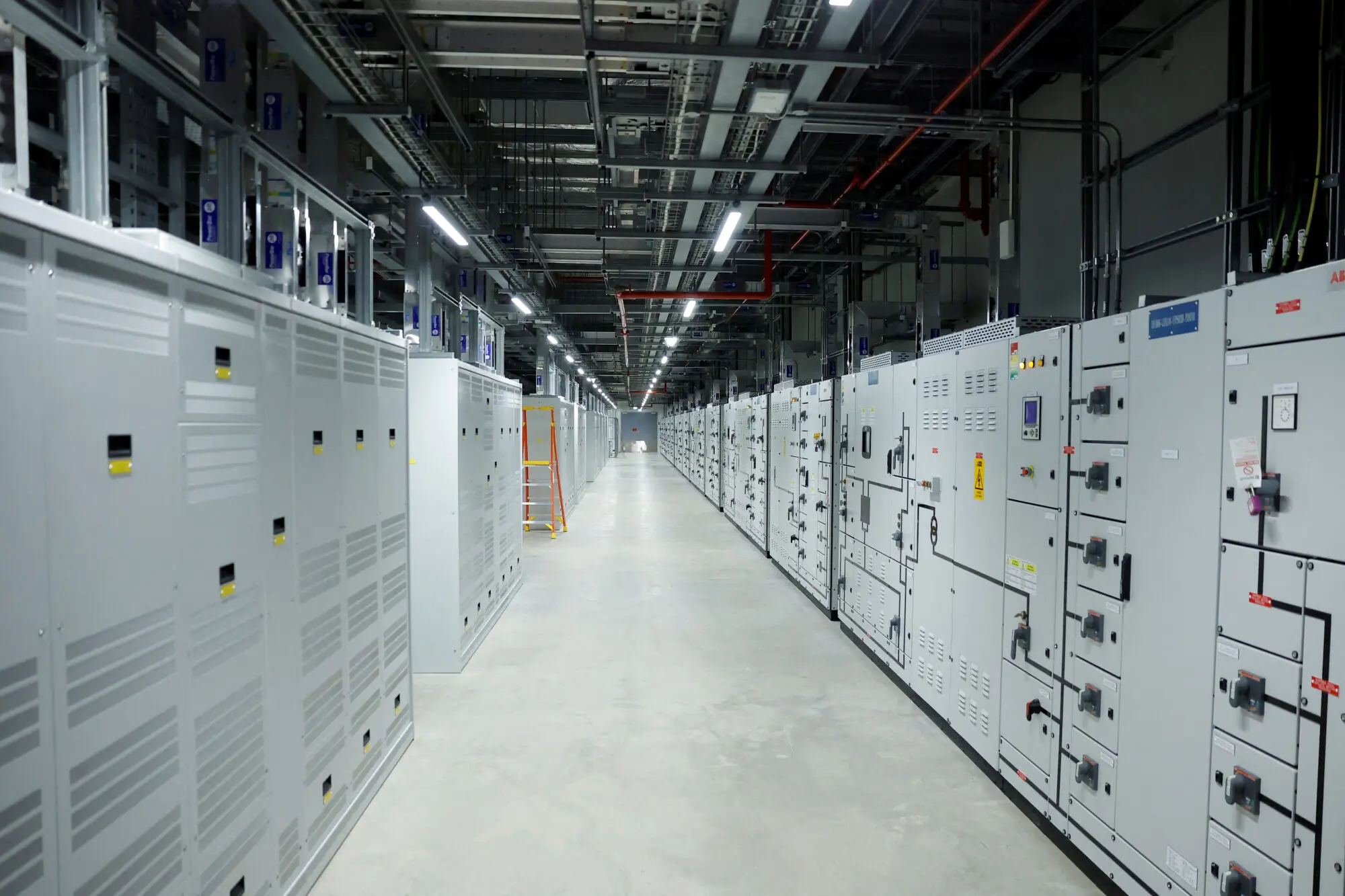
When traders woke up in late November 2025 to find currency markets, futures, and commodities suddenly frozen, the culprit was not a rogue algorithm or a geopolitical shock. It was heat.
A cooling failure at a data centre near Chicago operated by CyrusOne — one of more than 55 facilities the company runs across the United States, Europe and Japan — had knocked out the CME Group, the world’s biggest exchange operator. Engineers were scrambled to get the cooling system back online.
The incident offered a rare, public glimpse into one of the defining infrastructure challenges of the AI era: how to stop data centres from overheating — and at what cost to the planet’s resources.
Why data centres run hot
The answer lies in the physics of computing. Data centres contain racks of servers stacked together, constantly switched on, consuming enormous quantities of power. AI and cloud servers crunching data generate intense heat that traditional air cooling systems are increasingly unable to handle.
“The chips that are in those data centres need to stay within certain temperatures, otherwise they either malfunction or they turn off,” said Daniel Mewton, a partner in the infrastructure, energy and natural resources practice at law firm Slaughter and May.
Cooling is not a minor operational expense — it is a defining one.
According to law firm White & Case, up to 40% of total energy consumption in data centres goes towards keeping them cool.
That has made the cooling sector a booming business in its own right.
In November 2025, power management firm Eaton announced it would acquire Boyd Corporation’s thermal business from Goldman Sachs Asset Management for $9.5 billion.
Competitor Vertiv has entered a $1 billion deal for PurgeRite Intermediate to expand its liquid cooling services.
The scale of the problem
The heat challenge is inseparable from the sheer scale of what is being built.
Last year, data centres consumed 448 terawatt-hours of electricity globally — more than the entire nation of Saudi Arabia uses in a year — with AI accounting for roughly a fifth of that total, according to a report from the United Nations University Institute for Water, Environment and Health.
The numbers are set to grow dramatically. Annual power consumption from data centres is projected to nearly double, reaching 945 TWh by 2030 — roughly equivalent to Japan’s entire national electricity consumption — with AI’s share rising to 40% of the total.
“The public debate still often treats AI as software, but AI is also physical infrastructure: data centres, electricity generation, cooling systems, transmission networks, chips, minerals, land and water,” said Kaveh Madani, the institute’s director and the report’s lead author.
The land footprint of data centres is also forecast to more than double, from around 6,900 square kilometres last year to over 14,500 square kilometres by 2030.
A thirst that cannot be ignored
Heat and electricity are only part of the burden. Cooling data centres requires vast quantities of water — and the AI boom is set to make that demand far more acute.
Data centres consumed 4.5 trillion litres of water last year, enough to meet the needs of more than 600 million people in Sub-Saharan Africa, the UN researchers found.
By 2030, that figure is expected to reach 9.3 trillion litres.
AI-driven growth alone could consume as much extra water each year as Americans currently drink, according to estimates from Ecolab, an $85 billion hygiene and water treatment specialist.
The standard method of cooling — evaporating water to remove heat — is the core of the problem.
When water evaporates, it effectively disappears from the local ecosystem.
AirTrunk, the Asia-focused Australian data centre operator acquired by Blackstone for $16 billion in 2024, acknowledged in its own sustainability report that 85% of the water it uses evaporates as it cools — a fact it initially described as water being “returned to the environment,” wording it later agreed to change after the misleading framing was pointed out.
The promise and limits of liquid cooling
The industry has begun responding. Liquid cooling, which can be up to 3,000 times more efficient than air at removing heat, is increasingly being adopted. More data centres are turning to water or specialised coolants circulated directly around server components, rather than cooling the surrounding air.
At the Consumer Electronics Show in January 2026, Nvidia chief executive Jensen Huang announced that the company’s new Vera Rubin chip system could be cooled using water at 45 degrees Celsius, compared to the current industry standard of around 6 degrees Celsius.
Because cooling water typically requires it to be chilled — a process that often involves evaporation — the higher temperature threshold significantly reduces water waste.
Microsoft has gone further, beginning construction of data centres that use “closed-loop” cooling systems, in which liquid circulates locally around the semiconductor housing rather than being used to cool ambient air.
The company says this approach can cut water consumption by 90%.
Microsoft has also financed a water treatment plant in Washington state allowing it to reuse data centre water.
Elon Musk’s xAI paid $80 million to treat and sell water contaminated by a former coal-fired power station near its Memphis AI data centre.
AirTrunk, meanwhile, taps recycled water for 55% of its intake and is building a wastewater treatment facility in Malaysia.
However, these advances address only part of the problem. The closed-loop systems being promoted by Nvidia and Microsoft apply to new facilities.
Some 80% of existing data centre sites handle older cloud-computing workloads that predate the AI boom and are unlikely ever to be upgraded to the latest cooling technology, according to S&P Global.
Cooling outages remain rare but not impossible. Data centres are contractually required to remain operational more than 99.99% of the time, making failures like the CyrusOne incident exceptional — but as the CME Group disruption demonstrated, even brief failures carry enormous consequences.
The bigger picture: water, energy and geography
On-site water savings also obscure a deeper problem. Data centres consume vast amounts of electricity, most of which still comes from gas and coal — power sources that are themselves water-intensive.
The Lawrence Berkeley National Laboratory estimated that US data centres directly consumed around 66 billion litres of water in 2023.
The indirect effect, through energy consumption, was 800 billion litres — more than twelve times larger.
Geography compounds the risk. Data centres tend to cluster together — in Arizona, Virginia and Singapore — and many of these hubs sit in areas already facing chronic water stress.
Almost half of all data centres are located in regions of high or very high water stress, per S&P Global, either because they are in arid zones or because available water has already been allocated to other users.
Phoenix, home to a major data centre cluster, is heavily dependent on the Colorado River, whose flow has been declining for 20 years and whose two main reservoirs are currently only 30% full.
A water utility in Melbourne, which endured a decade-long drought at the start of this century, is currently reviewing applications from 19 data centres that together are seeking permits for 20 billion litres of water a year.
Semiconductor fabrication plants — which produce the chips that power AI — add yet another layer of demand.
Taiwan’s TSMC is expanding in Arizona, where Intel also operates.
These so-called fabs require ultra-pure water to clean chips during manufacturing, recycle only a small percentage of what they use, and can consume as much water in a single week as a food processing plant uses in an entire year, according to one industry insider.
A race outpacing its solutions
The UN researchers are clear-eyed about the trajectory. “AI will not simply ‘run out’ of water or electricity worldwide,” Madani said. “
But in specific places, poorly planned data centre expansion could collide with existing resource pressures.
That is why responsible planning matters now, before infrastructure and dependencies become locked in.“
The broader warning is about governance as much as technology.
Unless governments respond to the rising environmental costs, the rapid rollout of AI infrastructure could strain land resources and generate mountains of electronic waste — on top of the power and water pressures already mounting.
“Right now, the competition for growing faster than others overshadows the very basic principles of sustainable growth,” Madani said.
The cooling sector’s deal-making boom, and the brief but telling panic that Huang’s CES announcement triggered — wiping $15 billion from the market value of five major heating, ventilation and air conditioning companies in a matter of days — suggest investors understand that the industry’s resource risks remain far from resolved.
All five companies have since recovered and trade well above their January lows.
Modine Manufacturing, once known for making tractor radiators, has risen 83%.
The message from the market is the same as the one from the UN: the heat problem is real, the solutions are partial, and the clock is running.
For the latest news, follow us on Twitter @Aaj_Urdu. We are also on Facebook, Instagram and YouTube.
















Comments are closed on this story.