


US–Iran deal: World leaders praise Pakistan’s pivotal mediation role
5 min read



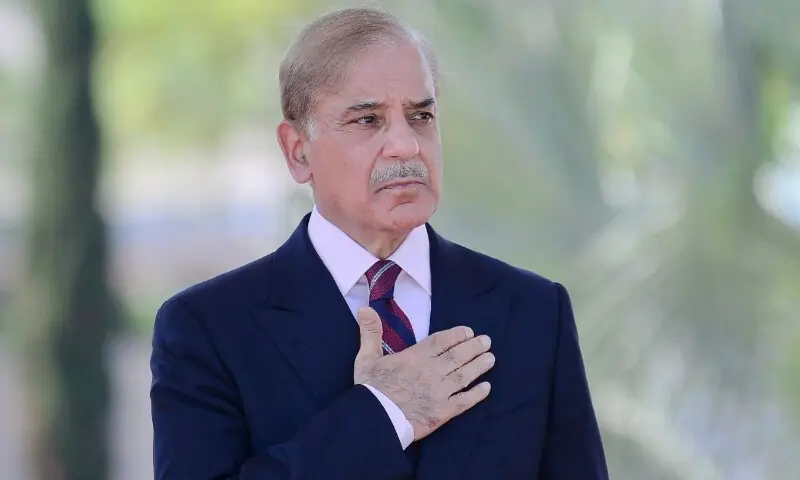
World leaders on Monday welcomed the deal reached between the United States and Iran to de-escalate tensions in the Middle East, hailing it as a significant diplomatic breakthrough that could restore stability, reopen the Strait of Hormuz, and ease global economic pressures.
In a series of statements, leaders and senior officials from the United Nations, Australia, Qatar, France, Türkiye, Japan, New Zealand, and Germany expressed support for the agreement, which builds on earlier ceasefire efforts and paves the way for broader negotiations on Iran’s nuclear programme and regional security.
Pakistan’s pivotal mediation role has once again come into the international limelight, with multiple world leaders appreciating Islamabad’s diplomatic efforts that helped initiate the ceasefire and facilitated the eventual US-Iran understanding.
UN Secretary-General António Guterres congratulated the US and Iran for having reached a peace deal that provided for an immediate and permanent ceasefire, the reopening of the Strait of Hormuz, as well as a framework for further negotiations.
“This represents a critical step towards the peaceful settlement of the conflict,” Gueterres remarked in a statement.
“My deep appreciation goes to Pakistan, Qatar, Egypt, Saudi Arabia, Türkiye, and other regional countries, for the constructive role played in supporting the negotiations that led to the peace deal,” he added.
Australia
Australian Prime Minister Anthony Albanese and Foreign Minister Penny Wong, in a joint statement, commended “the efforts to date of Pakistan, Qatar, Saudi Arabia, Türkiye and other mediating countries.”
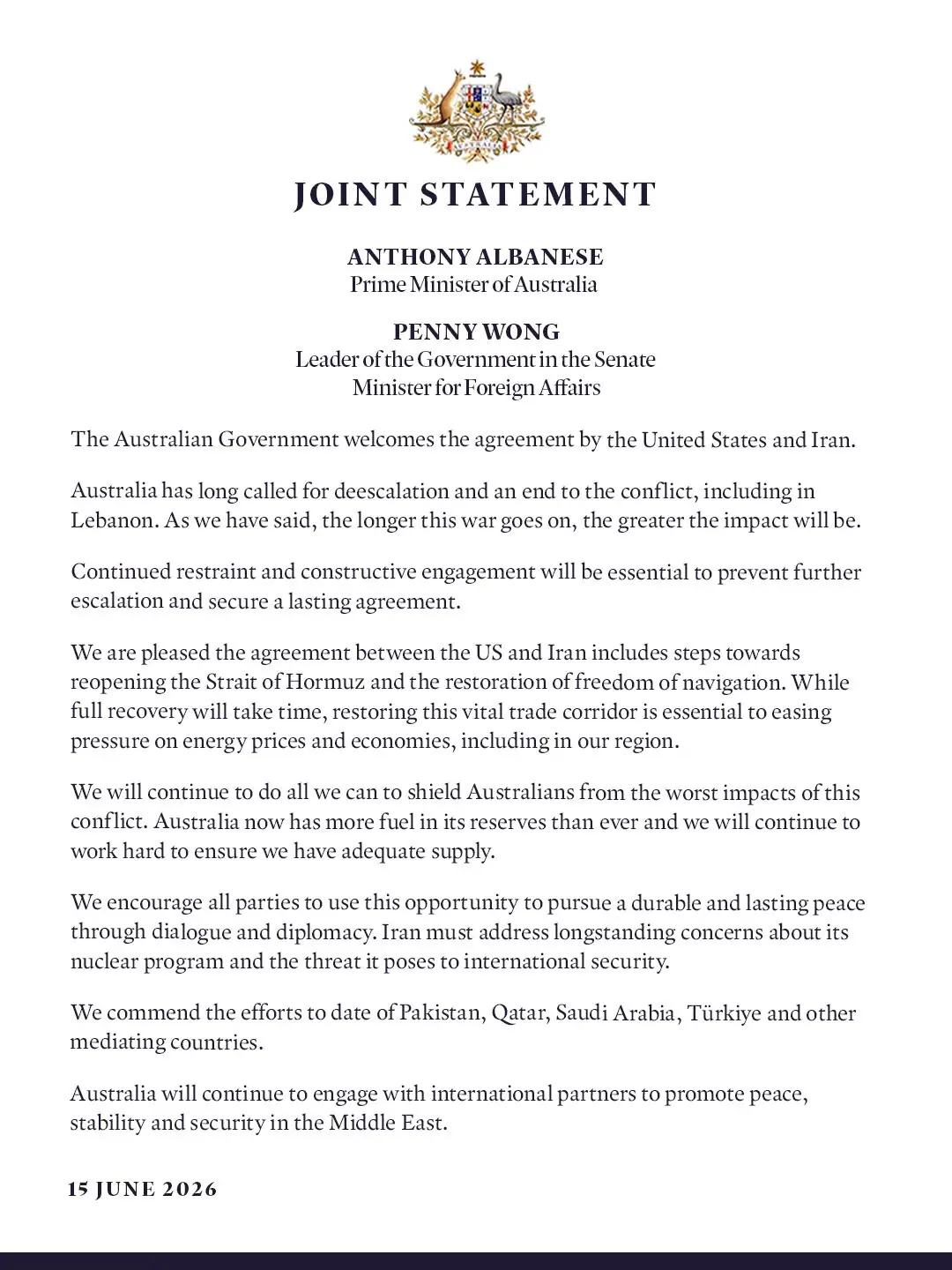
They emphasised that Australia had long called for de-escalation, including in Lebanon, and welcomed steps toward reopening the Strait of Hormuz.
Turkey
Turkish President Recep Tayyip Erdogan described the agreement as “an important development for establishing peace and tranquillity in our region.”
He specifically thanked Pakistan for its “exceptional mediation efforts,” particularly to the leaderships of the United States and Iran, and also appreciated the support provided by Qatar and Saudi Arabia.
Qatar
Qatar’s Ministry of Foreign Affairs, in its statement, extended “thanks to our brothers in the Islamic Republic of Pakistan, as well as to all regional and international parties” that contributed to the agreement.
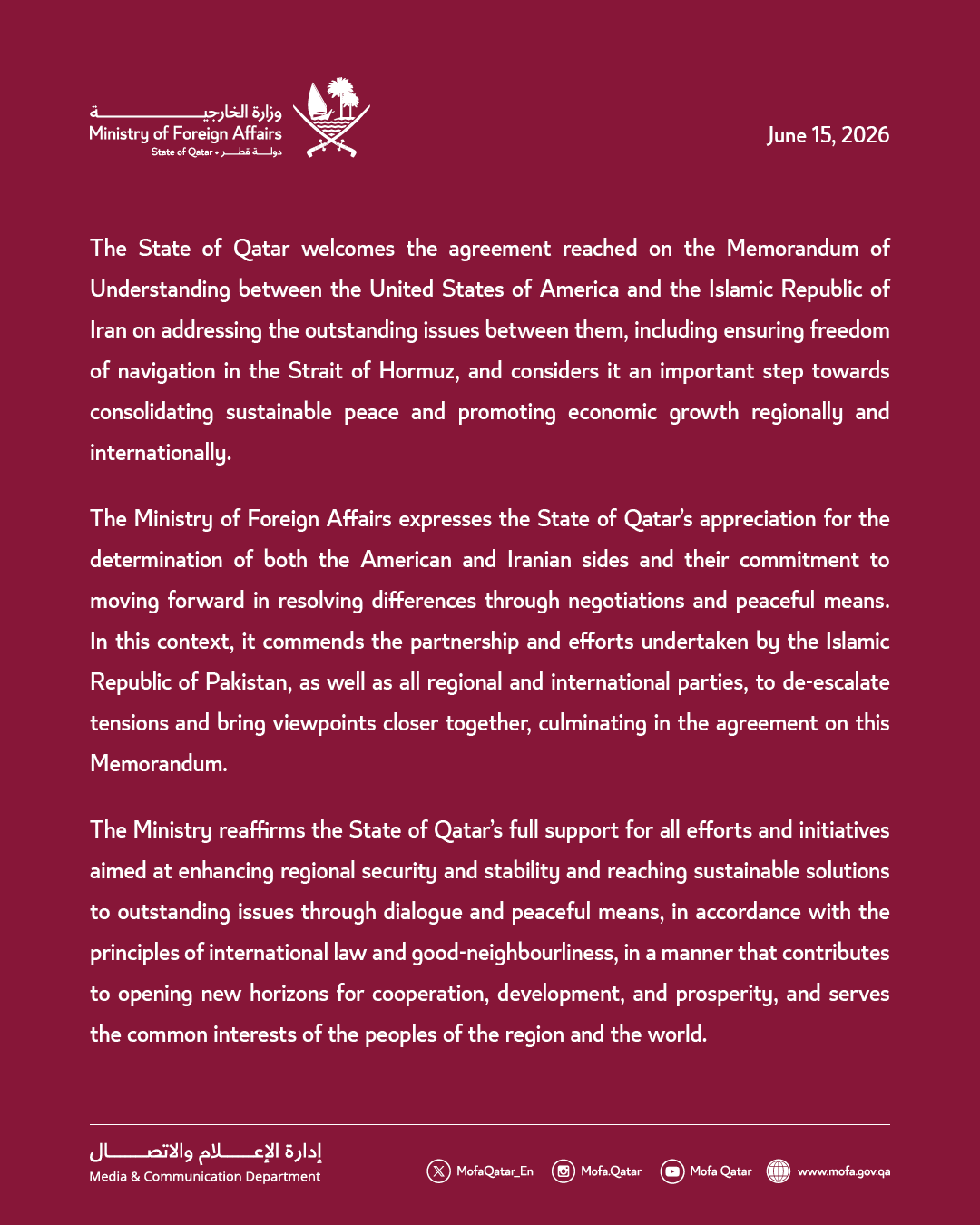
The statement highlighted Pakistan’s role in creating conditions for the Memorandum of Understanding on outstanding issues, including freedom of navigation in the Strait of Hormuz.
France
French President Emmanuel Macron, in a statement, said that the agreement was the result of a diplomatic effort to which several partners have contributed, and called for its rapid and complete implementation by all belligerents.
He said the deal also paved the way for comprehensive negotiations in the service of peace and security for all in the Middle East.
Japan
Japan’s Prime Minister Sanae Takaichi commended “the efforts of the relevant countries that have played a mediating role to date.”
“We welcome the agreement on this memorandum as a major step toward the resolution of the situation. This is the result of the parties concerned pursuing a diplomatic solution and engaging in persistent negotiations. At the same time, we highly commend the efforts of the relevant countries that have played a mediating role to date.”
Sanae Takaichi expressed the hope that this memorandum will be steadily implemented, that free and safe navigation in the Strait of Hormuz will be actually ensured, and that a final agreement on Iran’s nuclear issue and other matters will be realised at the earliest possible date.
Germany
German Chancellor Friedrich Merz also welcomed the US-Iran deal and congratulated President Trump and the Iranian side on this diplomatic breakthrough.
“This can pave the way towards a reinvigorated global economy and a more secure Middle East. It is crucial to implement it with determination,” he added.
Britain
British Prime Minister Keir Starmer warmly welcomed the agreement, describing it as “a hugely important step forward in ending the war, ensuring regional stability and re-opening the Strait of Hormuz.”
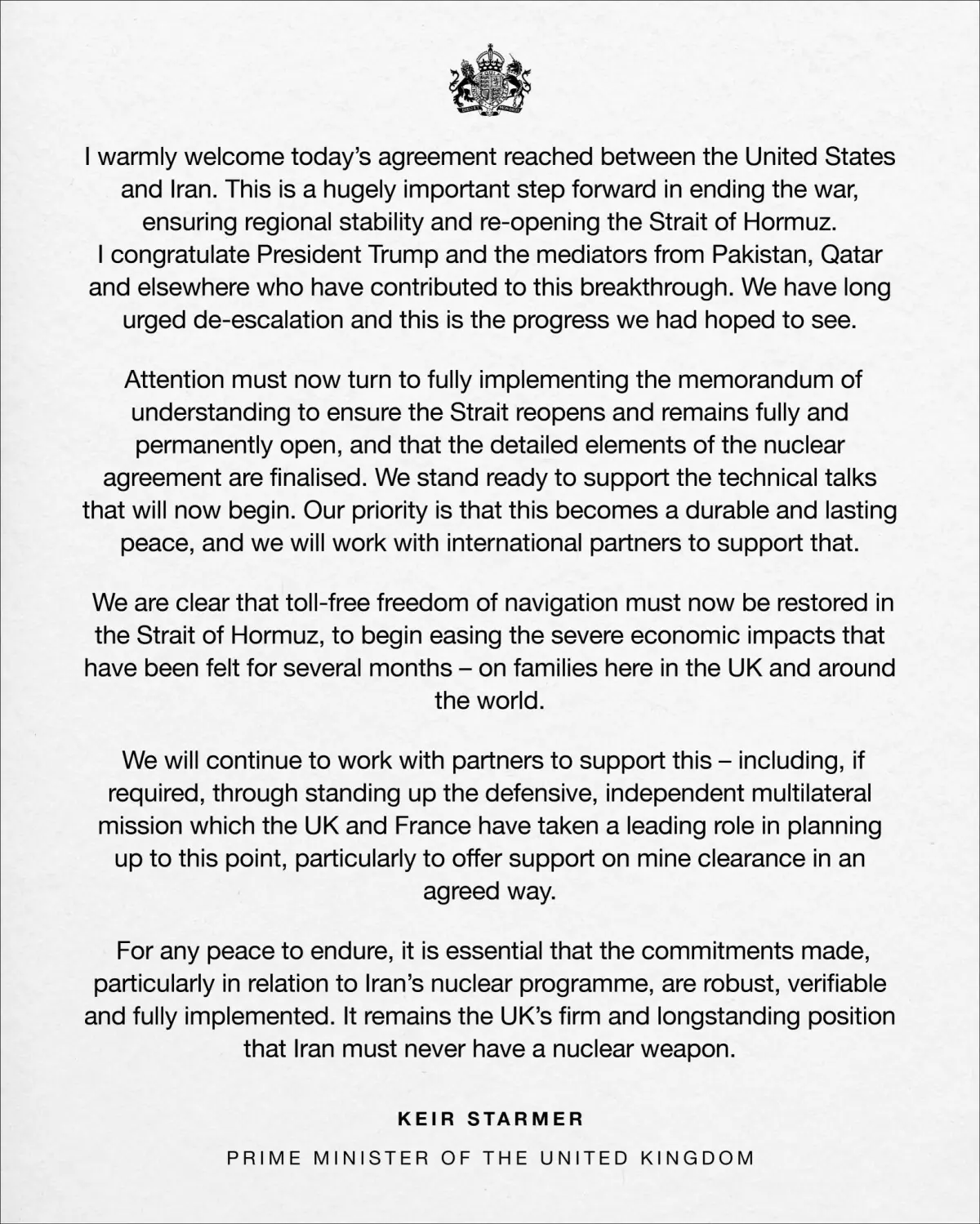
He specifically congratulated President Trump and “the mediators from Pakistan, Qatar and elsewhere who have contributed to this breakthrough.”
Starmer stressed the need for full implementation of the Memorandum of Understanding to ensure permanent freedom of navigation in the Strait of Hormuz and to finalise details of the nuclear agreement.
New Zealand
Foreign Minister of New Zealand Winston Peters welcomed the deal, calling it a step towards reducing tensions and promoting stability in a region that is critical to global economic security.
“The disruption to the Strait of Hormuz has had serious impacts on New Zealand’s economy, as well as on our Pacific partners,” Peters says.
We welcome steps that will enable the safe reopening of this vital maritime route and restore confidence in key supply chains, he added.
Earlier, Prime Minister Shehbaz Sharif and US President Donald Trump announced on social media that the US-Iran deal had been reached.
“Following intensive talks, we are pleased to announce that the Peace Deal between the United States of America and the Islamic Republic of Iran has been REACHED. Both sides have declared the immediate and permanent termination of military operations on all fronts, including in Lebanon. The official signing ceremony will be on Friday, 19 June in Switzerland,” the prime minister wrote on his X timeline.
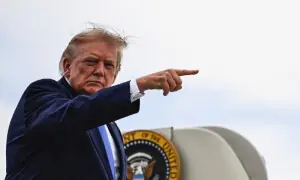
US President Donald Trump, in a post on his social media platform Truth Social, also announced that the deal with the Islamic Republic of Iran was now complete.
“Congratulations to all! I hereby fully authorise the toll-free opening of the Strait of Hormuz, and, simultaneously herewith, authorise the immediate removal of the United States Naval blockade. Ships of the World, start your engines. Let the oil flow,” he wrote.
Trump said that the “Great Deal” would bring peace and security to the whole region.
Throughout this process, Pakistan has played a proactive and constructive role in supporting mediation efforts and backchannel diplomacy to promote peace and de-escalation in the region.
Pakistani leadership, including Prime Minister Shehbaz Sharif and Field Marshal Syed Asim Munir, remained actively engaged with all concerned parties, advocating for dialogue and a diplomatic resolution to the conflict.
It is pertinent to mention that a ceasefire was also agreed upon and later extended on Pakistan’s request as part of the diplomatic efforts to de-escalate tensions.
For the latest news, follow us on Twitter @Aaj_Urdu. We are also on Facebook, Instagram and YouTube.



Comments are closed on this story.