Oil slides as Iran talks revive hopes of Middle East peace
3 min read




Oil prices skidded and stocks wobbled on Monday as hopes of a peace deal in the Middle East grew, while the yen jumped suddenly again after the US and Japan confirmed joint intervention to prop up the frail currency.
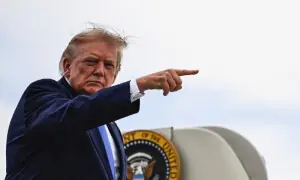
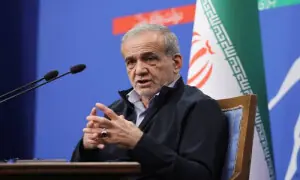
Brent crude futures sank more than 4% to $83.88 after US President Donald Trump said talks with Iran will happen on Monday.
He had earlier called off an imminent attack on Iran to reach a deal to reopen the Strait of Hormuz and resolve the impasse over Tehran’s nuclear capabilities.
S&P 500 futures rose 0.5% while Nasdaq futures gained 0.8%. European futures were 0.7% higher.
Asian stocks, though, struggled at the start of the week after a turbulent July that saw wild swings due to worries over the AI trade as investors fretted about the massive capital spending and whether it will provide returns quickly enough.
Japan’s Nikkei dipped nearly 2%, while South Korea’s KOSPI slid over 4%. MSCI’s broadest index of Asia-Pacific shares outside Japan was down about 1%.
Japanese yen firm
The Japanese yen firmed 0.5% to 156.47 per US dollar after a sudden move earlier in the day put traders on alert for another bout of intervention.
Japan and the US conducted coordinated yen-buying intervention and will not hesitate to take further action, Japan’s finance ministry said on Monday, confirming a rare bilateral action to halt the yen’s slide to fresh 40-year lows.
US Treasury Secretary Scott Bessent also said the United States would consider increasing in coming months the size of the Federal Reserve’s repurchase facility providing temporary dollar liquidity, calling the tool an “important backstop”.
“Bessent’s comments arguably carry more weight than the intervention itself,” said Matt Simpson, senior market analyst at StoneX.
“It feels like a safe bet that the Japanese yen has troughed for the year. The words ‘joint intervention’ carries a lot of weight in these markets and is a term rarely used.”
Preceding the announcement on the joint action, Trump said on Sunday the United States was helping Japan to prop up the yen as a sign of friendship and to help the world economy.
“They have a weakening yen, and they wanted a little bit of help. And we’re always there for Japan,” Trump said.
Tokyo’s solo intervention conducted between late April and early May caused only a brief yen rebound, while a rate hike in June by the Bank of Japan provided little boost, underscoring the challenge facing policymakers amid rising oil prices and a wide interest rate differential against other major economies.
The yen had been rooted near 40-year lows of 163.99 per US dollar in recent weeks before the latest bout of interventions, with net short positions on the yen of roughly $12.5 billion, the highest in two years, data from a US regulator showed.
“They are clearly determined to make a solid effort in strengthening the yen as the billions of dollars they have spent and joint moves have proved,” said Nick Twidale, chief market strategist at ATFX Global.
“However, there will need to be a change in the underlying fundamentals for these moves to be sustainable. The market will challenge these moves once they feel the action has been completed.”
The action and comments from Bessent repeating his calls for further interest-rate hikes by the BOJ have put monetary policy in focus.
The 2-year JGB yield, which is most sensitive to near-term monetary policy moves, briefly hit 1.545% on Monday, the highest since 1995, as markets priced in the chance of an early rate hike.
Meanwhile, the drop in oil prices led US Treasury yields lower.
The yield on the 30-year bond fell 3.7 basis points to 5.238%, easing away from a 19-year high it touched last week.
It had jumped 372 basis points in July as investors grappled with confusion around the Iran war and the policy outlook for the Federal Reserve.
For the latest news, follow us on Twitter @Aaj_Urdu. We are also on Facebook, Instagram and YouTube.