


The Lost Glory
6 min read

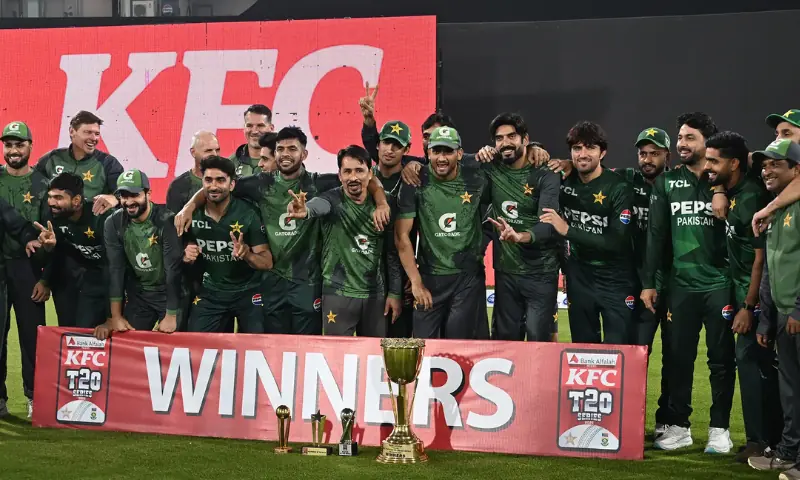
Cricket in Pakistan is a passion, a national obsession and an important part of the country’s identity. From packed stadiums in major cities to children playing in streets and parks, cricket has long united Pakistanis across class, language and region.
It has produced legendary cricketers such as Hanif Mohammad, Zaheer Abbas, Javed Miandad, Wasim Akram and Waqar Younis, and in recent years, players like Babar Azam, Muhammad Amir, Shaheen Shah Afridi and a few others have carried the nation’s hopes. Yet cricket in Pakistan has never been only about runs, wickets and victories. Politics, favouritism and the lack of merit have often played a major role in shaping the game, influencing how it is run, how players are selected, and how it is seen both at home and abroad.
Since Pakistan’s inception in 1947, cricket has become one of the country’s most important sports. The Pakistan Cricket Board (PCB), originally known as the Board of Control for Cricket in Pakistan, was created to organise and manage the game.
In principle, cricket administration was meant to function independently, focusing on the development of the sport and the management of national and domestic cricket. In reality, however, cricket in Pakistan has often been deeply connected with political power and personal influence. At times, favouritism in appointments and selection has been a concern, with critics arguing that merit has not always been the main factor in decision-making.
Governments, military rulers and elected leaders have all taken a keen interest in cricket, not simply because of its popularity, but because it became a matter of national pride and prestige.
The game has often been seen as a symbol of the nation itself. Victories on the cricket field, especially against major rivals, have carried emotional and political significance far beyond sport. For many Pakistanis, a cricket win has represented national strength, resilience and pride. This emotional connection has meant that the governments have rarely treated cricket as just another sport. Political leaders have often associated themselves with cricketing success, celebrating victories publicly and using such moments to build goodwill among the public. In this way, cricket gradually became tied to state power, political symbolism, and at times selective favouritism.
One of the most persistent criticisms of Pakistan cricket has been political interference in administration. The appointment of top officials in the PCB has often been influenced by the governments rather than determined through fully independent sporting processes. Changes in political leadership frequently led to changes in cricket administration. When a new government came to power, cricket officials often changed as well, creating a cycle of instability.
Critics have also argued that favouritism has affected player selection and coaching decisions. At times, players have been picked based on personal connections, regional influence, or reputation rather than consistent performance. This has led to frustration among fans and players who believe that merit should always come first.
This pattern of political appointments and perceived favouritism has had a lasting impact on Pakistan cricket. Cricket boards require long-term planning, institutional stability and continuity to develop players, improve domestic structures and build sustainable policies.
In Pakistan, however, administrations have often changed abruptly. New officials sometimes reversed the decisions of their predecessors, introduced new domestic structures, replaced coaches or captains and altered policies according to their own vision. This lack of continuity created uncertainty and often prevented long-term development. Fans and analysts repeatedly complained that Pakistan cricket was being run according to politics and influence rather than sporting logic and merit.
Pakistan’s political history, marked by both military rule and civilian governments, also shaped cricket in different ways. During military regimes, cricket victories were often presented as symbols of national unity and strength. Sporting success helped improve Pakistan’s image internationally and became part of state symbolism.
Under elected civilian governments, cricket remained politically significant, though in different ways. Political leaders often used cricketing success to connect with the public, appearing with the players and publicly celebrating victories.
In both cases, cricket became more than a sport; it became a national instrument that carried political meaning.
Another area where politics and favouritism have often entered Pakistan cricket is team selection and domestic cricket administration. Pakistan is a country with strong provincial identities, and cricket has sometimes reflected these regional tensions. Fans and commentators have often accused selectors of favouring players from particular regions or major cricket centres, even when other players had better performance records.
This perception of unfair selection and the lack of merit has created controversy for many years. Cricket selection, ideally based purely on performance and fitness, has been influenced by personal relationships, pressure groups, or regional bias.
Domestic cricket in Pakistan has also faced similar issues. Regional associations, provincial interests and local political influences have often shaped debates about cricket administration. Provincial pride and regional competition sometimes turned cricket matters into political disputes.
The relationship between Pakistan and India offers perhaps the clearest example of cricket’s political role. Cricket matches between the two countries have never been ordinary sporting contests. Because of political tensions and history, these matches have carried enormous diplomatic and emotional significance. Cricket between the two nations has often been described as “cricket diplomacy”.
At times, leaders from both countries attended matches together in the hope that sport could improve relations. However, political tensions repeatedly disrupted cricketing ties. Bilateral series were cancelled or suspended because of diplomatic crises, security concerns or worsening relations.
For Pakistan cricket, this had serious consequences. Matches against India generate huge revenue and global attention, so the absence of regular bilateral cricket affected Pakistan financially as well as emotionally.
Pakistan cricket also faced one of its darkest chapters in 2009, when the Sri Lankan team bus was attacked in Lahore. The attack shocked the cricketing world and had devastating consequences. International teams refused to tour Pakistan for years, forcing the national side to play home matches in the United Arab Emirates.
This isolation damaged domestic cricket badly. Local players lost the chance to play international cricket at home, fans were deprived of live matches, and development slowed down.
This long period of isolation is one of the major reasons for the decline of cricket standards in Pakistan. Without regular international exposure at home, young players had fewer opportunities to develop. Domestic cricket also suffered from a lack of investment and attention.
Another reason for the decline has been frequent changes in domestic structure. Over the years, Pakistan has repeatedly changed its domestic cricket system. Departments, regional teams and tournament formats have been introduced and removed. Each new administration brought a different idea, but the lack of continuity created confusion.
Administrative instability has also played a major role. Frequent changes in PCB leadership meant that the long-term planning was rarely followed. Coaches were replaced often, captains were changed frequently, and selection policies kept shifting. This instability affected team performance.
Similarly, the decline has also been linked to problems in player development. While Pakistan continues to produce talented cricketers, the system for nurturing that talent has often been weak. At times, players have been promoted too quickly due to favouritism or reputation, while others with better domestic records were overlooked. Many players rely on natural ability rather than structured coaching and training.
The media environment has also added pressure. Constant public criticism, television debates and social media discussions often create a stressful atmosphere for the players. A few poor performances can lead to strong public backlash, which affects confidence and long-term development.
Despite all these challenges, Pakistan cricket has continued to produce world-class players and unforgettable moments. The passion of Pakistani fans remains strong, and cricket continues to inspire millions across the country.
The future of Pakistan cricket may depend on building stronger institutions, reducing political interference, ending favouritism, and creating a system that is based on merit and long-term planning. Cricket will always carry emotional and national importance in Pakistan, but its revival depends on allowing fair selection and professional standards to guide the game.
The writer is a seasoned journalist and a communications professional.
For the latest news, follow us on Twitter @Aaj_Urdu. We are also on Facebook, Instagram and YouTube.












Comments are closed on this story.