


Iran, Oman hold talks on sovereignty, security of Strait of Hormuz
2 min read



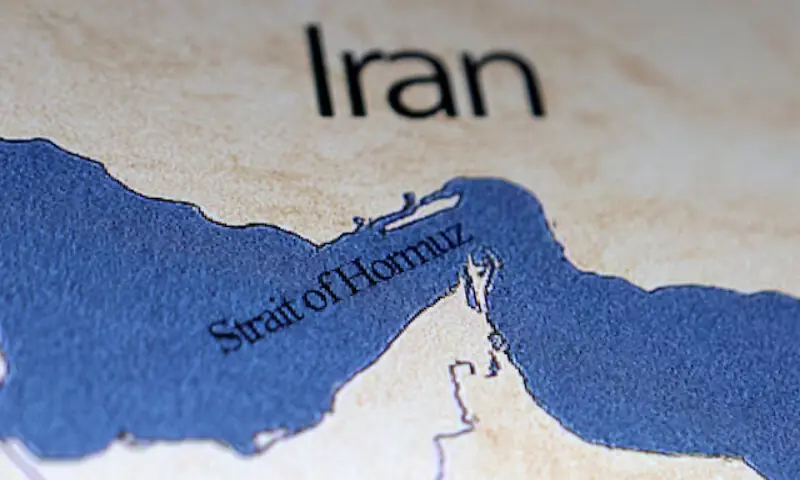
Iranian and Omani officials held a legal-technical meeting in Muscat to discuss arrangements for the secure passage of vessels and reaffirm the sovereign rights of both countries over the strategic Strait of Hormuz.
The discussions held on Tuesday were part of ongoing consultations at multiple levels between Tehran and Muscat on bilateral relations and regional developments.
The Iranian delegation was led by Abbas Baqerpour, director general for International Legal Affairs at Iran’s Foreign Ministry, and included representatives from relevant institutions.
During the meeting, both sides stressed their respective jurisdictions over the Strait, noting that it forms part of the territorial waters of Iran and Oman.
Later, the Iranian delegation also met Omani Foreign Minister Badr Al Busaidi for separate talks.
International Maritime Organisation (IMO) Secretary General Arsenio Dominguez, who was in Oman at the time, met the Iranian delegation to discuss related technical issues.
At its narrowest point, the Strait of Hormuz measures 21 nautical miles.
Under the UN Convention on the Law of the Sea, which Iran has signed but not ratified, coastal nations can claim territorial waters extending 12 nautical miles from their shores.
This overlap has long left the strait without a clear high-seas corridor for unimpeded international passage.
Recent regional tensions, including US and Israeli military strikes, have prompted Iran to assert its territorial claims more decisively.
Rear Admiral Mohammad Akbarzadeh, political deputy of the Islamic Revolution Guards Corps Navy (IRGC), said on Tuesday that Iran has redefined the operational boundaries of the strait.
“In the past, the Strait of Hormuz was defined as a limited area around islands such as Hormuz and Hengam. Today, it has been expanded,” he said, explaining that Iran now considers the strait to extend from the coasts of Jask and Sirik to beyond the Greater Tunb Island, forming a strategic zone spanning 200 to 300 miles.
This redefinition, according to Iran, reflects its intent to administer, regulate, and control all maritime traffic within the expanded territorial waters, under the framework of international law.
For the latest news, follow us on Twitter @Aaj_Urdu. We are also on Facebook, Instagram and YouTube.













Comments are closed on this story.