


US Navy turns to AI firm Domino for options to counter Iranian mines
2 min read



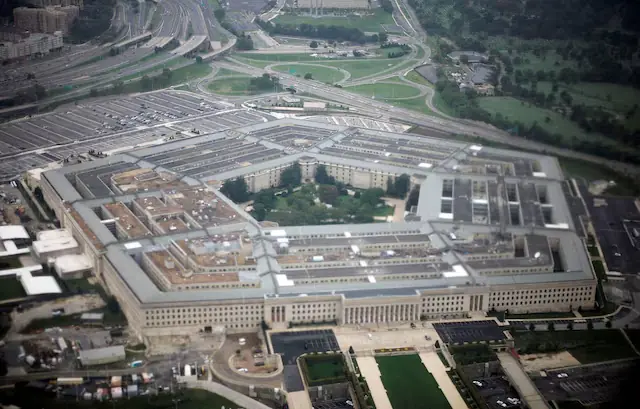
The US Navy is ramping up its AI capabilities to hunt for Iranian mines in the Strait of Hormuz, one of the world’s most critical shipping lanes, a recently awarded contract shows.
President Donald Trump has said the US Navy is clearing Iranian mines from the strait, a vital sea route for oil shipments, whose disruption is increasingly threatening the global economy. Sweeping for underwater explosives could take months despite a tenuous ceasefire between the US and Iran in their weeks-long war.
The up to $100 million contract for the San Francisco artificial intelligence company Domino Data Lab could quicken this process with software that can teach underwater drones to identify new types of mines in a matter of days.
“Mine-hunting used to be a job for ships,” Thomas Robinson, Domino’s chief operating officer, said in an interview with Reuters. “It’s becoming a job for AI. The Navy is paying for the platform that lets it train, govern, and field that AI at a speed required for contested waters that block global trade and imperil sailors.”
Last week, the US Navy awarded the up to $99.7 million contract to expand Domino’s role as the AI backbone of the Navy’s Project AMMO - Accelerated Machine Learning for Maritime Operations - a program to make underwater mine detection faster, more accurate, and less dependent on human sailors.
The software integrates data from multiple sensor types, including side-scan sonar and visual imaging systems, and allows the Navy to monitor how well various AI detection models are performing in the field, identify failures, and push corrections to improve performance.
The core of Domino’s pitch - and the Navy’s wager - is speed. Before the company’s involvement, updating the AI models that power the Navy’s unmanned underwater vehicles (UUVs) to recognise new or previously unseen mines could take up to six months. Domino says it has cut that cycle to days.
Robinson illustrated the relevance to the Middle East crisis: “If there were UUVs in the Baltic Sea trained on Russian mines, and then they needed to be deployed to the Strait of Hormuz to detect Iranian mines, with Domino’s technology, the Navy could be ready in a week rather than a year.”
For the latest news, follow us on Twitter @Aaj_Urdu. We are also on Facebook, Instagram and YouTube.












Comments are closed on this story.