


China’s Labour Day travel shifts domestic as fuel costs hit overseas trips
4 min read



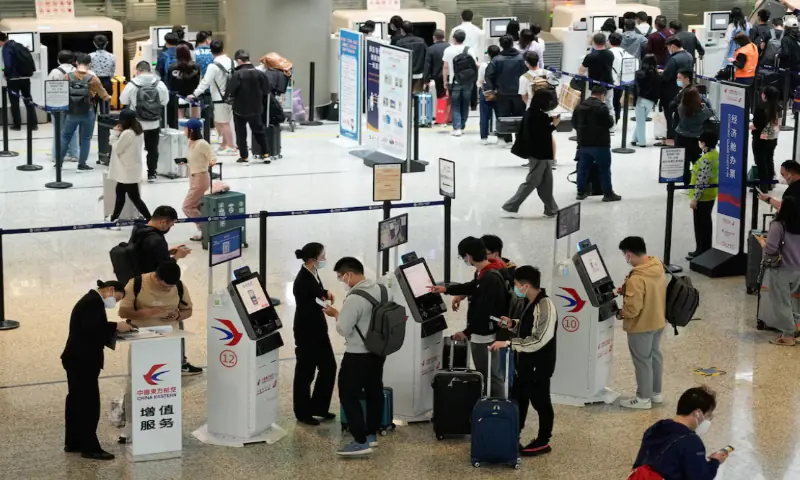
Travel demand in China is expected to remain strong during the five‑day Labour Day holiday from May 1, with travellers opting for domestic road trips and independent tours as higher fuel costs curb demand for overseas holidays.
Travel agencies and industry experts expect most holidaymakers to stay within China, continuing a trend seen in recent years during major holiday periods, with cheaper local destinations amid an economic slowdown and stagnant wage growth.
Now, soaring jet fuel prices following the war in Iran have made overseas travel even more expensive.
The price rises have triggered a wave of flight cancellations on routes between China and Southeast Asia.
Multiple carriers — including Air China, China Eastern, Spring Airlines and Malaysia‑based AirAsia — have reduced or suspended services between China and popular destinations such as Bangkok, Phuket and Kuala Lumpur, according to domestic media.
Industry data cited by the China Air Transport Association showed that international flight cancellations during the May Day holiday rose to 7.4%, with about 785 flights scrapped - more than double last year’s level.
“We are starting to feel the impact of the Iran war on the availability and price of jet fuel, and this is leading to some major cancellations of flights between China and Southeast Asia, especially by low-cost carriers,” said Sienna Parulis-Cook, marketing and communications director at Dragon Trail Research.
She added that flights between China and Southeast Asia that were still operating were about 18% more expensive on average than at the same time last year.
May Pan, a 39‑year‑old Beijing resident, said she felt fortunate that a planned trip with her husband to Malaysia’s Langkawi island had not been affected.
“We planned this trip a long time ago, and I bought the air tickets six months ago,” she said. “I heard that many flights to Southeast Asia have been cancelled, but luckily, so far, ours remains unchanged.”
Domestic demand on the rise
While more travellers are staying closer to home, it remains unclear whether per capita spending will finally rebound to pre-COVID levels.
More Chinese opting for train travel over flight tickets will keep the price of trips lower, in addition to lowering the chance of being caught up in flight disruptions.
China Railway Group said it expects 158 million trips to be taken by train between April 29 and May 6, up from 151 million a year ago.
“People may choose to travel domestically by train. They can also get to Hong Kong and Macau by train, so not risking any flight cancellations that way,” Parulis-Cook said.
The Iran war impact also extends beyond cancelled flights.
According to Dragon Trail’s latest Chinese Traveller Sentiment Report, 43% of respondents said their travel plans had already been affected by the conflict, while two‑thirds said the instability had significantly reduced their willingness to travel to the Middle East and North Africa.
Chinese travel agency Tuniu said bookings for domestic self‑driving group tours during the Labour Day period rose more than 50% from a year earlier, while demand for independent travel packages climbed nearly 20%.
China’s May Day holiday runs for five days from May 1. In Zhejiang province, where school spring breaks overlap with the public holiday to create what local media describe as a “3+5” extended break, Tuniu said total travel bookings surged 135% from a year earlier, with reservations from nearby cities Huzhou and Hangzhou more than tripling.
Zhou Weihong, deputy general manager at Shanghai‑headquartered Spring Tour, the travel arm of Spring Group, also said domestic trips were likely to outperform during the holiday.
“The number of domestic trips ordered via our platform increased 20% year-on-year,” he said.
China’s tourism sector has become an important barometer of consumer confidence as policymakers seek to revive household spending and boost domestic demand.
Retail sales growth of 2.4% trailed overall GDP growth of 5% in the first quarter, underlining Beijing’s long‑running struggle to engineer a consumer‑led recovery of its economy.
To encourage holiday spending, local governments have rolled out cultural and tourism offerings focused on spring outings, flower viewing and educational travel, and have distributed more than 284 billion yuan ($41.59 billion) in consumption vouchers and other subsidies.
For the latest news, follow us on Twitter @Aaj_Urdu. We are also on Facebook, Instagram and YouTube.














Comments are closed on this story.